Meet Barley Boy
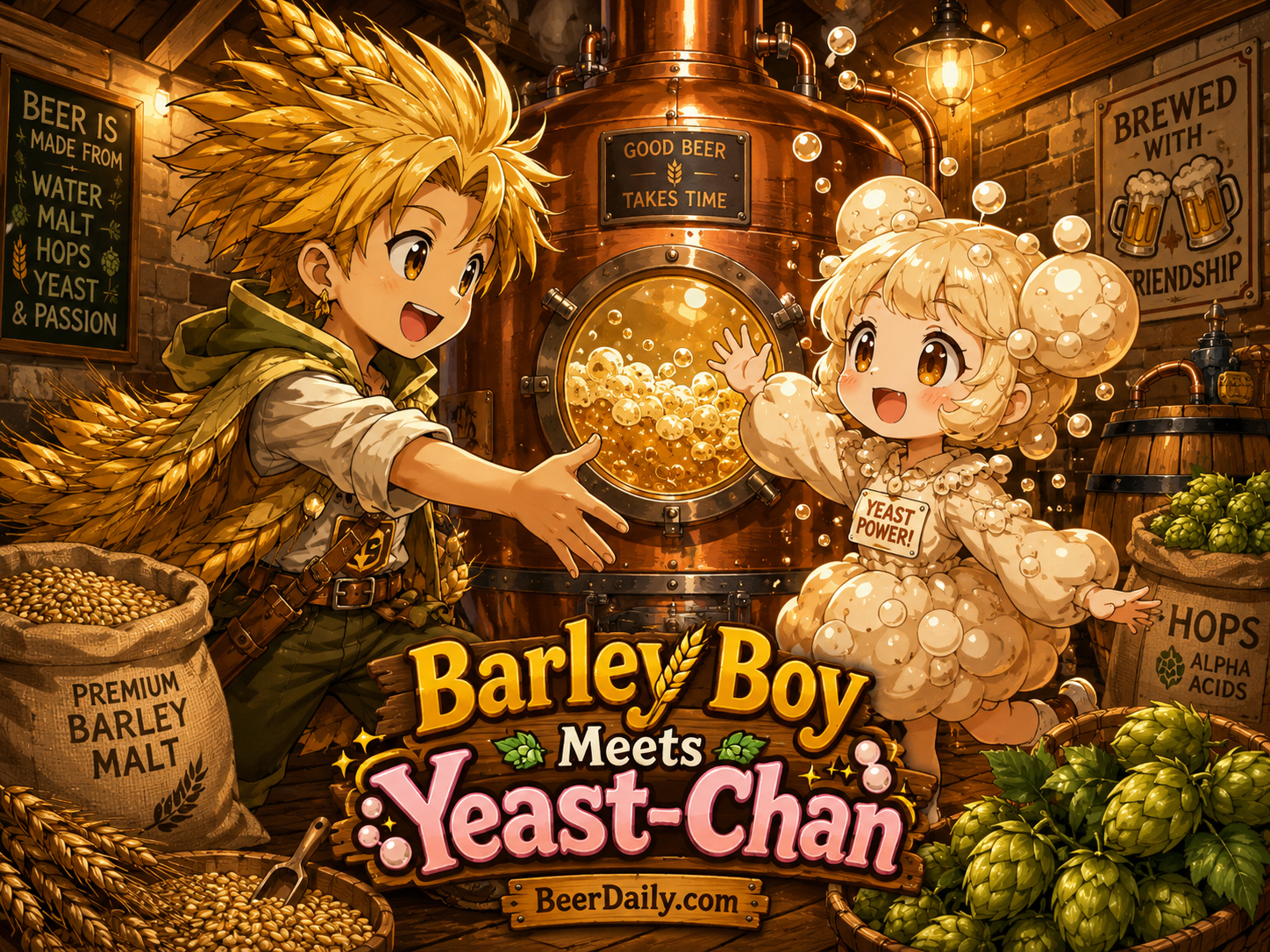
Barley Boy is golden, earnest, and slightly overconfident. He believes grain is already impressive enough on its own. He is not wrong. Grain feeds people, stores well, travels well, and helped make settled civilization possible.
But beer asks more from grain. Beer needs fermentable sugar. Barley Boy has starch, structure, enzymes, flavor, and potential. He does not yet have the full song.
Barley Boy: “I am historically important.”
Yeast-chan: “Great. Now become fermentable.”
Meet Yeast-chan
Yeast-chan is tiny, busy, and absolutely essential. She does not care about your dramatic label copy. She cares about sugar, temperature, oxygen levels, nutrients, timing, and whether the brewer cleaned the vessel properly.
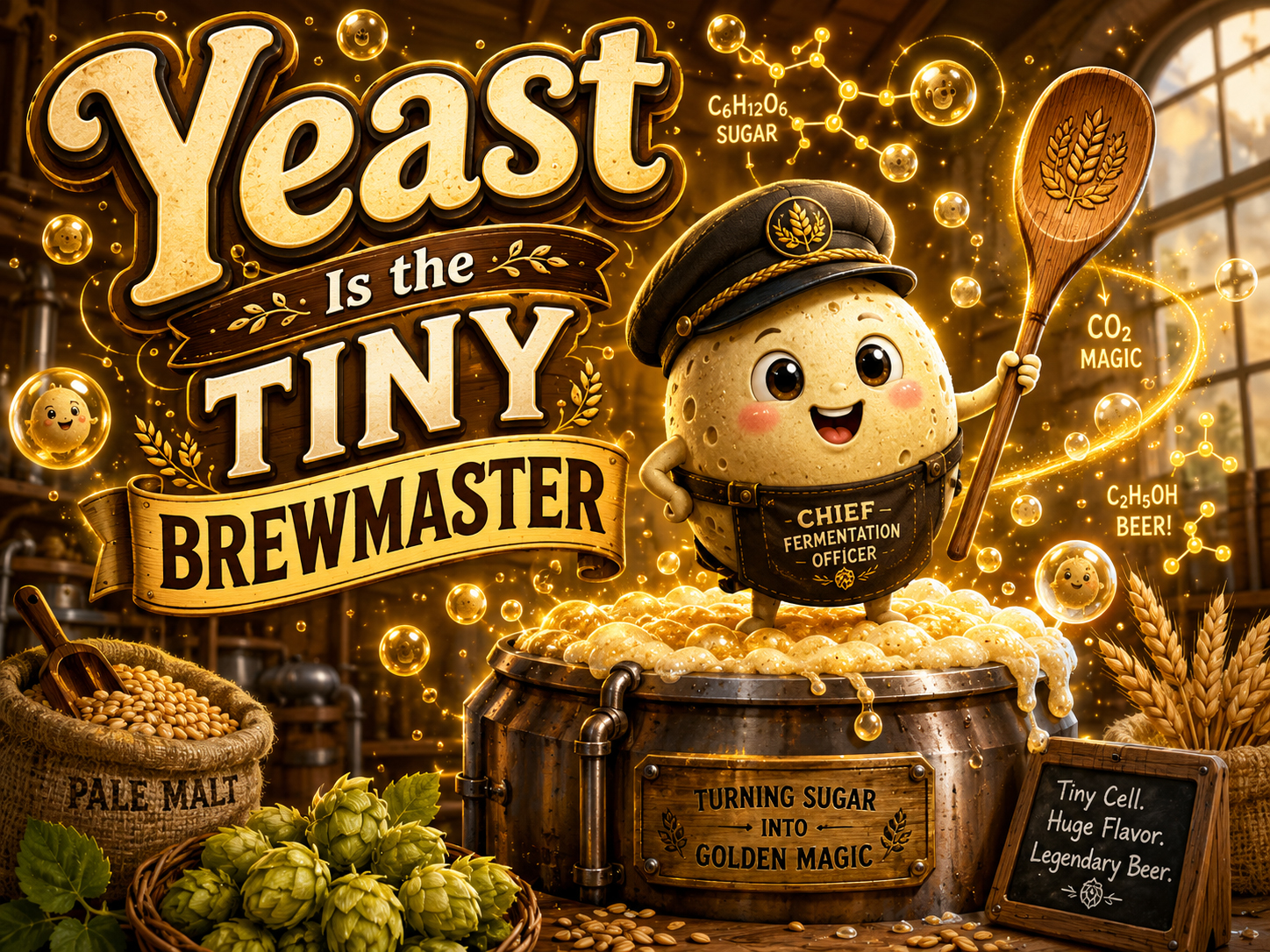
Yeast eats fermentable sugars and produces alcohol, carbon dioxide, and many flavor compounds. Without yeast, sweet wort stays sweet wort. With yeast, the story starts bubbling.
The first misunderstanding
Barley Boy points to himself and says, “So I become beer?”
Yeast-chan shakes her head. “You become malt. Then mash. Then sugar-rich wort. Then I do the part everyone forgets to thank me for.”
Barley Boy thinks about this. “So beer is teamwork?”
“Beer is teamwork with temperature control,” says Yeast-chan.
Step one: barley becomes malt
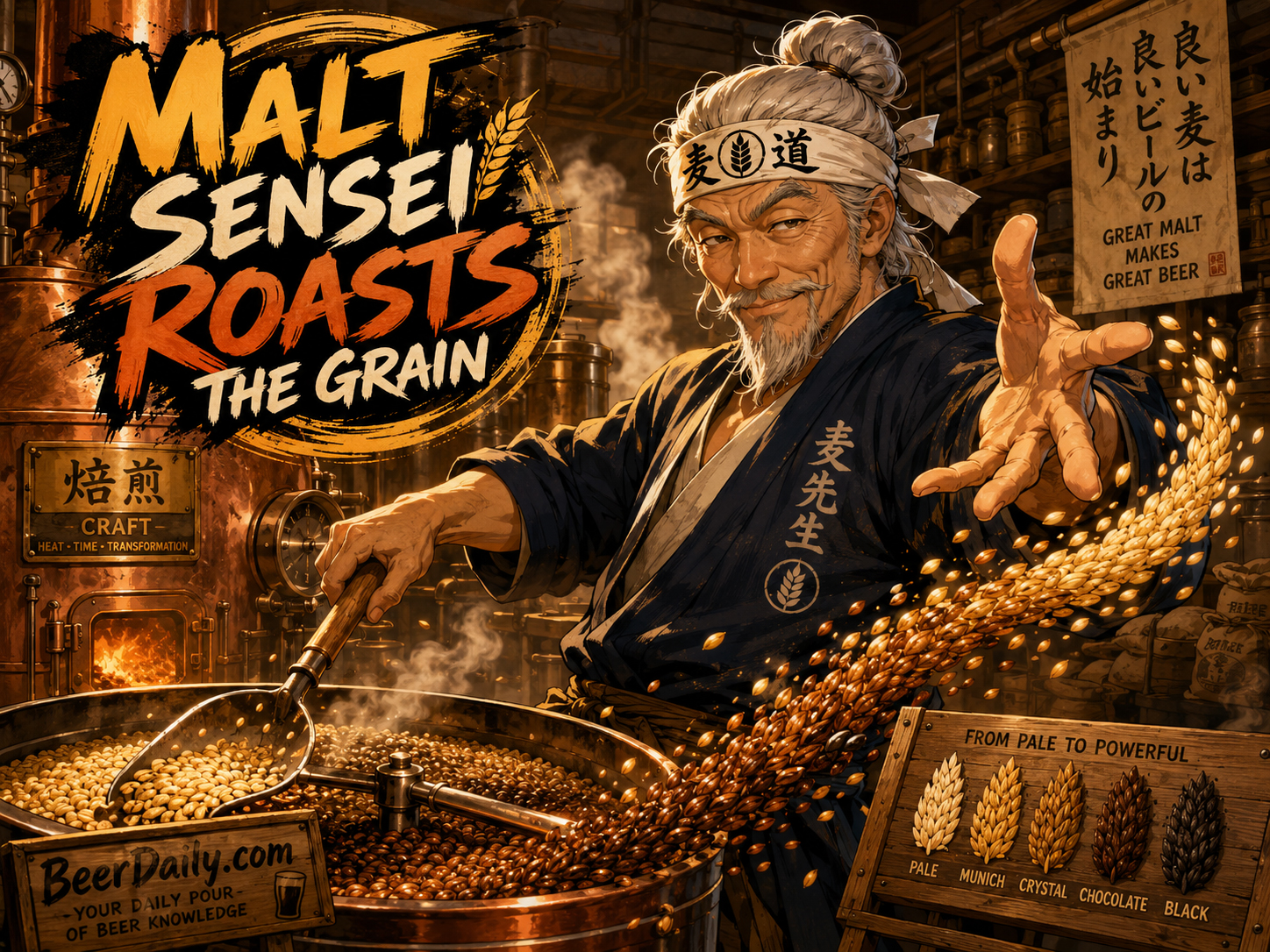
To make beer, grain often needs malting. Malting lets the grain begin to germinate, waking up enzymes that can later help convert starches into sugars. Then the grain is dried to stop that process at the right time.
Malt Sensei supervises this stage. He is wise, smoky, slightly toasted, and always says things like, “Inside every grain is a future mash bill.”
Step two: malt becomes sweet wort
Crushed malt meets warm water in the mash. Enzymes help convert starch into fermentable sugar. The sweet liquid created from that process is called wort. Wort is not beer yet. It is beer’s sugary prequel.
Barley Boy tastes the wort and becomes emotional. “I am sweet now.”
Yeast-chan appears instantly. “I heard sugar.”
Step three: yeast turns sugar into beer
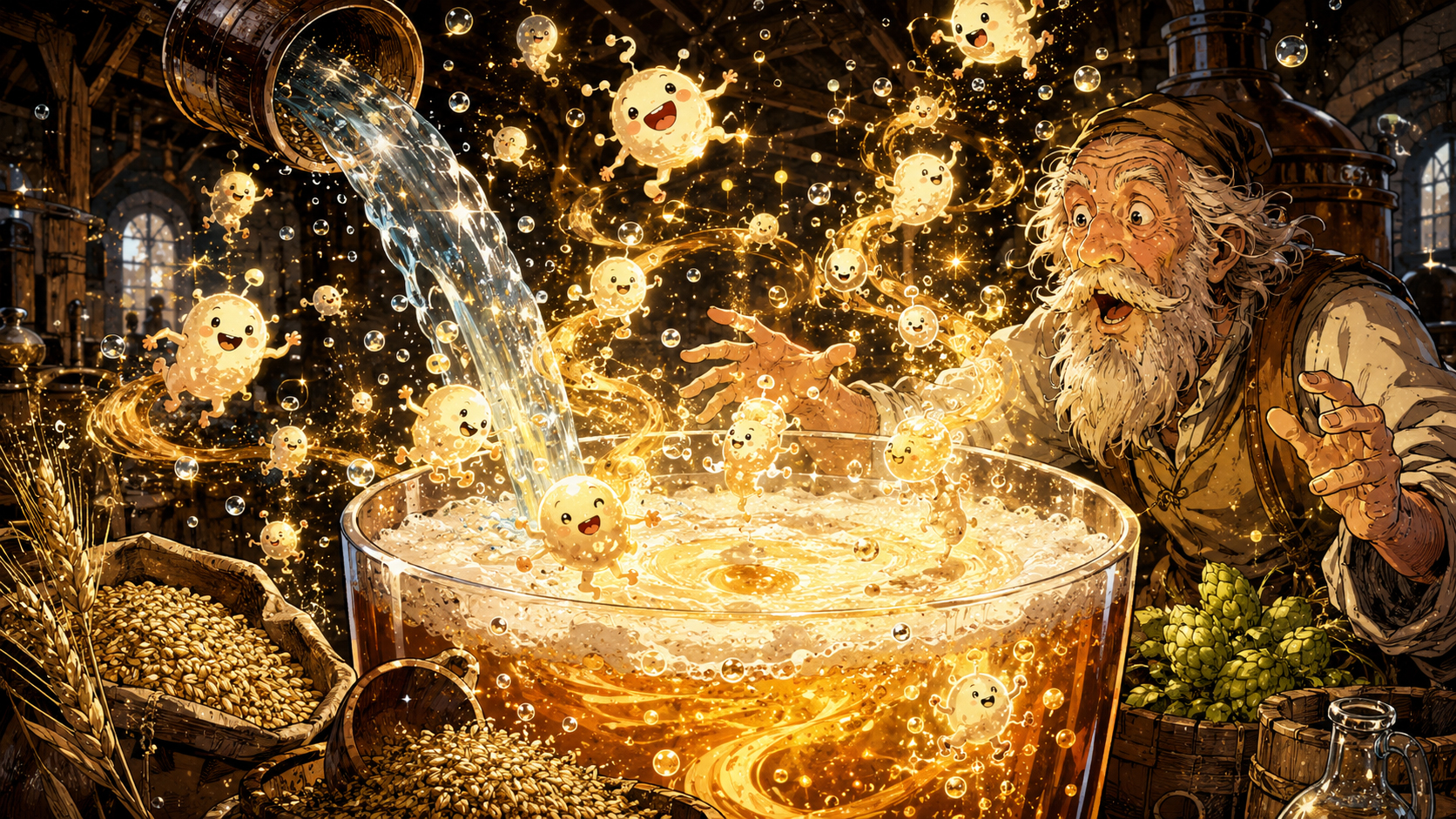
Fermentation is where Yeast-chan takes over. She consumes sugars and creates alcohol, carbon dioxide, and flavor compounds. The bubbles are not decoration. They are evidence that invisible life is working.
This is why BeerDaily calls yeast “the tiny brewmaster.” Brewers design the conditions, but yeast performs the transformation.
Temperature changes Yeast-chan’s mood
Yeast behaves differently at different temperatures. Warmer fermentations often produce more expressive fruity or spicy character. Cooler fermentations can be slower and cleaner when handled well. This difference helps explain why ales and lagers can feel so different.
Yeast-chan owns several outfits: a summer ale apron, a winter lager scarf, and a wild fermentation cloak she refuses to explain.
Flavor comes from both characters
Barley Boy brings bread, toast, biscuit, caramel, chocolate, roast, smoke, and body depending on the malt. Yeast-chan brings fruit, spice, dryness, alcohol, carbonation, and fermentation character depending on strain and conditions.
Beer flavor is not one ingredient talking. It is a conversation. Sometimes grain leads. Sometimes yeast leads. Sometimes hops interrupt. Sometimes the brewer has to separate everyone and clean the floor.
Why this duo matters historically
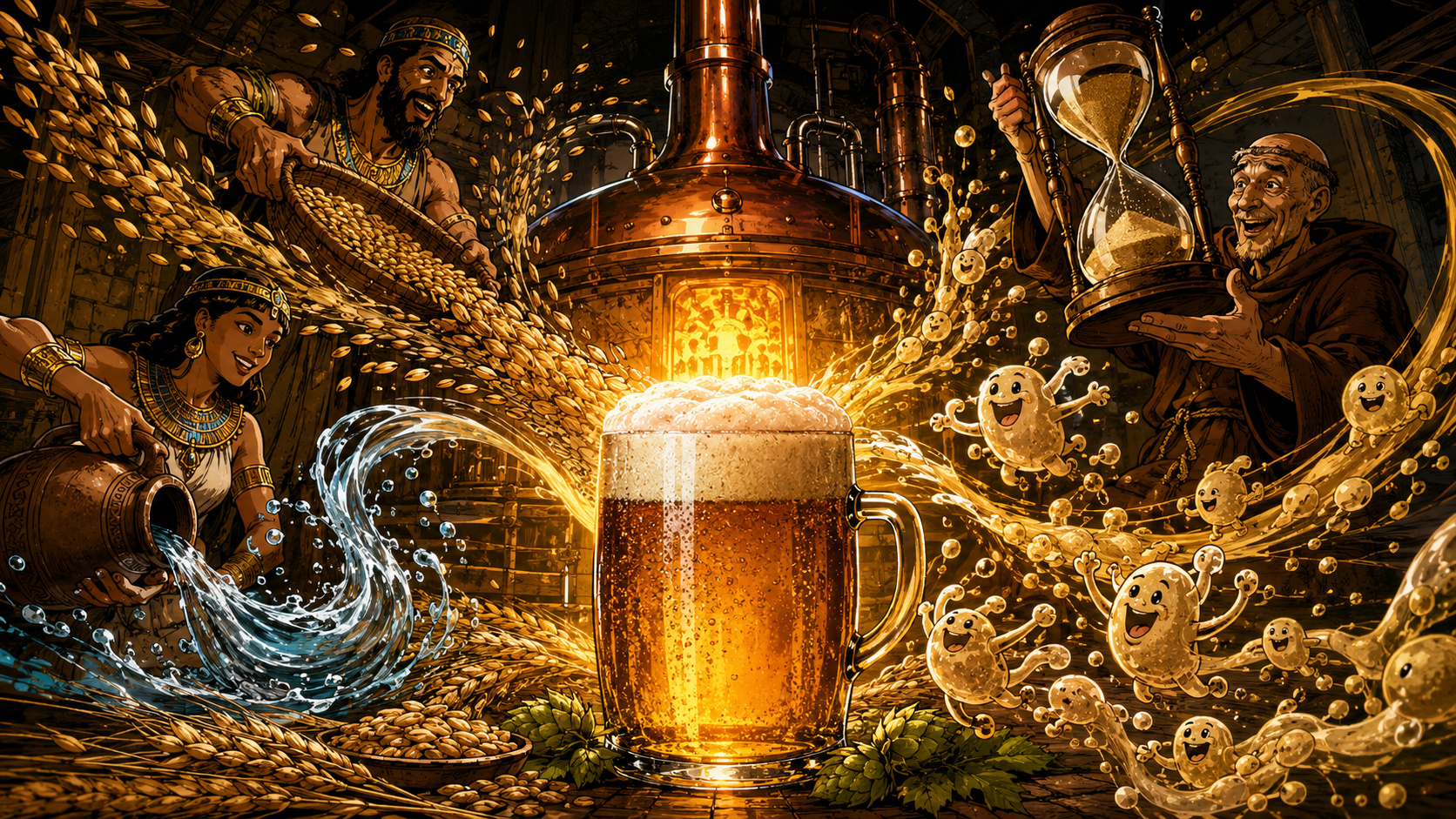
Ancient brewers did not understand yeast in modern scientific terms, but they understood fermentation by practice. Certain vessels, residues, temperatures, and methods worked better than others. Knowledge traveled through habit, repetition, ritual, household practice, and eventually written records.
The relationship between grain and yeast is one of beer history’s deepest continuities. Whether the vessel is clay, wood, copper, or stainless steel, the basic drama remains: grain offers sugar; yeast changes everything.
The Foam Goblin ruins the lesson
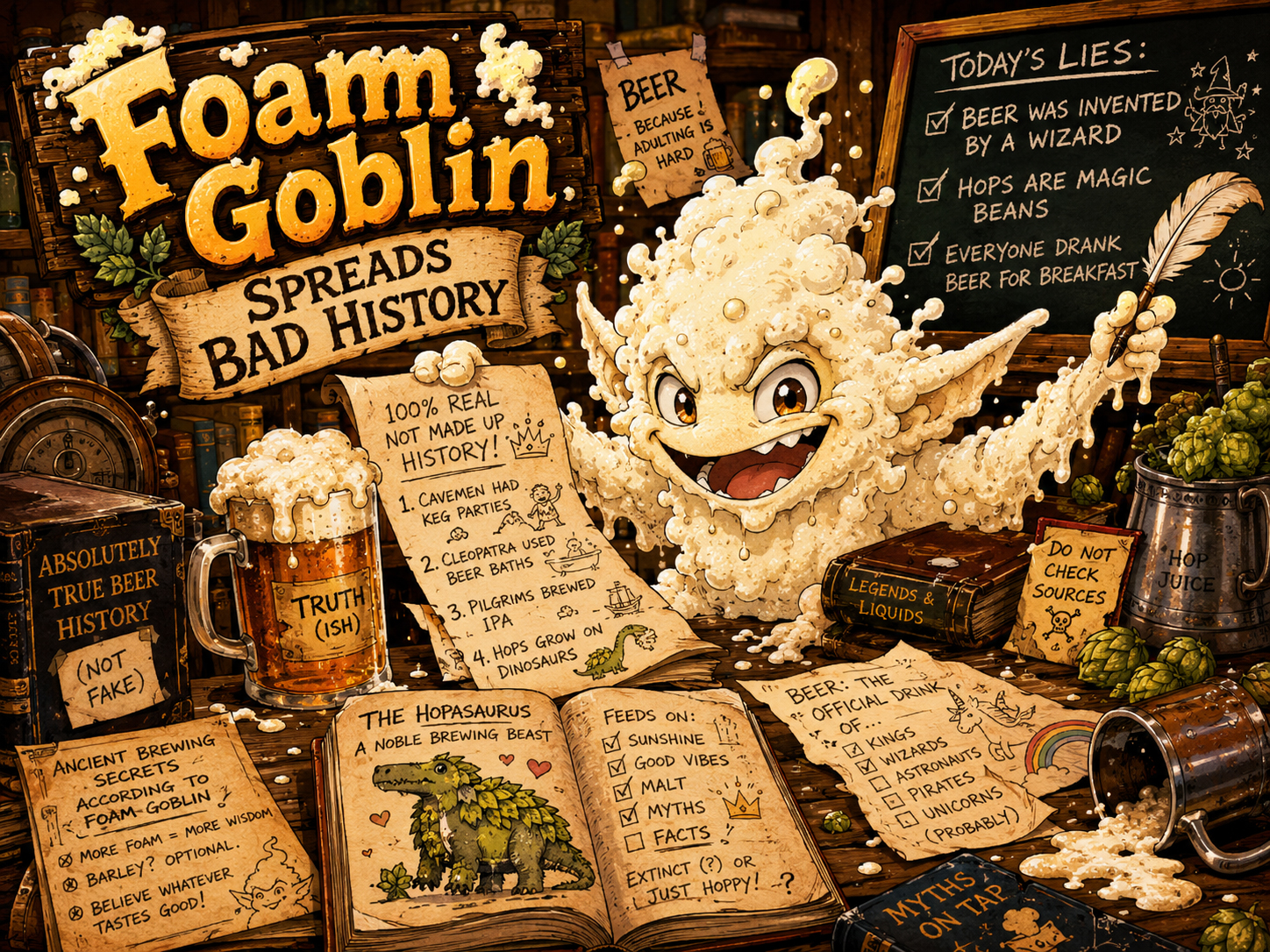
Foam Goblin bursts in and says, “Beer is just old fizzy bread water!”
Barley Boy gasps. Yeast-chan narrows her eyes. Professor Pint appears with a red pen.
“Beer is fermented grain technology,” Professor Pint says. “Bread and beer are related, but do not reduce either to a lazy joke unless the joke has a footnote.”
The BeerDaily lesson
Barley Boy and Yeast-chan show that beer is both agriculture and biology. Grain provides stored energy. Malting and mashing unlock sweetness. Yeast transforms that sweetness into alcohol, bubbles, aroma, and flavor.
Beer is not just a drink. It is a partnership between plant life, microbial life, human observation, and time.
BeerDaily moral: grain writes the melody. Yeast makes it sing.