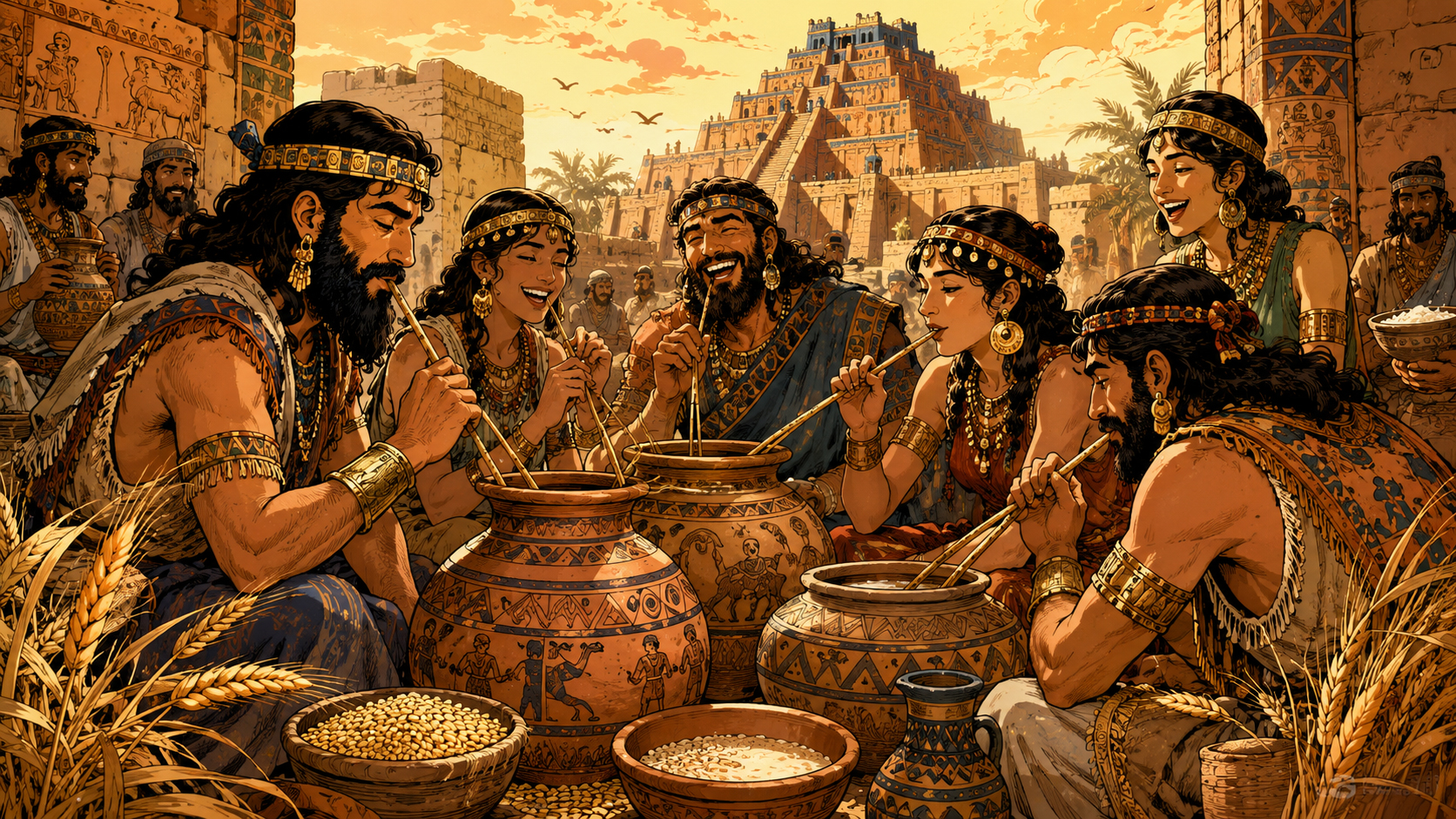
Myth 1: Ancient people drank beer only because water was unsafe.
This is the king of lazy beer myths. Yes, water quality mattered in many historical settings. Yes, boiling, fermentation, and alcohol could affect safety in some contexts. But reducing ancient beer to “they had no clean water” misses almost everything important.
Ancient beer was also food, ritual, wage, offering, agricultural technology, social glue, flavor, comfort, and stored grain transformed into a drinkable form. It appeared in household life, temple systems, worker rations, and cultural memory because it mattered in many ways — not because everyone was simply fleeing a puddle.
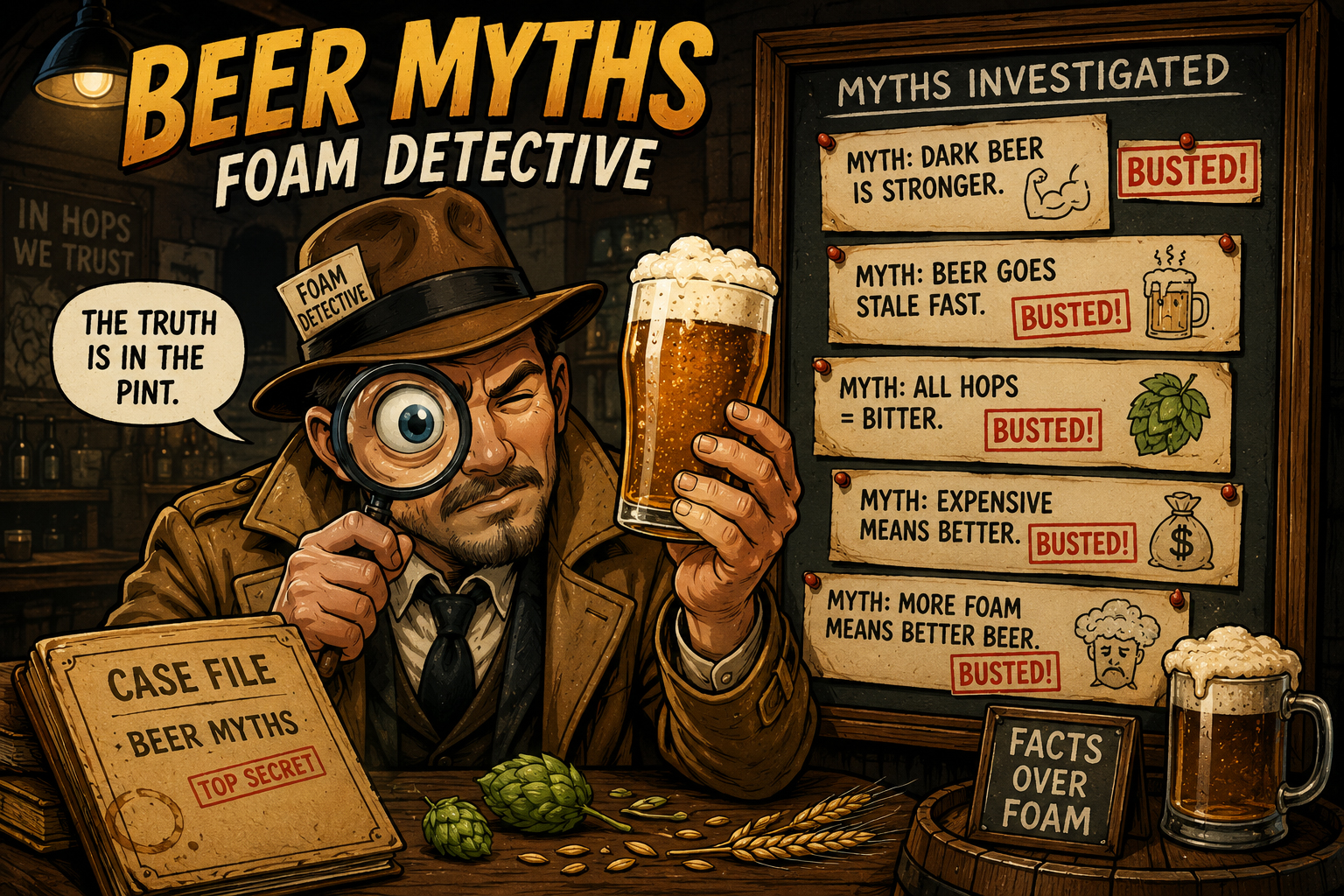
Foam Detective verdict: water mattered, but beer was not just ancient bottled water with confidence.
Myth 2: Beer has always meant barley plus hops.
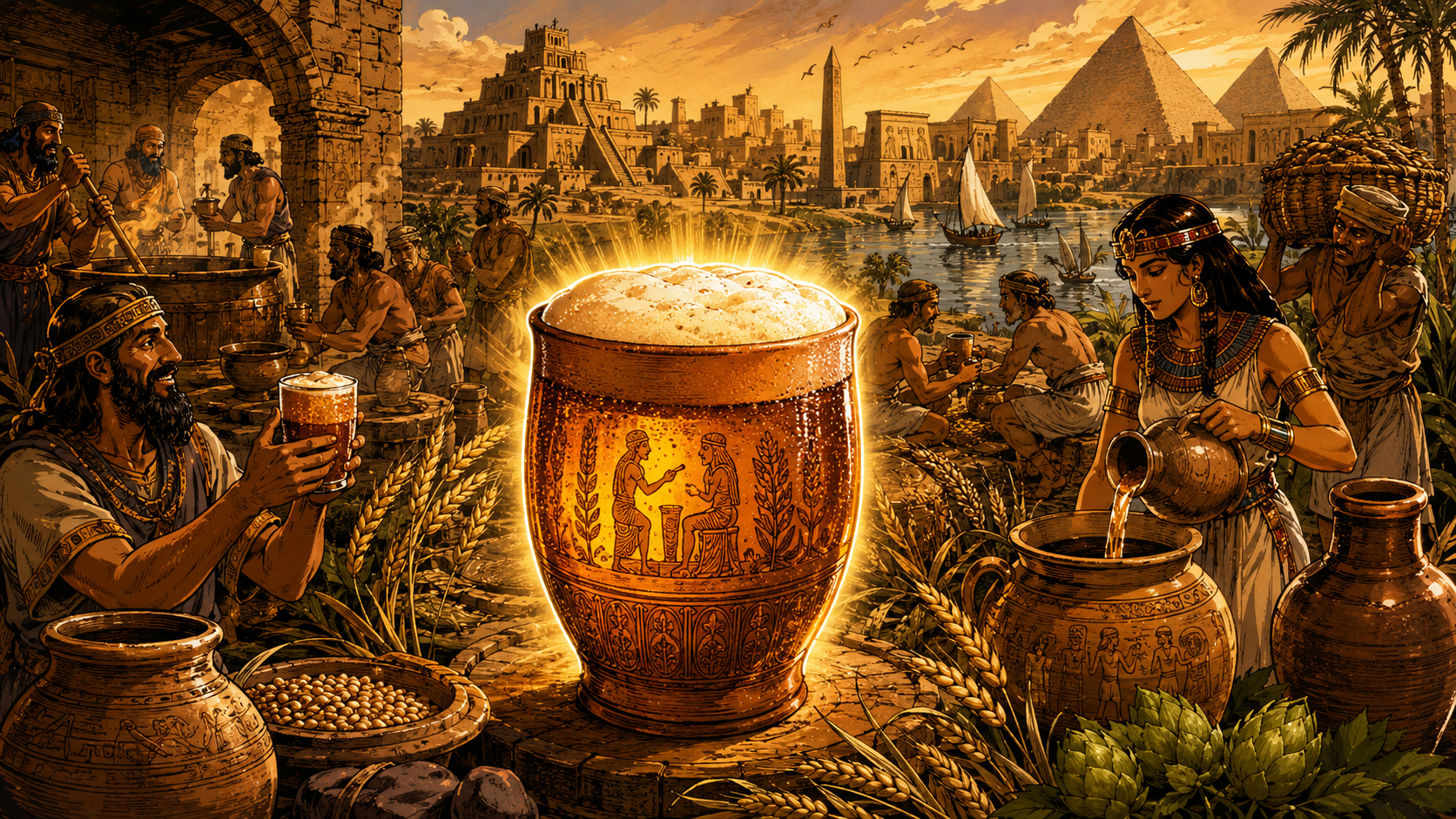
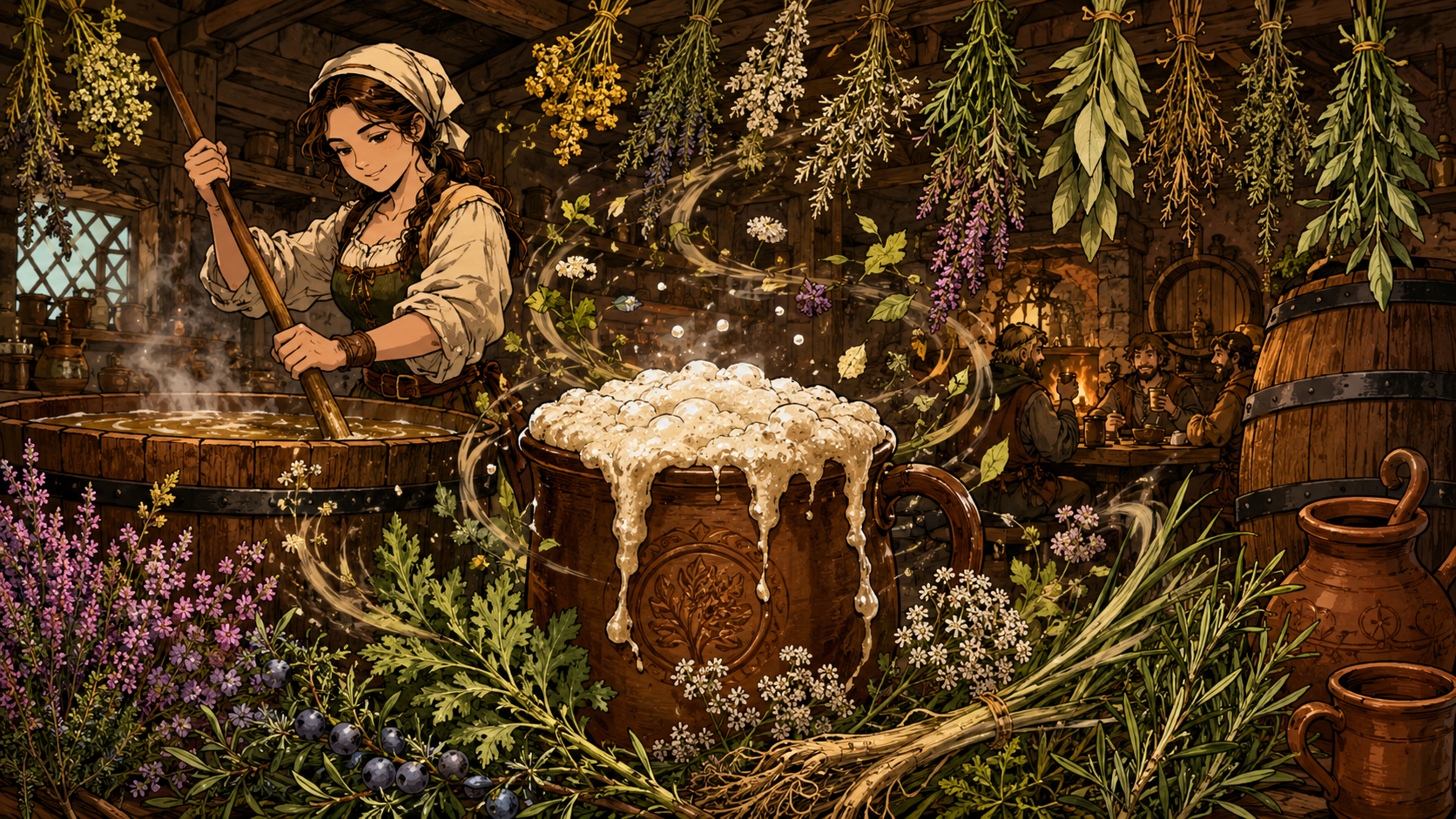
Modern beer often uses malted barley and hops, but beer history is much older and broader than that formula. Ancient and medieval fermented grain drinks could involve barley, wheat, millet, rice, sorghum, bread, honey, dates, fruits, herbs, spices, smoke, wild fermentation, and local plants.
Hops eventually became central in many brewing traditions because they add bitterness, aroma, and preservation benefits. But beer existed long before hops became the green boss of the kettle.
Myth 3: Hops were invented to make beer taste bitter.
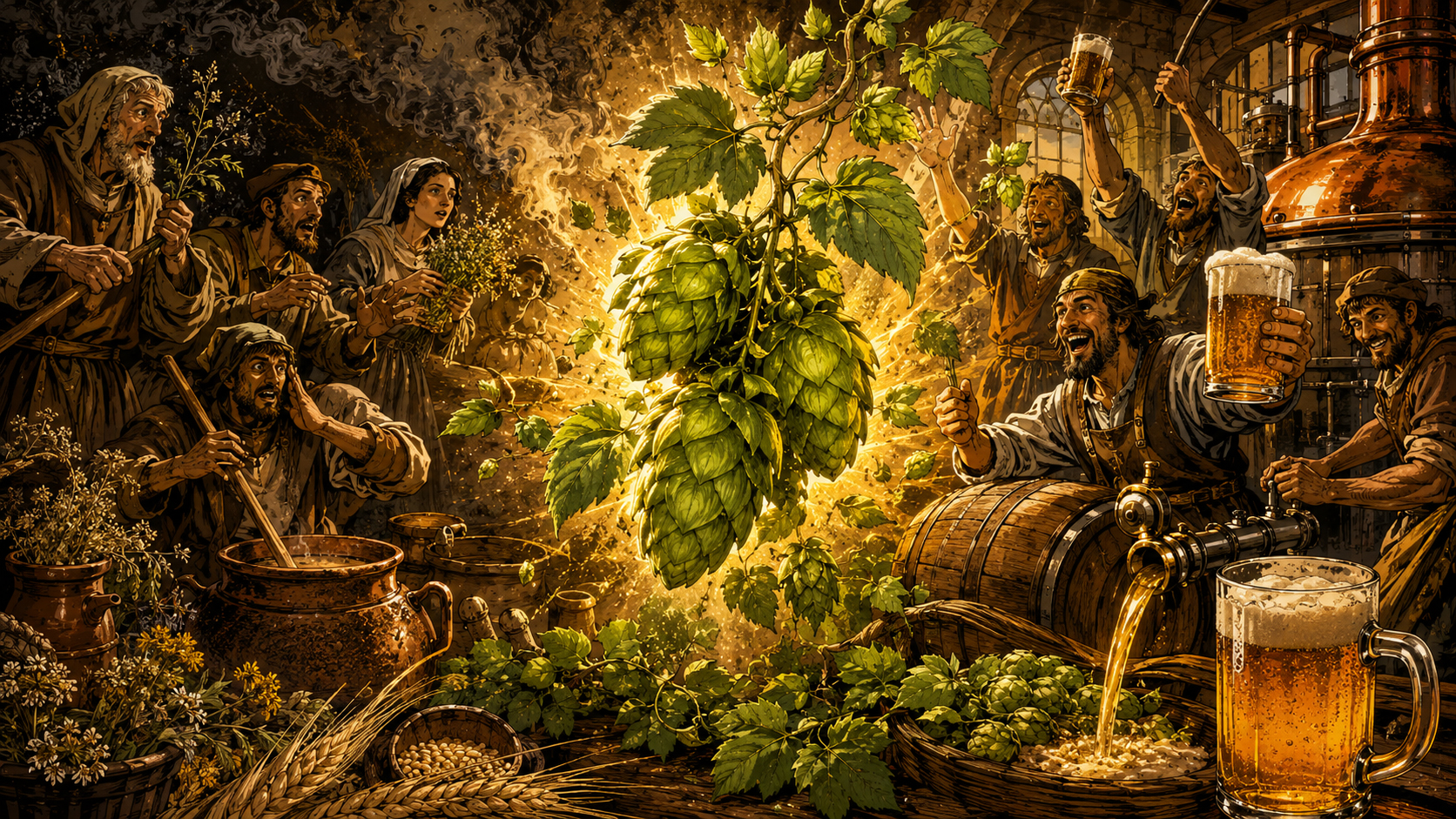
Bitterness is important, but hops did more than provide flavor. They helped balance malt sweetness, contributed aroma, and improved beer stability. Their rise was tied to preservation, trade, agriculture, taxation, and commercial brewing.
A hop cone is not just a flavor grenade. It is a small green logistics consultant with a bitter personality.
Myth 4: Dark beer is always stronger.
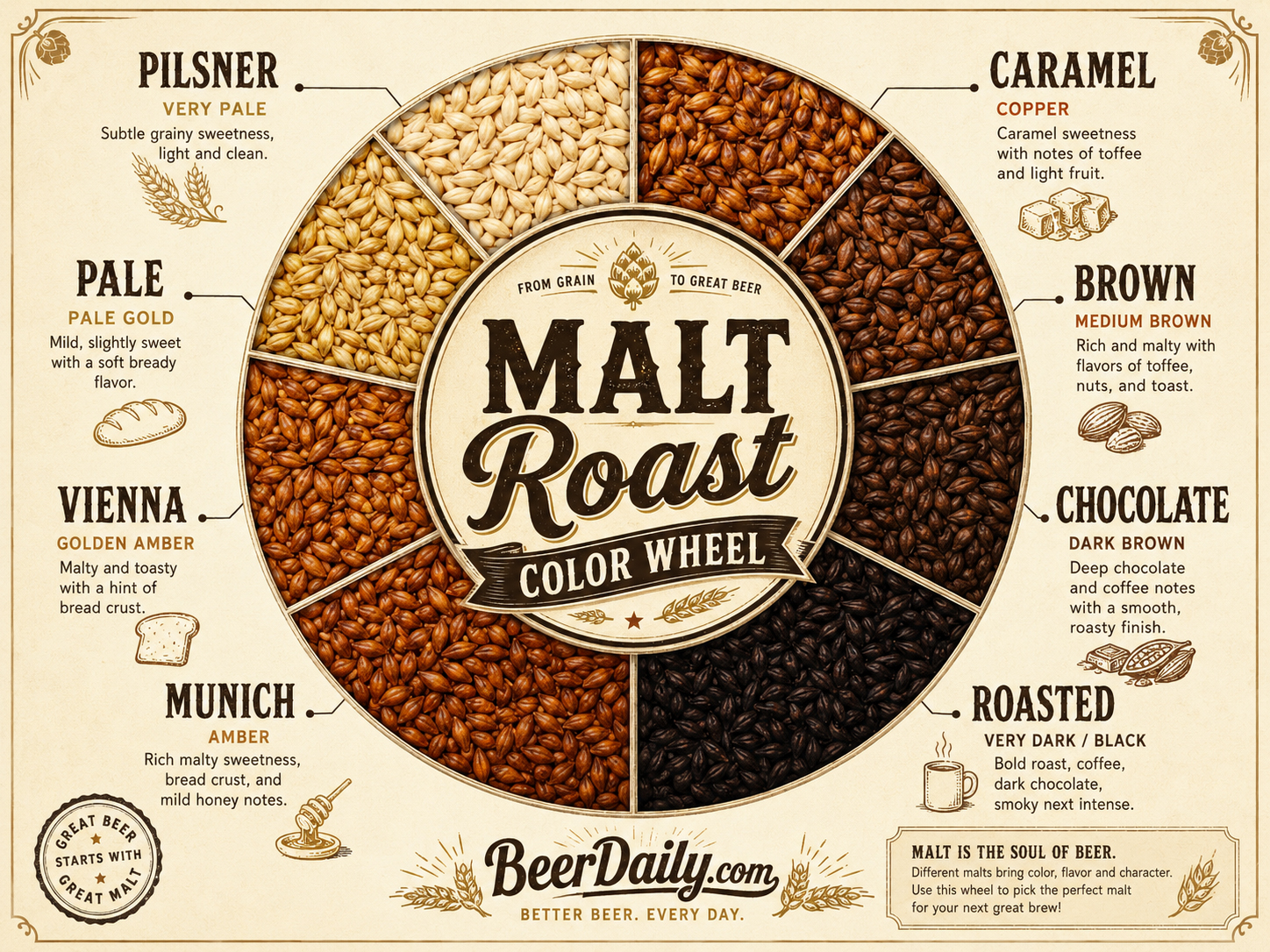
Color and alcohol are not the same thing. Dark beer gets its color from darker malts or roasted grains. Strength comes from fermentable sugar and fermentation. A dark mild can be low in alcohol. A pale Belgian tripel can be strong enough to make your calendar look judgmental.
The dark color may suggest roast, chocolate, coffee, toast, caramel, or burnt sugar notes, but it does not automatically announce high alcohol. Do not judge the pint by its cloak.
Myth 5: Clear beer is automatically better.
Clarity can be desirable in many styles, especially pilsners, lagers, and beers meant to showcase brilliant polish. But haze can also be natural, intentional, historical, or style-appropriate. Wheat beers, farmhouse ales, hazy IPAs, and some bottle-conditioned beers may not want crystal clarity.
Clear does not always mean good. Hazy does not always mean bad. The right question is whether the beer fits the tradition, process, and intended character.
Myth 6: Monks invented beer.
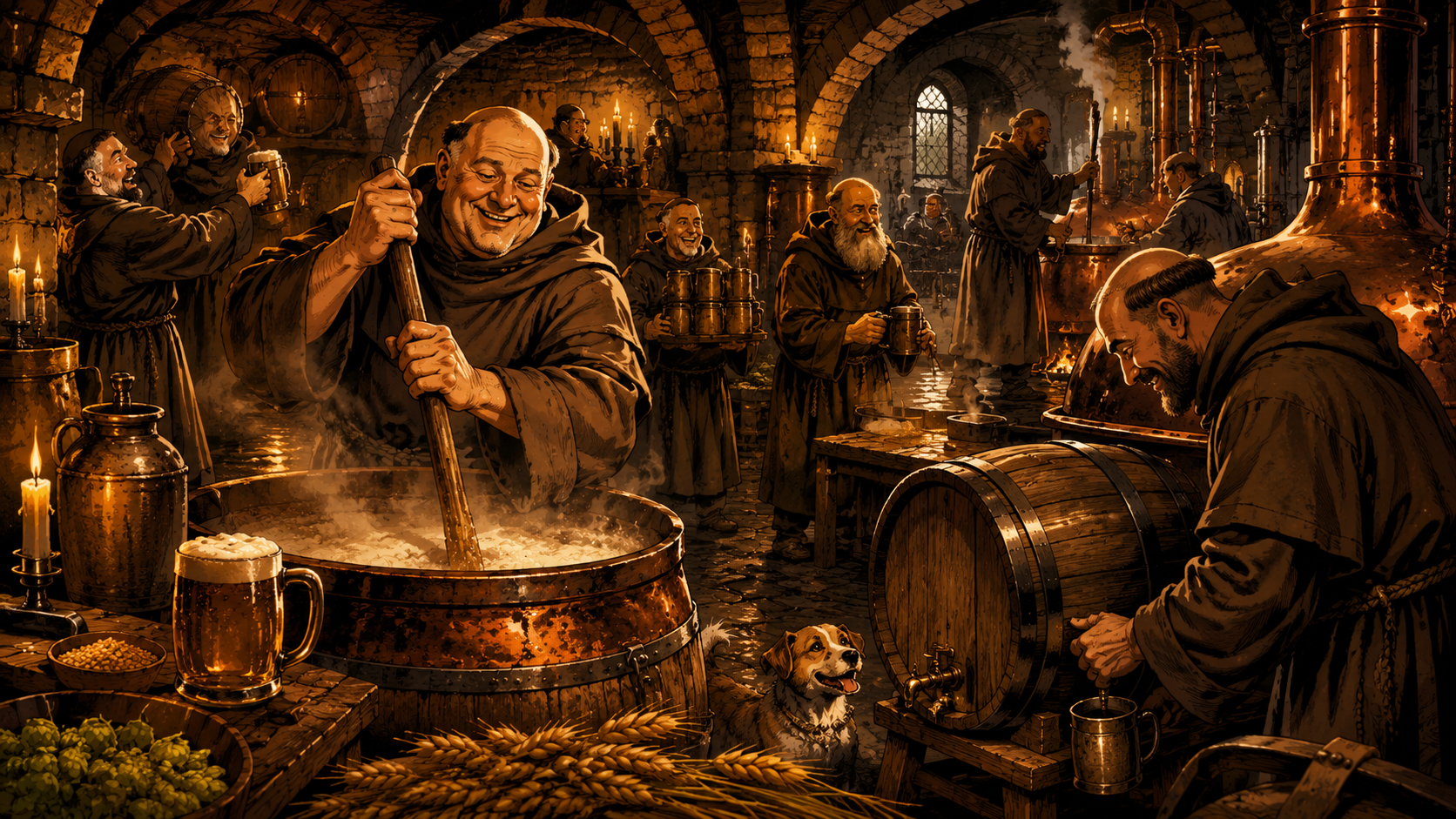
Monks did not invent beer. Beer is far older than medieval monasteries. Ancient Sumer, Babylon, Egypt, China, and other early grain cultures already had fermented grain traditions long before abbey cellars entered the story.
Monks mattered because they helped preserve, refine, record, and repeat brewing practices. They were important stewards, not the beginning of beer itself. The abbey gets a chapter, not the entire book.
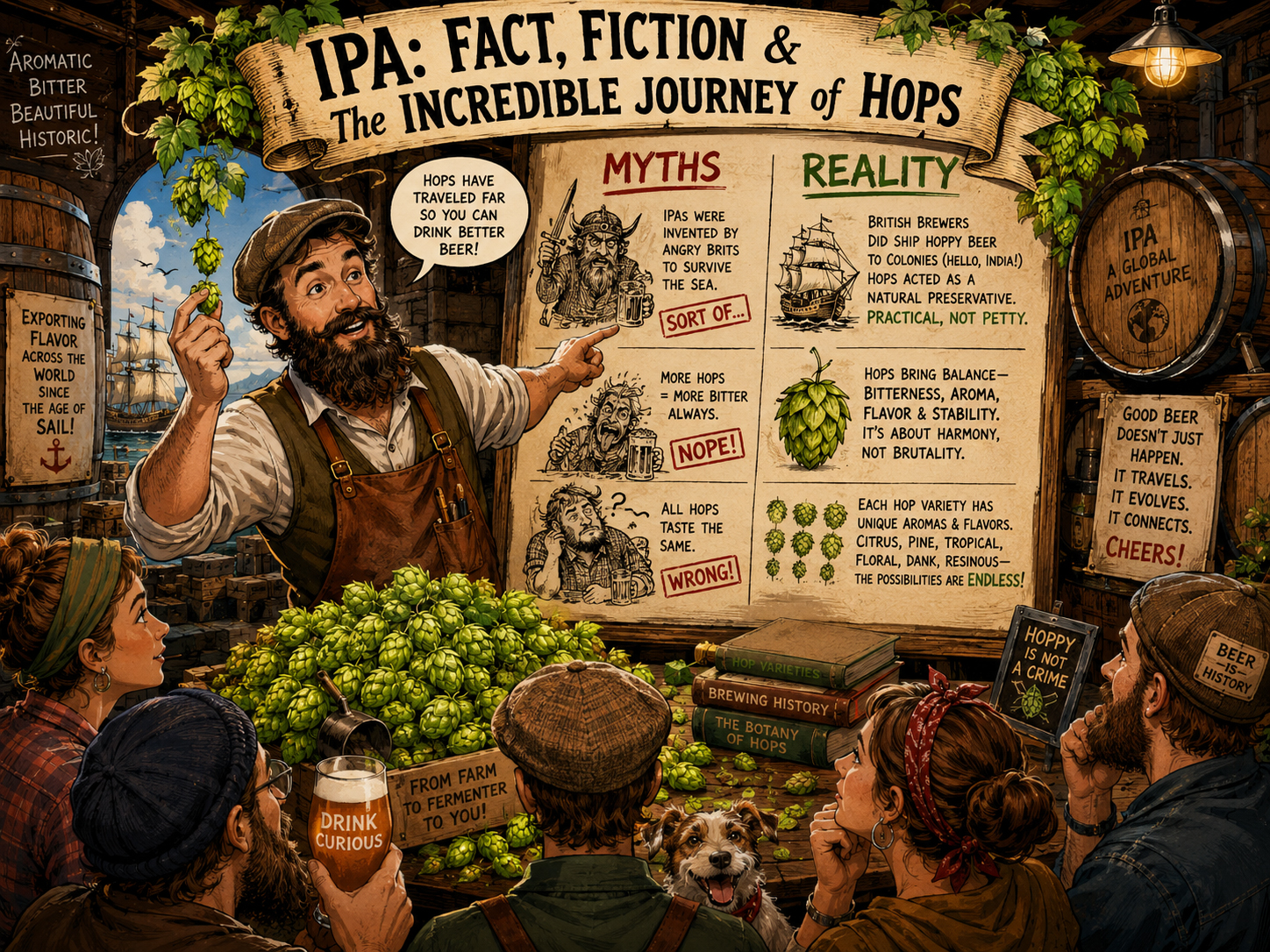
Myth 7: IPA has one simple origin story.
IPA history is often told as a neat tale: extra hops were added so beer could survive the voyage to India. Preservation and shipping are part of the story, but the full history is messier. Porter, pale ales, trade routes, brewery practices, market demand, changing tastes, and later mythmaking all matter.
The Foam Detective does not ban IPA legends. He just requires them to wear a seatbelt and bring evidence.
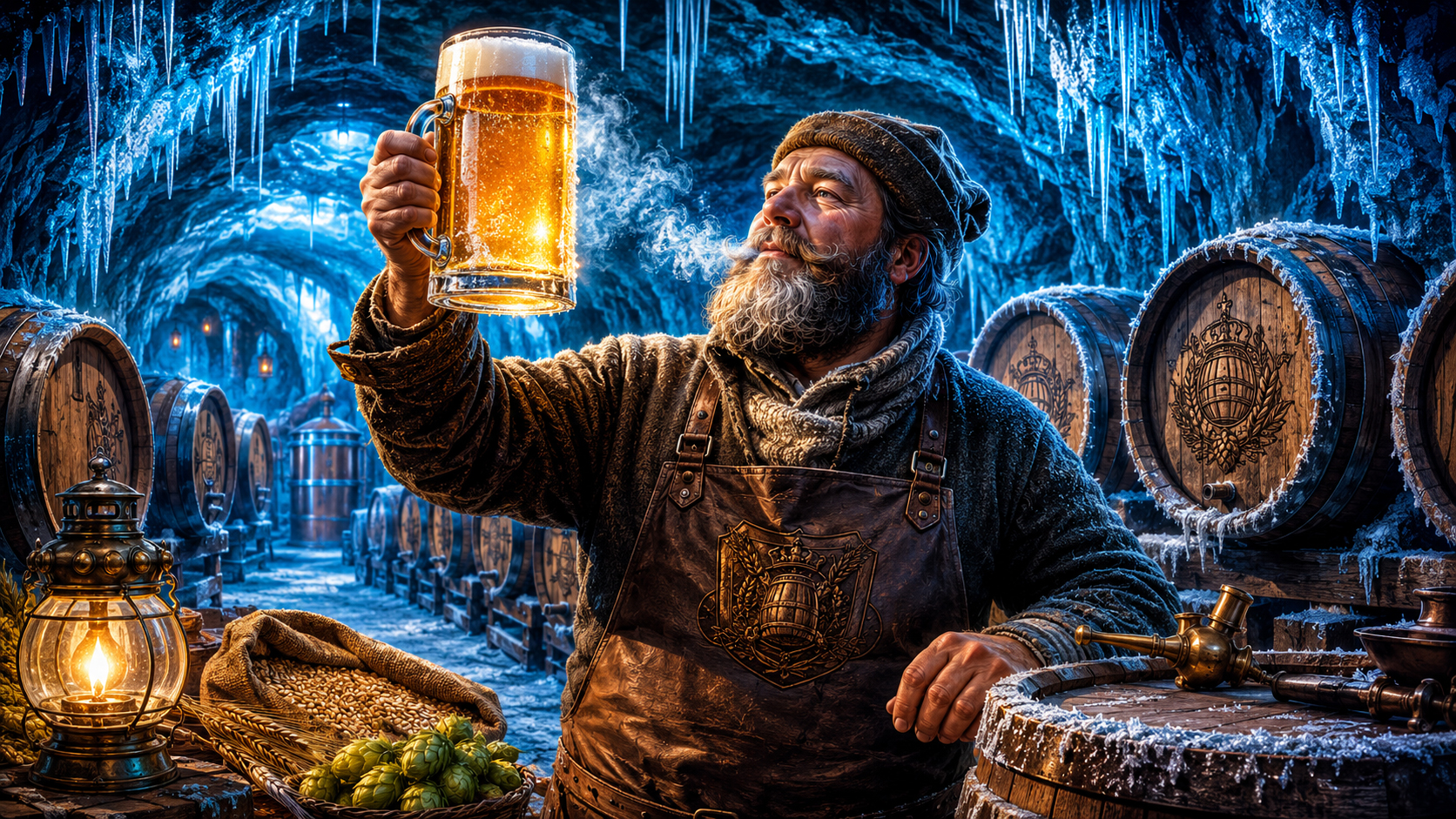
Myth 8: Lager is boring.
Bad lager can be boring. Great lager is hard. Clean lager gives the brewer fewer places to hide because flaws stand out. Temperature control, yeast health, fermentation management, patience, and storage all matter.
A well-made lager can be elegant, crisp, subtle, refreshing, bitter, malty, dry, floral, spicy, bready, or deeply satisfying. It is not boring. It is disciplined. There is a difference.
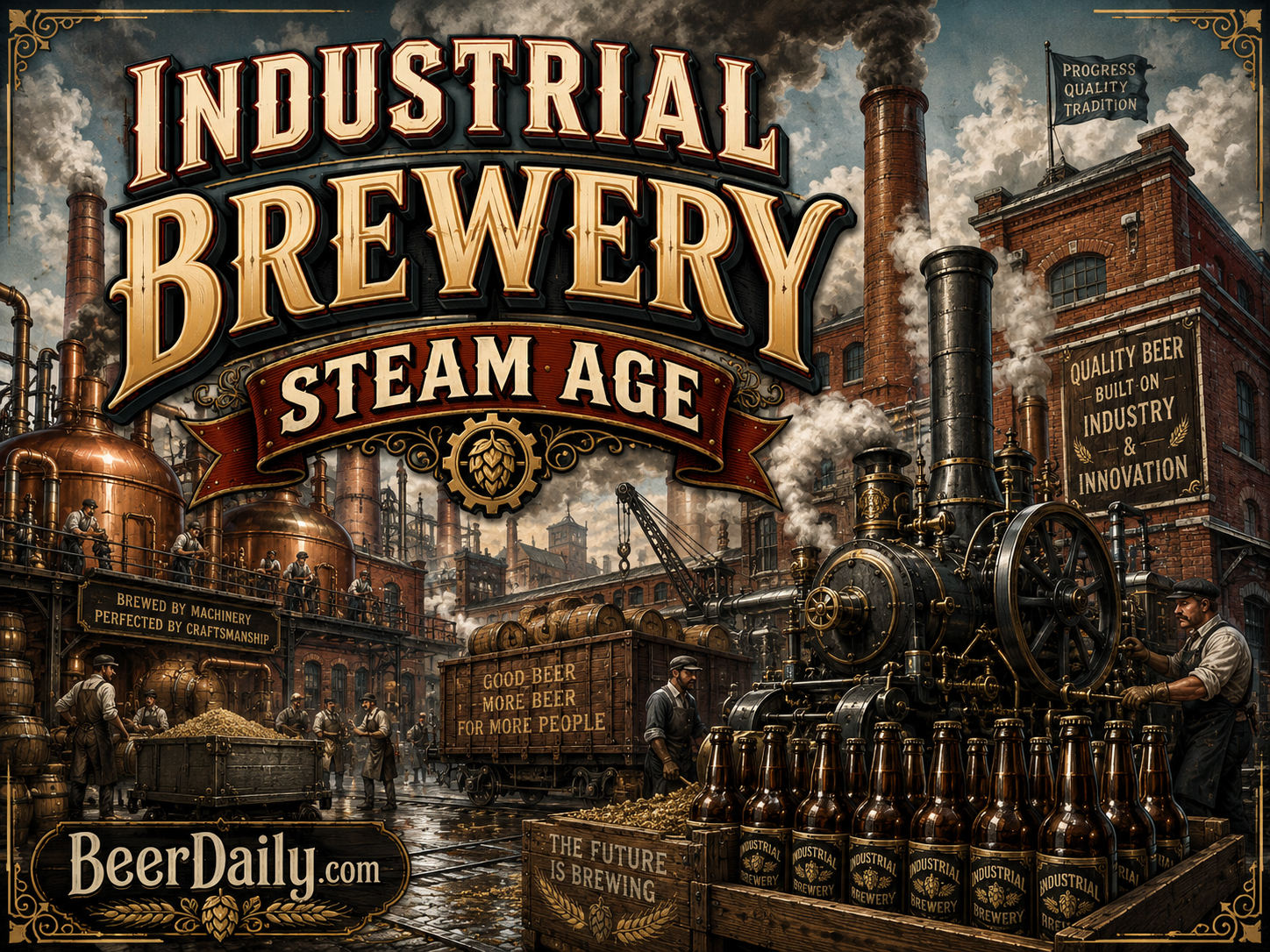
Myth 9: Industrial beer has no historical value.
Industrial beer can be criticized for standardization, consolidation, and flattened flavor. But it also represents massive technical achievement: refrigeration, sanitation, packaging, distribution, quality control, yeast management, railroads, glass, branding, and scale.
The history is not “small good, big bad.” The better history asks what industrial brewing solved, what it damaged, and how it changed what millions of people expected beer to be.
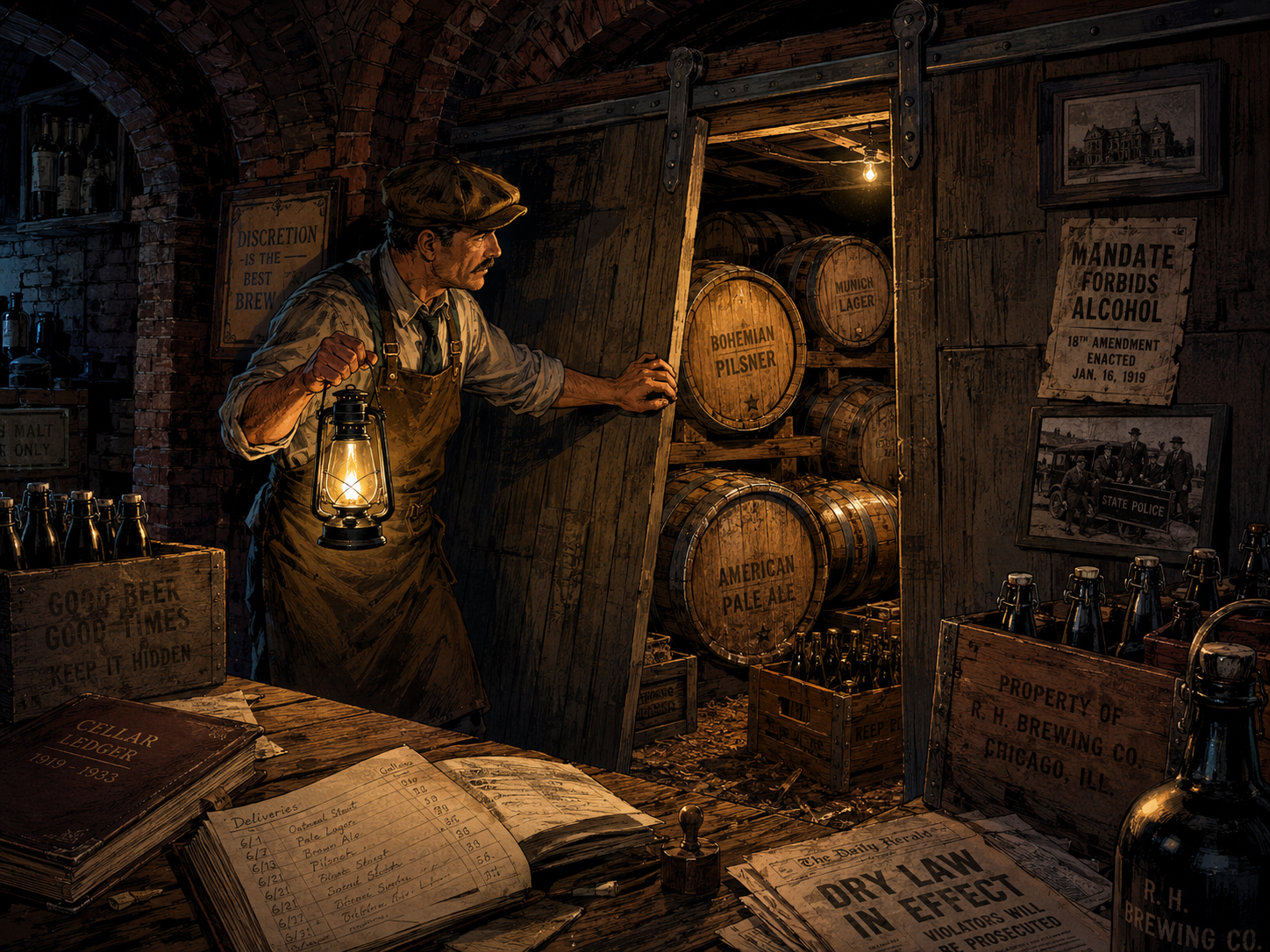
Myth 10: Prohibition made beer disappear.
Prohibition devastated legal brewing, but beer did not vanish. Breweries pivoted to near beer, soft drinks, malt products, ice cream, or other goods. Some closed. Some survived. Illegal production, smuggling, and speakeasy culture also became part of the story.
Prohibition did not erase beer. It pushed beer into loopholes, basements, disguise, law enforcement, and comeback plans.
Myth 11: Craft beer is automatically better.
Craft beer reopened beer’s flavor map and restored local brewing energy. But “craft” is not a magic spell. Small breweries can make great beer, mediocre beer, or beer that tastes like a candle shop fell into a cereal bowl. Large breweries can make technically excellent beer.
The best craft beer combines creativity, freshness, skill, sanitation, consistency, and a reason to exist beyond putting a pun on the label.
Myth 12: Beer history is just drinking history.
Beer history includes drinking, but it is much larger. It is agricultural history, urban history, religious history, labor history, women’s history, taxation history, technology history, industrial history, refrigeration history, and local community history.
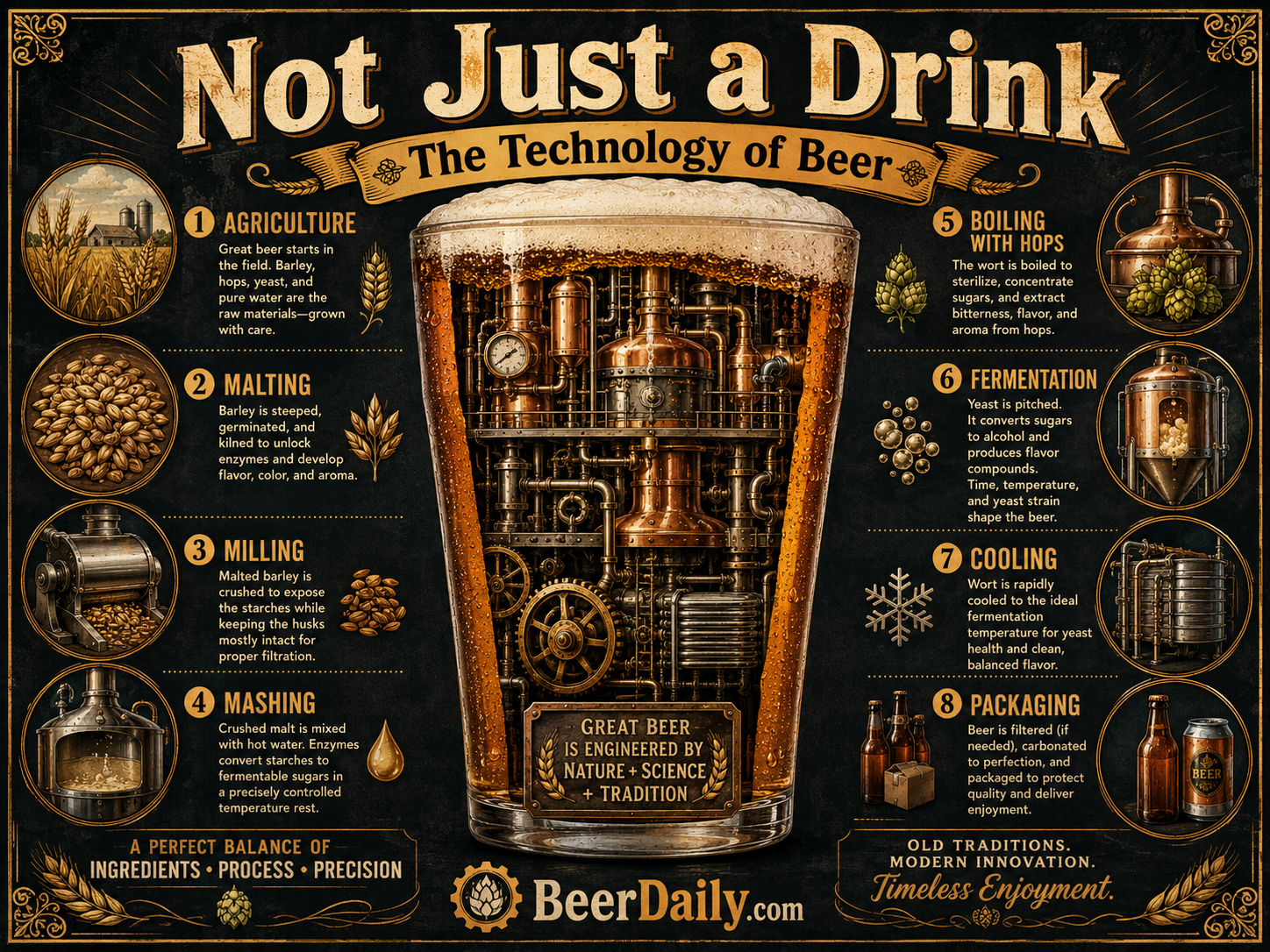
A glass of beer contains grain fields, water chemistry, yeast behavior, kilns, mills, kettles, workers, barrels, bottles, laws, railroads, cellars, refrigeration, marketing, and memory. Beer is not just what people drank. It is what people built around the drink.
The Foam Goblin’s favorite trick
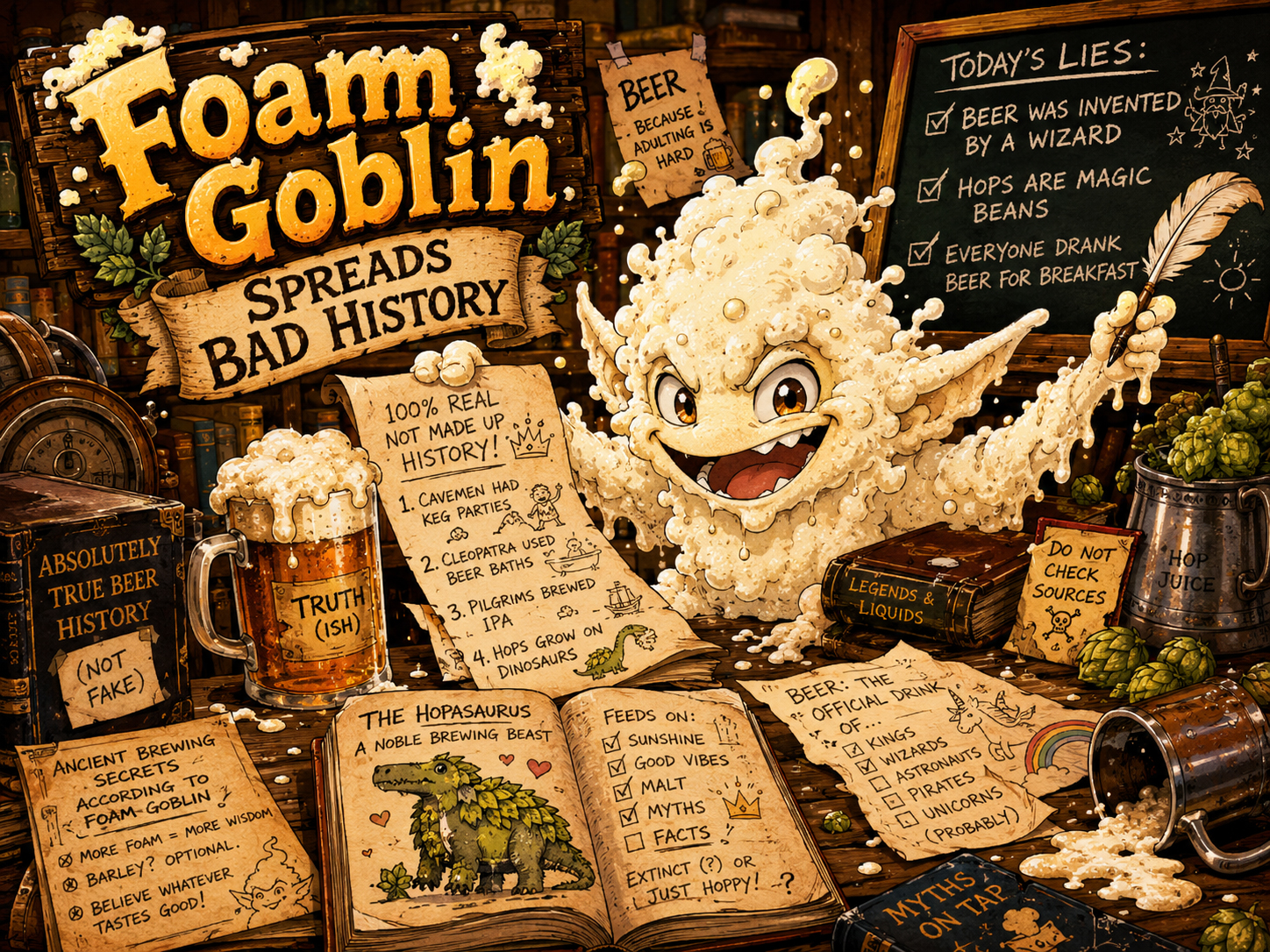
The Foam Goblin loves simple stories because simple stories travel fast: “Everyone drank beer because water was bad.” “Monks invented beer.” “Dark beer is stronger.” “IPA was invented exactly one way.” “Craft is always better.” These claims are easy to repeat and hard to clean off the bar.
BeerDaily’s answer is not to make history boring. It is to make the true version more fun than the fake one.
The BeerDaily rule
A good beer story should be funny, vivid, and honest. It can have monks, sailors, workers, tax goblins, hop samurai, refrigeration madames, and dramatic barrels. But when the story makes a factual claim, it has to earn its place at the table.
The truth is already strange enough. Beer began with grain and became civilization, prayer, wage, trade, industry, law, rebellion, craft, and community. Bad myths are not needed. The real story has better foam.