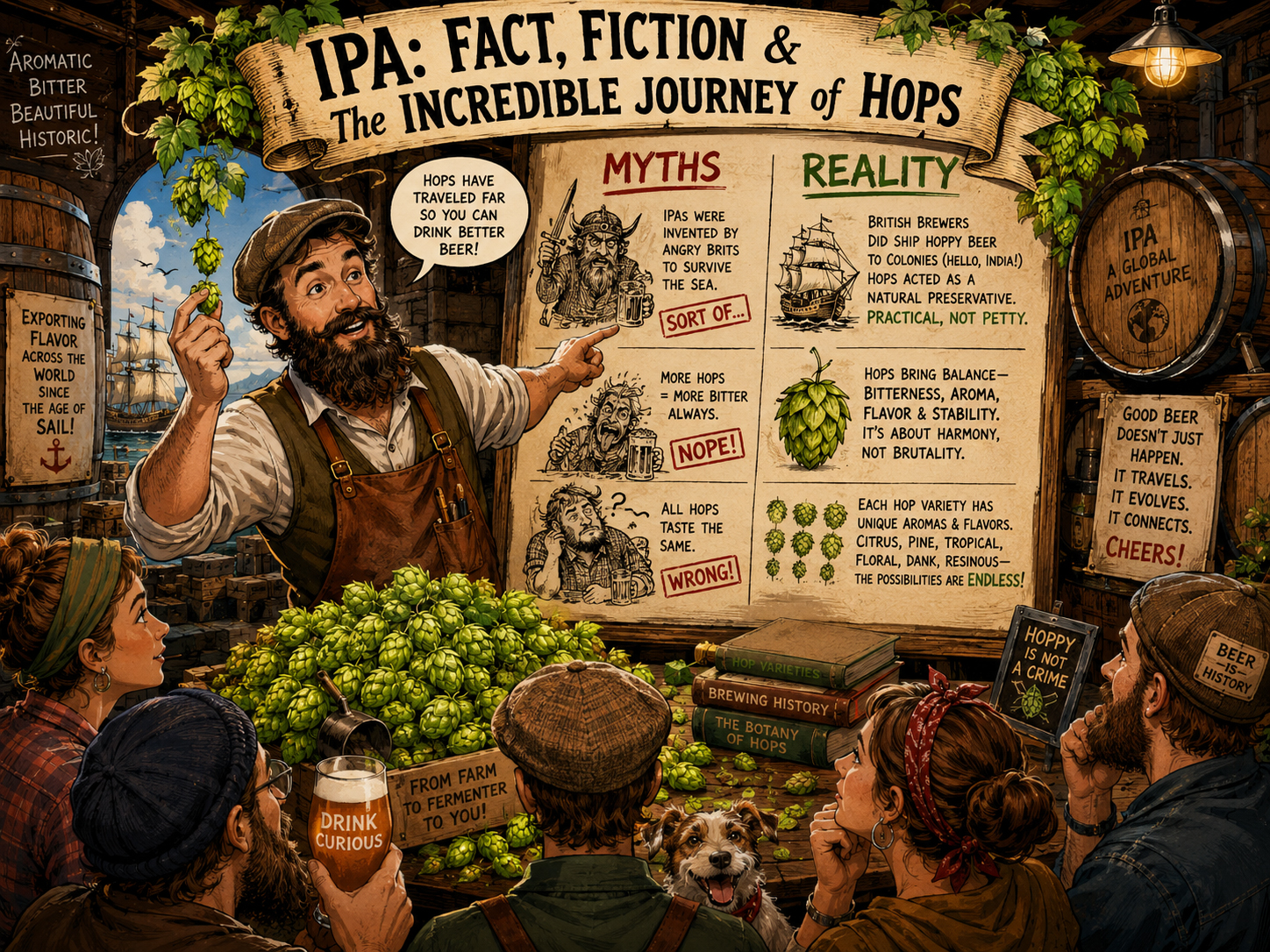
The famous IPA story
The popular IPA story is easy to remember: beer had to survive the long voyage from Britain to India, so brewers added more hops, and India Pale Ale was born. It is tidy, dramatic, and useful at parties.
It is also too simple. Like many beer myths, it contains a piece of truth wrapped in too much certainty. Hops can help beer keep better. Export markets mattered. India mattered to the style’s name and story. But IPA did not appear from one magic hop decision on one heroic afternoon.
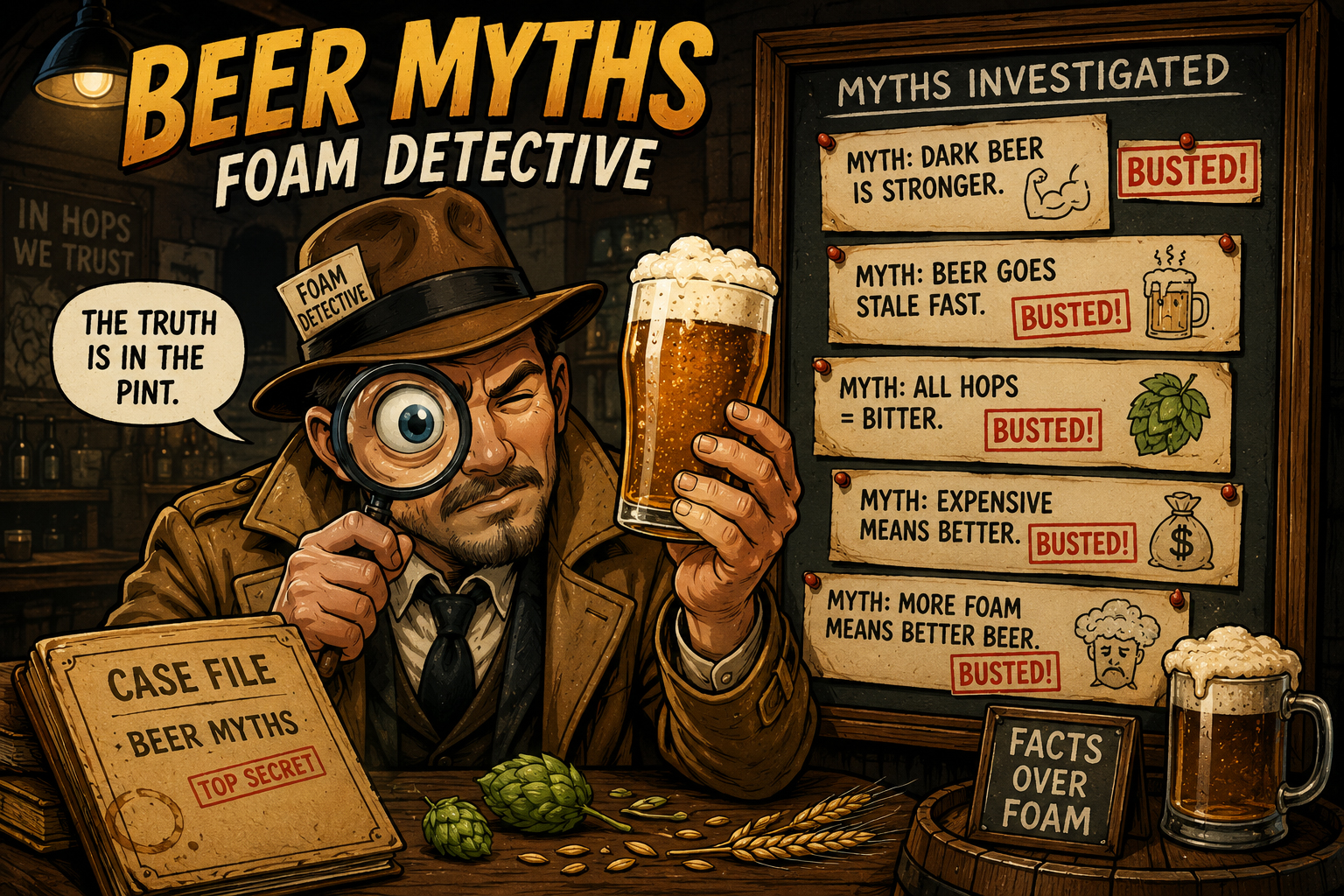
Foam Detective says: “If the story fits too neatly on a coaster, check the back of the coaster.”
Hops did help beer travel.
Hops are important because they do several jobs at once. They add bitterness, contribute aroma, and help beer resist some spoilage problems. In a world before modern refrigeration, stainless steel, pasteurization, and controlled distribution, that mattered.
This is why the IPA myth has staying power. It is not nonsense from top to bottom. Hops really were useful for stability. Beer really did travel. The error is turning those truths into a single simple origin story.
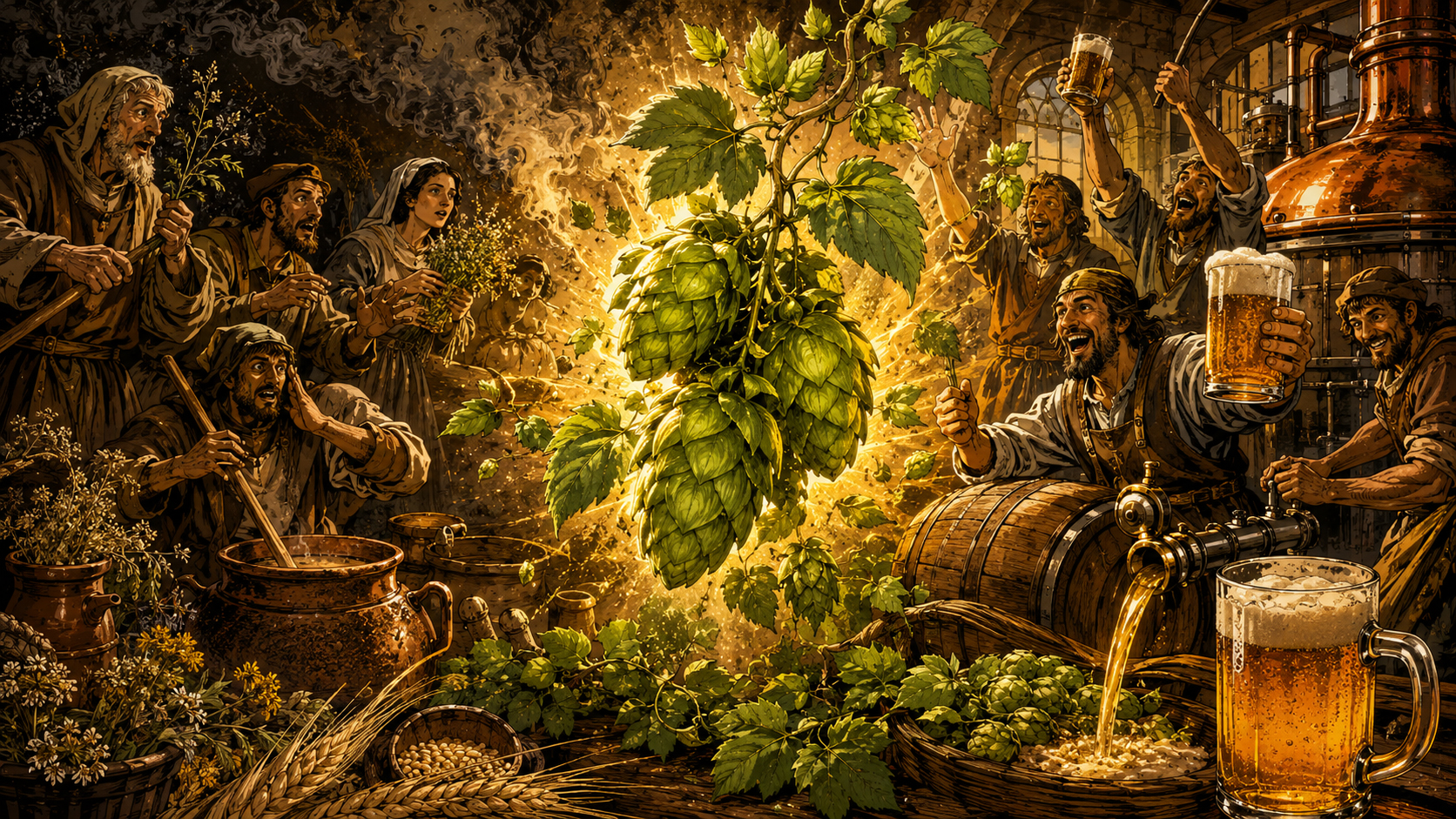
Pale ale existed before the IPA myth got loud.
IPA belongs to the larger history of pale ale. Pale malt, changing fuel technology, urban brewing, export trade, and consumer preference all shaped the beers that eventually became associated with India Pale Ale.
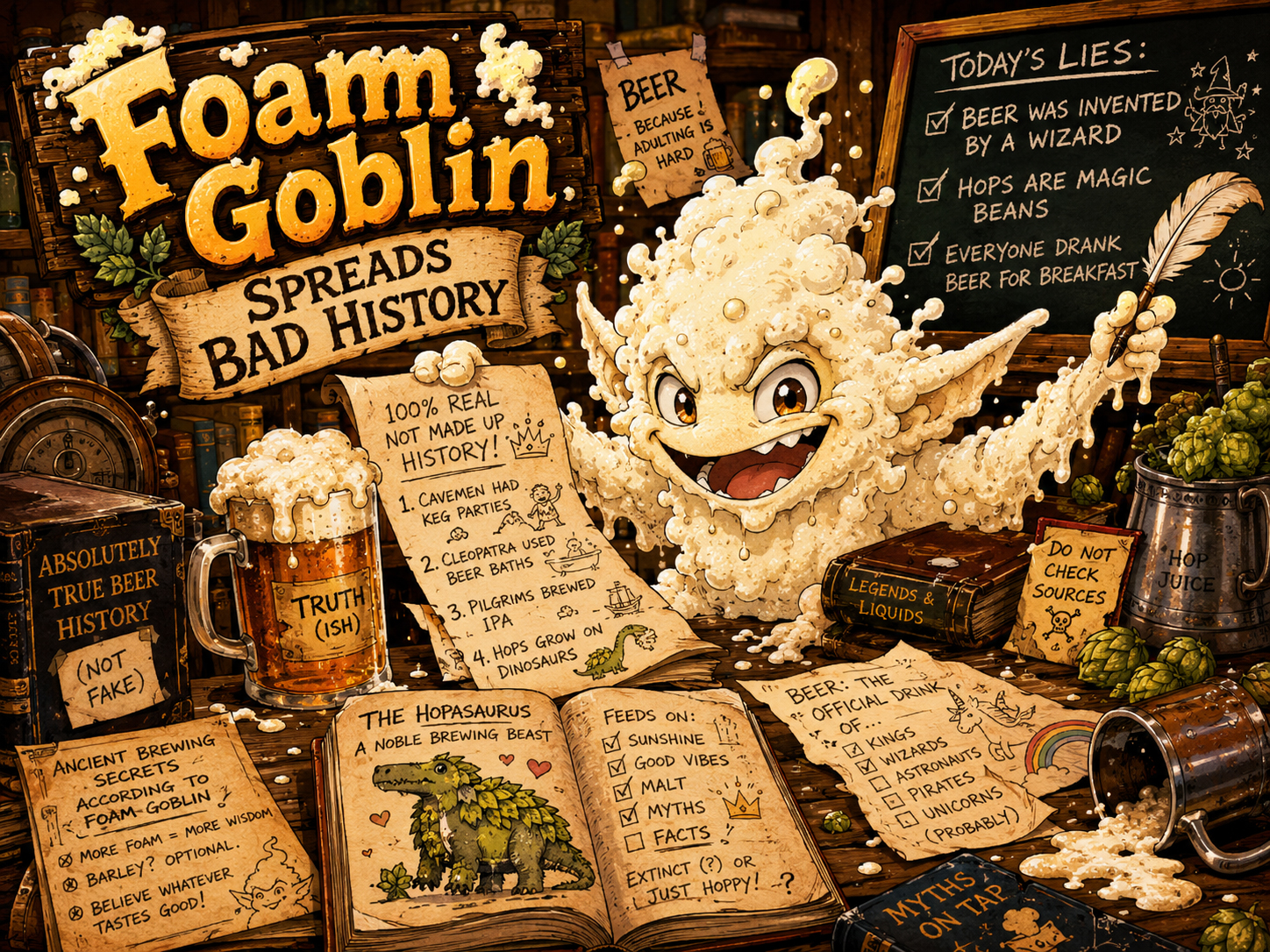
Foam Goblin likes to start the story with a ship because ships look dramatic. Professor Pint starts with malt, breweries, markets, and records because he is less fun at first but more useful by the end.
Porter also traveled.
One reason the simple IPA legend is suspicious is that other beers traveled too. Porter was a major export beer and an important part of British beer history. Pale ale was not the only beer capable of moving through trade networks.
That does not make IPA unimportant. It just means the story belongs to a wider export-beer world, not a single lonely barrel bravely crossing the ocean with extra hops and a theme song.
India mattered — but not like a cartoon.
India mattered as a market, a naming context, and a colonial trade destination. But the history involves commercial decisions, changing tastes, brewery competition, transport, preservation concerns, and later storytelling.
BeerDaily does not erase India from IPA. BeerDaily simply refuses to let Foam Goblin reduce the whole story to “hot boat plus more hops equals beer.”
Why the myth is so sticky
The standard IPA origin story survives because it has everything a good tavern tale wants:
- a long voyage;
- a practical brewing problem;
- a heroic ingredient;
- a memorable name;
- a simple cause-and-effect structure;
- just enough truth to feel trustworthy.
Unfortunately, history does not always cooperate with good marketing copy.
The hop’s real role
Hops were genuinely powerful in beer history. They helped balance sweetness, added aroma, improved stability, and supported trade. Hops also became agricultural commodities, commercial tools, and eventually modern craft-beer celebrities.
The mistake is not giving hops too much respect. The mistake is letting one hop story swallow the whole history.

Modern IPA changed the meaning again.
Modern craft beer gave IPA a new life. American IPA, double IPA, hazy IPA, session IPA, black IPA, cold IPA, and other variations turned hops into a language of aroma, freshness, bitterness, fruit, haze, and experimentation.
In many taprooms, IPA no longer means only an export-beer story. It means hop-forward identity. The modern IPA is as much a craft-beer movement as a historical inheritance.

IPA is not one flavor.
IPA can be bitter, floral, piney, citrusy, tropical, resinous, dry, hazy, juicy, crisp, dank, balanced, harsh, elegant, or ridiculous. The style family is broad because brewers keep reinterpreting hops.
Foam Detective’s tasting rule: “Do not judge all IPA by the worst one you met at a festival.”
What BeerDaily rejects
BeerDaily rejects the lazy version:
- Too simple: IPA was invented only because beer spoiled on ships to India.
- Too heroic: one brewer solved everything with extra hops.
- Too modern: old IPA tasted like today’s hazy taproom IPA.
- Too isolated: IPA developed apart from porter, pale ale, trade, and markets.
- Too certain: every IPA claim can be repeated without checking evidence.
What BeerDaily accepts
The better version is:
- Hops helped beer keep better and balance malt sweetness.
- Pale ale and export beer history matter.
- India was an important market and naming context.
- Trade, empire, brewery competition, and consumer taste all shaped the story.
- Modern craft IPA is a later reinterpretation, not a direct clone of early export pale ale.
Foam Detective’s IPA case file
Foam Detective opens the case file and labels the IPA myth: partly true, frequently oversold, historically interesting.
That is the BeerDaily sweet spot. Do not throw the story away. Do not swallow it whole. Pull it apart, keep the useful pieces, and return the overconfident parts to Foam Goblin for recycling.
The IPA lesson
IPA history matters because it shows how beer stories become legends. A real style grows through ingredients, technology, markets, trade, consumer taste, and storytelling. Then later generations simplify the story until it fits on a label.
BeerDaily moral: hops helped the beer travel, but myths travel even faster.