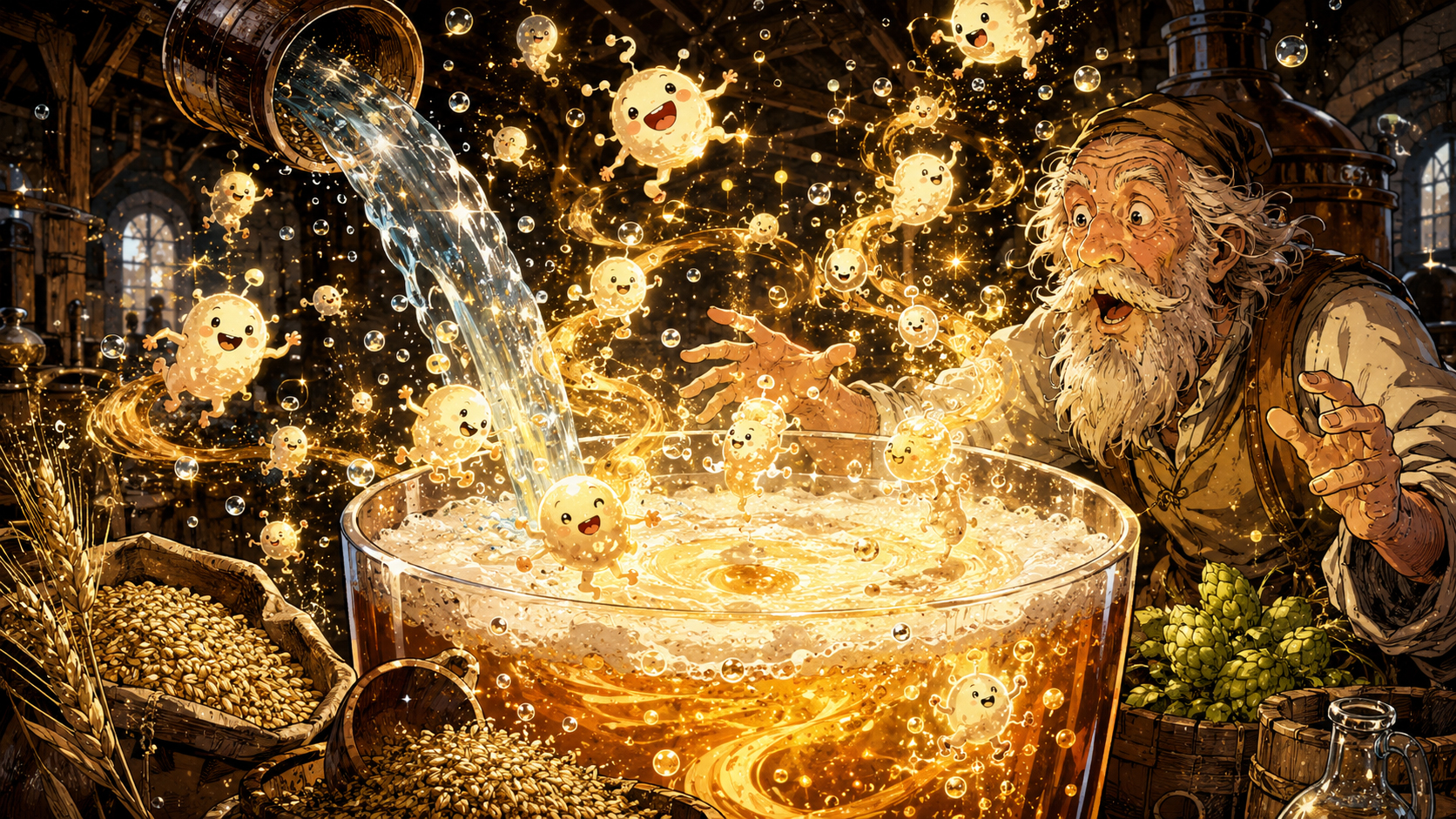
Opening scene: the cellar smells suspicious
A brewer enters the cellar and pauses. Something is wrong. The air is warm. A barrel burps sadly. A jar in the corner looks nervous. From behind the grain sacks comes a wet little laugh.
The Spoilage Goblin appears, carrying a cracked cup and wearing a cape made of bad storage decisions. “Sweet beer,” he hisses. “Warm cellar. Weak protection. My favorite buffet.”
Spoilage Goblin: “I bring sourness without permission.”
Professor Pint: “That is not a tasting note. That is a warning.”
Panel 1: beer has enemies
Beer is alive before it is stable. Heat, oxygen, wild microbes, poor vessels, time, and bad handling can all damage it. Before modern sanitation, refrigeration, sealed packaging, and lab control, spoilage was a serious threat.
Barley Boy hides behind a mash paddle. Yeast-chan rolls her eyes. “Everyone wants bubbles until they have to protect the batch.”
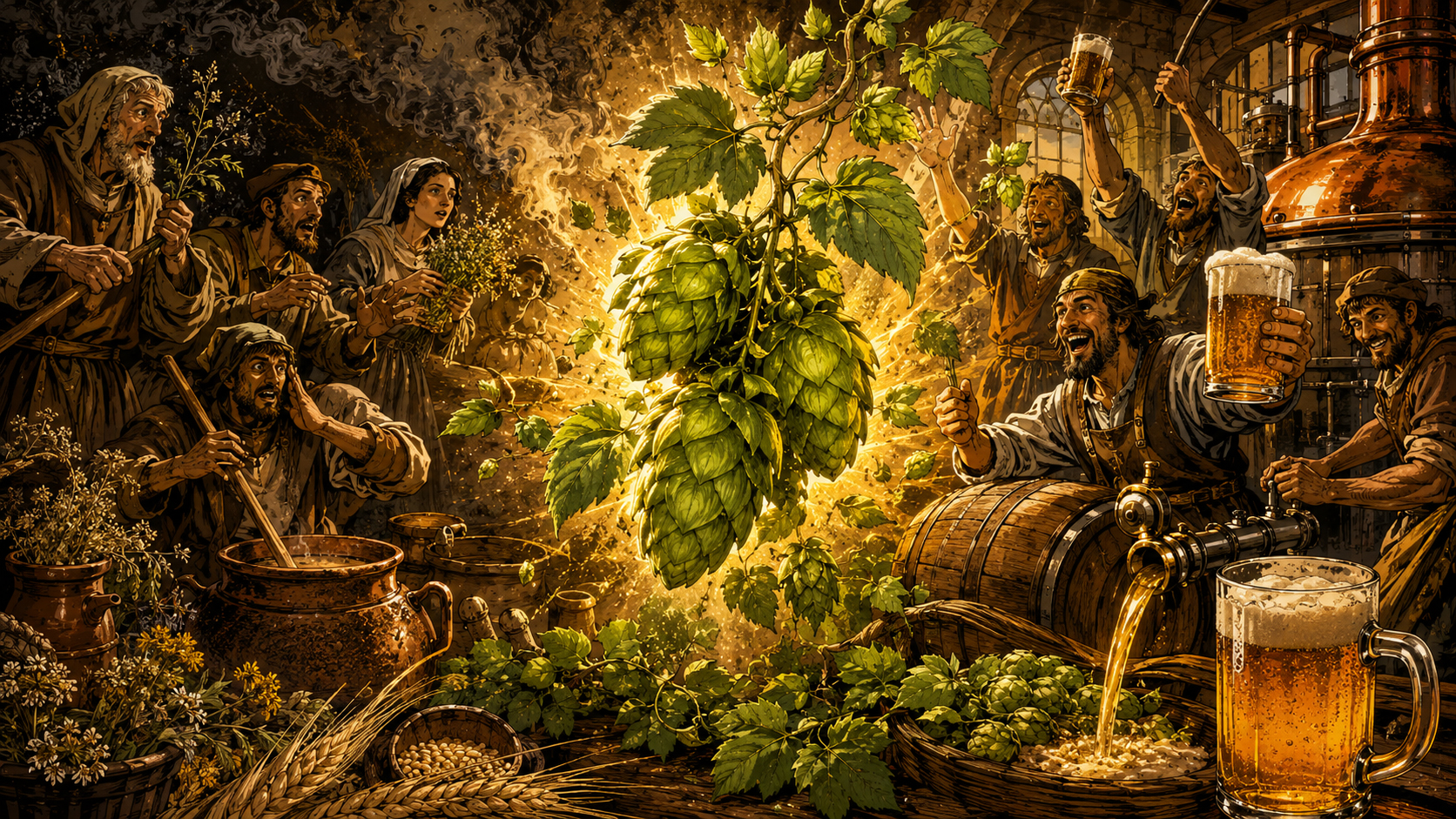
Panel 2: enter Hop Samurai
The cellar doors burst open. A green silhouette appears in the light. Hop Samurai steps forward, robes lined with hop leaves, sword drawn, expression calm.
“I am not here because beer began with hops,” he says. “I am here because hops became very useful.”
The Spoilage Goblin squints. “Useful how?”
Hop Samurai smiles. “Preservation. Bitterness. Aroma. Trade.”
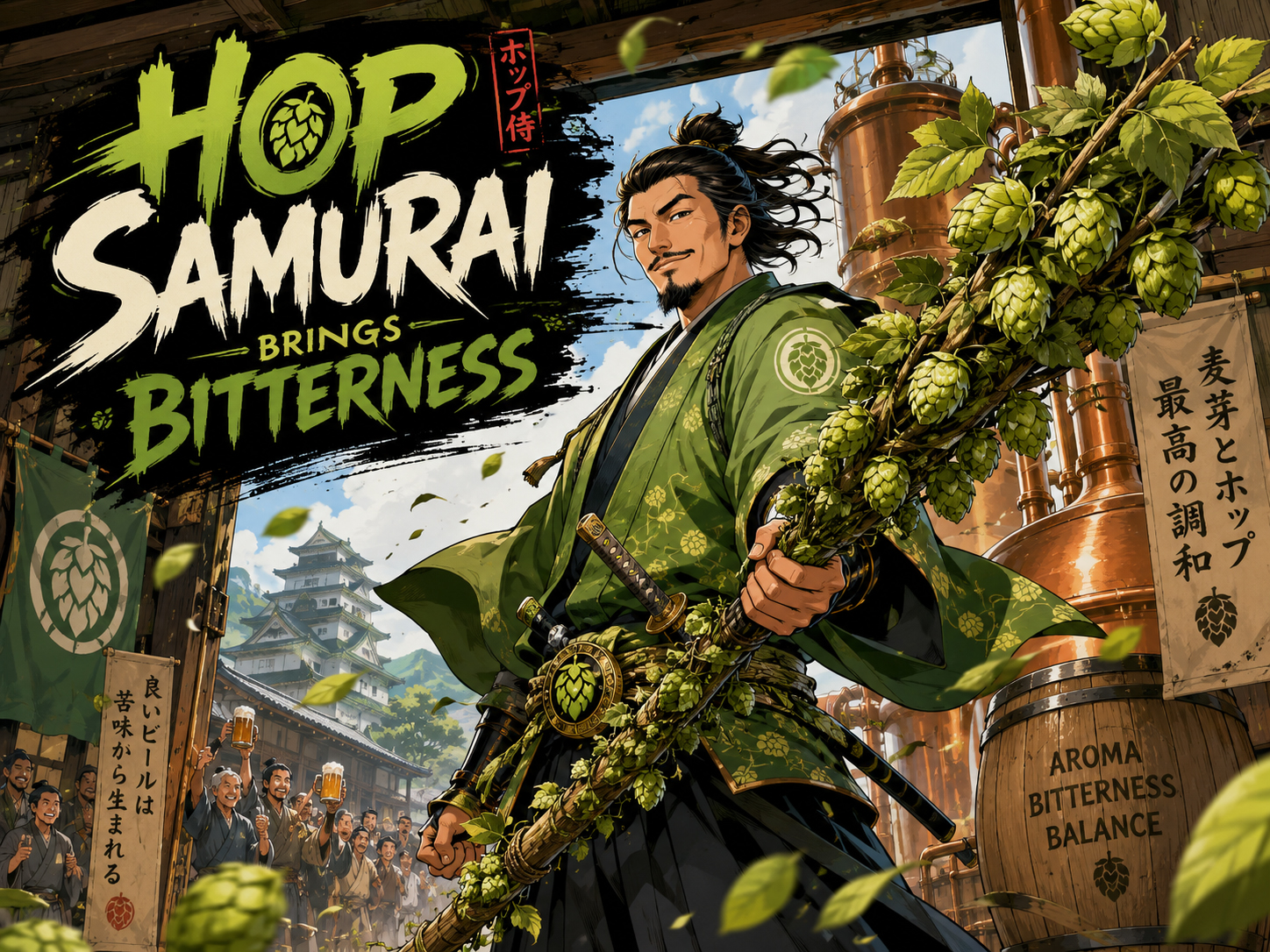
Panel 3: bitterness balances sweetness
Malt gives beer sweetness, body, bread, toast, caramel, and grain character. Without balance, beer can feel heavy or syrupy. Hops add bitterness that cuts through sweetness and makes the beer more drinkable.
Hop Samurai flicks one hop cone into the kettle. The sweet wort gasps. “I suddenly have structure,” it says.
Hop Samurai: “Bitterness is not anger. It is balance with eyebrows.”
Panel 4: aroma enters the battle
Hop Samurai opens a pouch. The cellar fills with herbal, floral, spicy, earthy, citrus, pine, and resinous notes. The Spoilage Goblin sneezes dramatically.
Hops are not only bitter. Different varieties and brewing methods can add many aromas. In later beer history, this aromatic power becomes one of the great playgrounds of brewers.
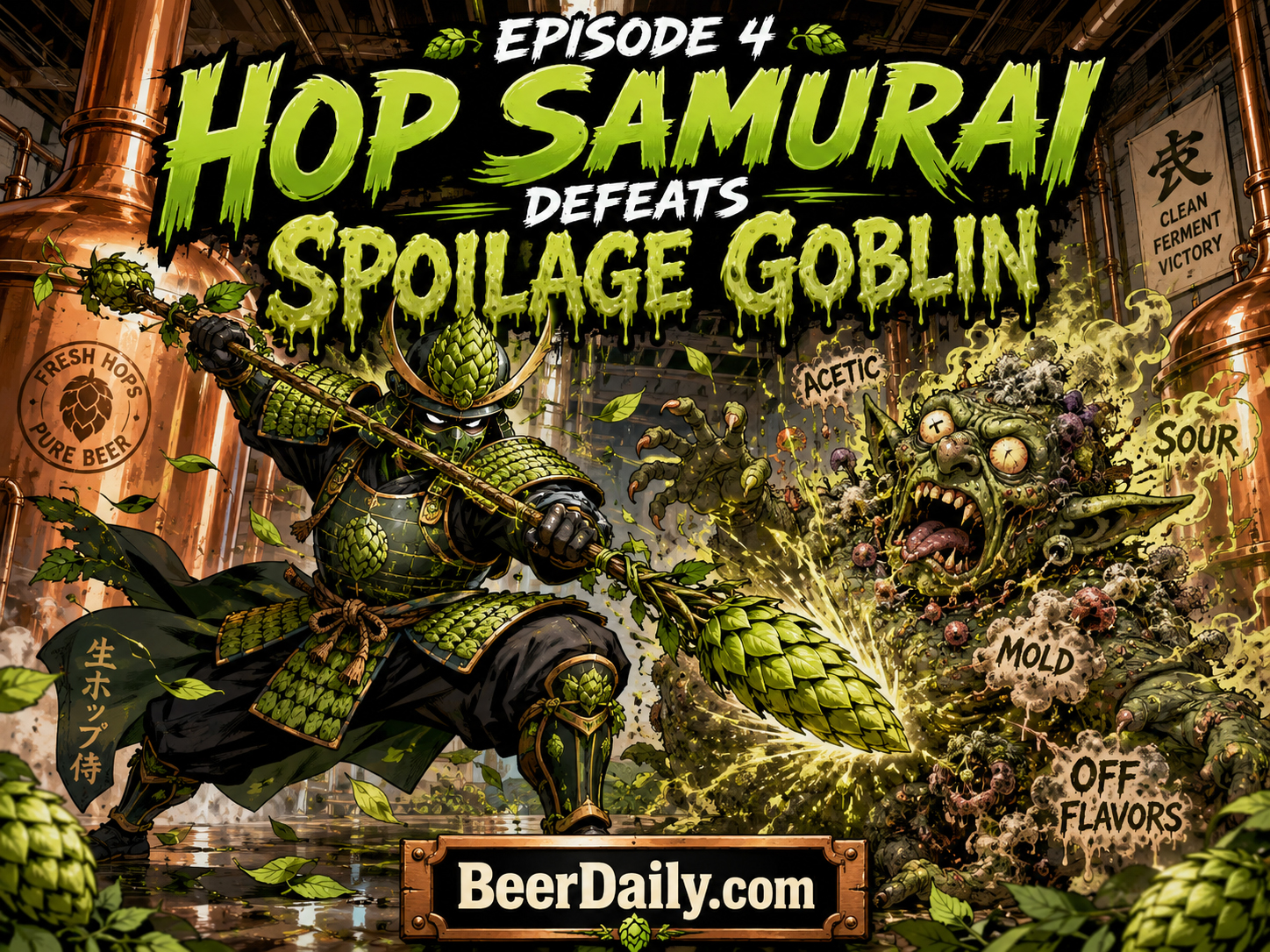
Panel 5: preservation strike
The Spoilage Goblin rushes toward the barrel. Hop Samurai blocks him with a swirl of green cones. “You may still cause trouble,” he says, “but this beer has better defenses now.”
Hops can help beer keep better by making it less friendly to some spoilage organisms. They were not magic, and they did not solve every storage problem, but they gave brewers an important advantage.
The barrel stops sweating. The brewer exhales. The goblin looks offended.
History note: hops rose gradually
Hops did not suddenly replace every herb and gruit mixture everywhere at once. Beer history is regional, gradual, and complicated. Different places used different ingredients, and hopped beer spread over time through brewing practice, trade, agriculture, law, taxation, and taste.
The real story is not “hops saved primitive beer.” The better story is that hops became an extremely successful answer to problems brewers had been solving many other ways.
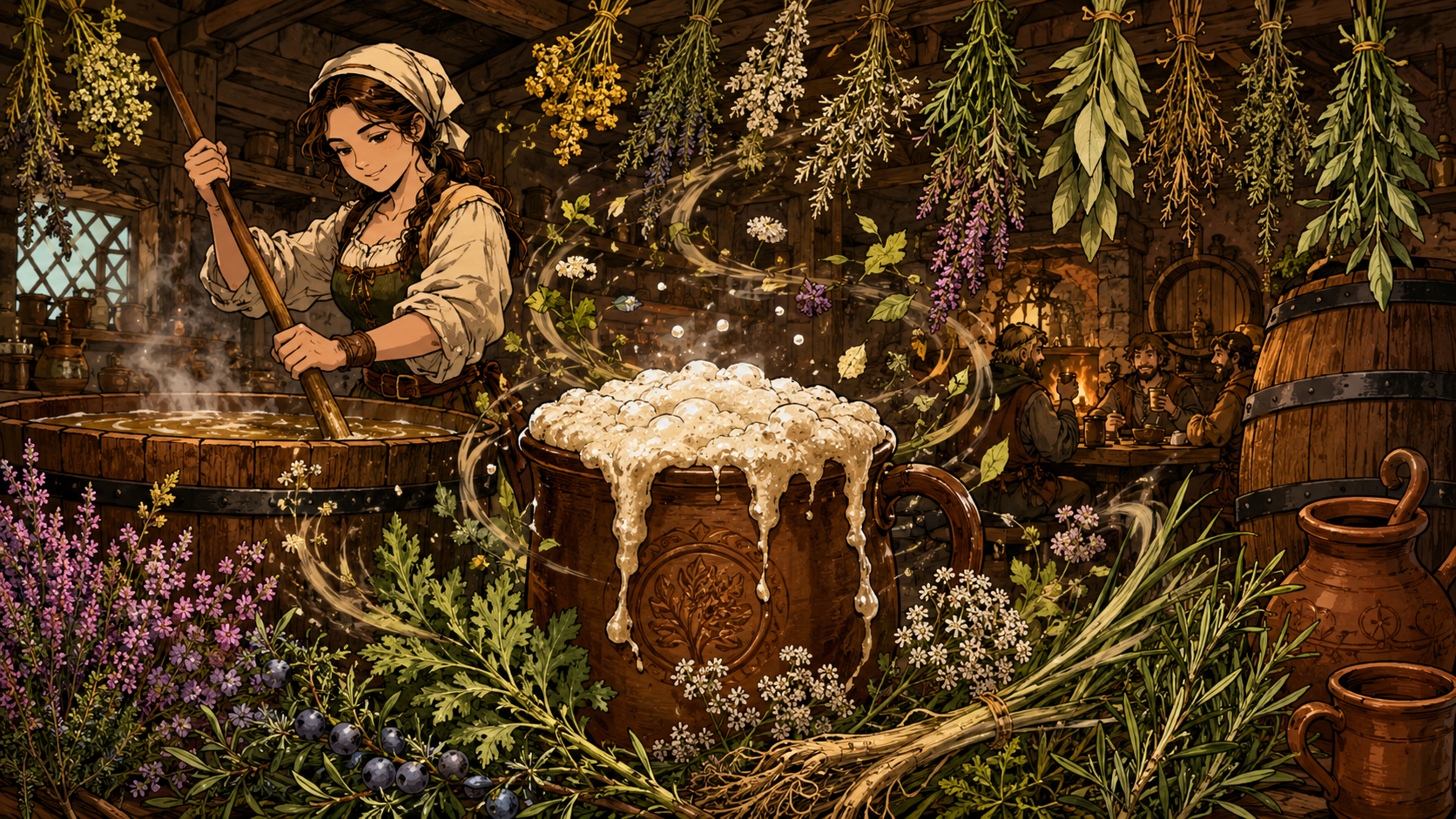
Panel 6: the gruit cabinet objects
A cabinet full of herbs creaks open. Yarrow, sweet gale, heather, rosemary, and mystery plants lean out. “Excuse us,” they say. “We were here first.”
Hop Samurai bows. “Respect. Beer before hops was diverse, local, herbal, smoky, sour, and strange. I do not erase you. I explain why I became popular.”
Professor Pint applauds. The Foam Goblin tries to turn this into a fake feud. The herb cabinet slams on his fingers.
Panel 7: trade changes the stakes
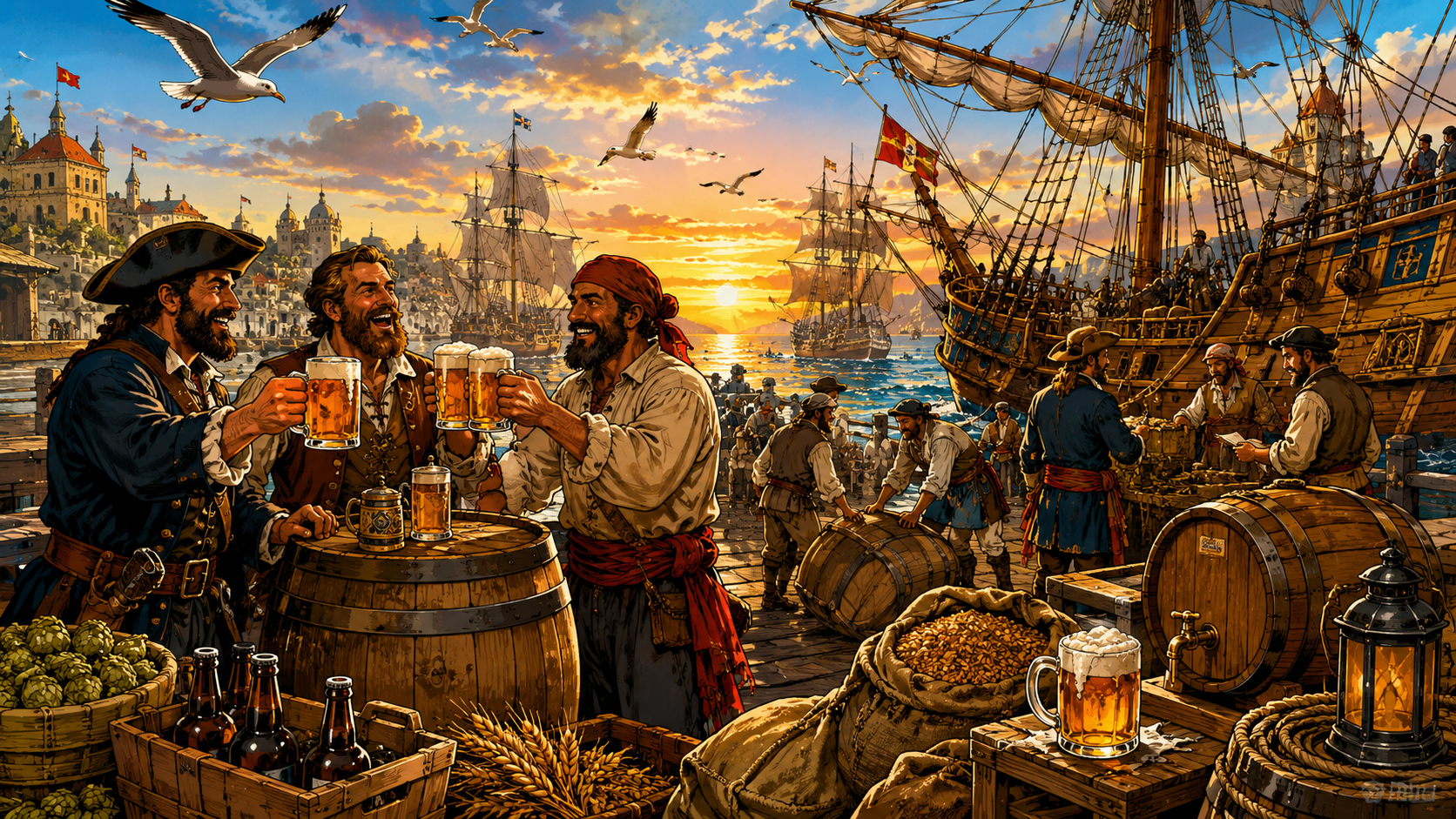
A merchant arrives with barrels and a ship schedule. “Can this beer travel?” he asks.
Hop Samurai points to the improved beer. “Farther than before, if the brewer does the rest correctly.” Preservation matters because trade matters. Beer that keeps better can move farther, reach more markets, and become part of larger commercial networks.
Panel 8: the Spoilage Goblin retreats
The Spoilage Goblin backs toward the cellar stairs. “Fine,” he says. “I will return when someone stores beer warm, lets oxygen in, ignores sanitation, or forgets the date code.”
Hop Samurai lowers his sword. “He is not wrong. Hops help. They do not replace good brewing.”
Yeast-chan: “Finally, someone said process matters.”
Barley Boy: “I thought the sword solved everything.”
Professor Pint: “That is how bad history starts.”
What the episode teaches
Hops changed beer because they solved several problems at once. They balanced malt sweetness, added aroma, helped preserve beer, supported trade, and eventually helped define what many people expected beer to taste like.
But hops were not the beginning of beer, and they were not the only flavoring tradition. The honest story respects both the pre-hop world and the hop revolution.
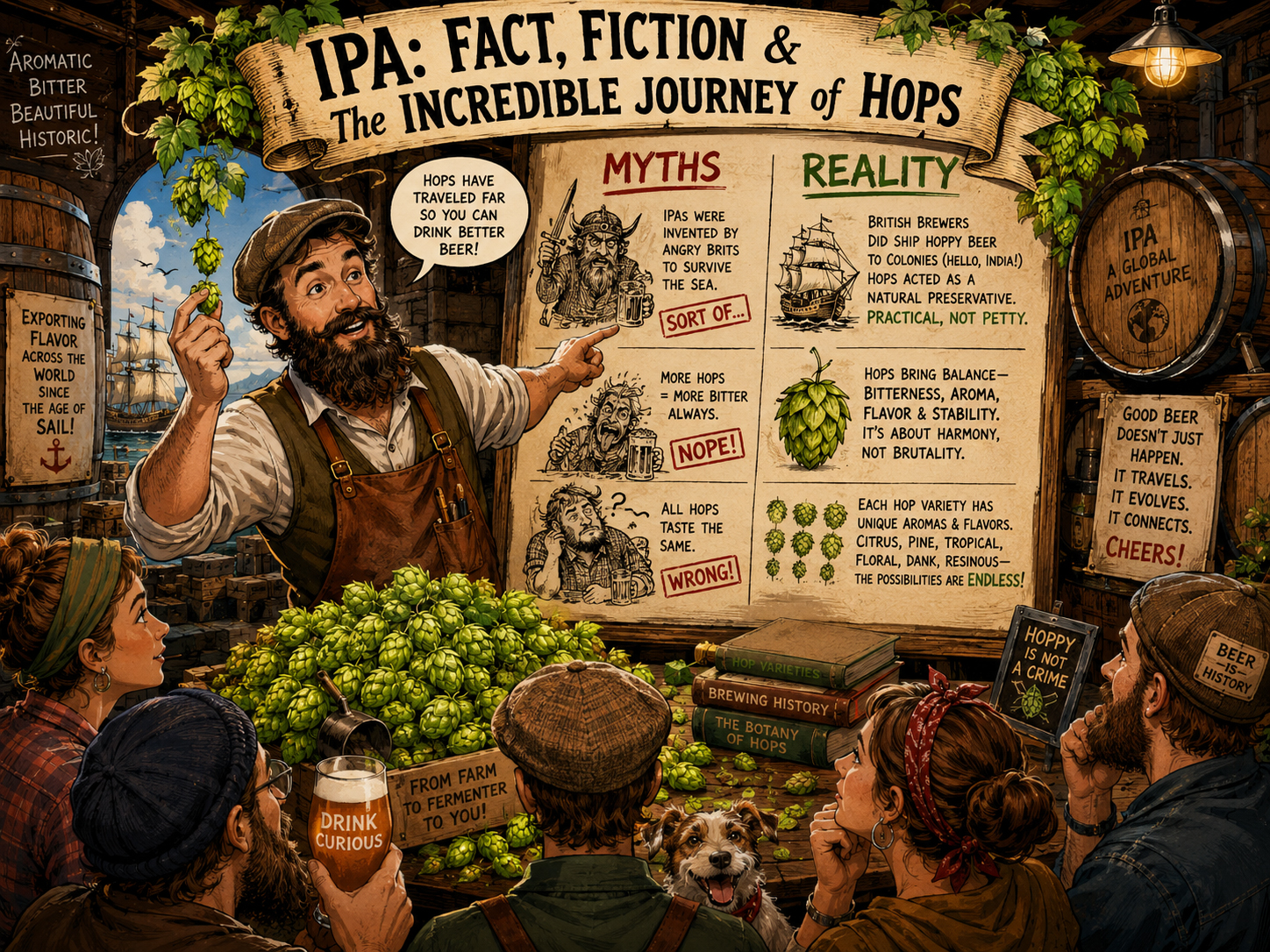
Foam Detective correction
The Foam Goblin loves saying, “Hops were always beer.” Wrong. He also loves saying, “Hops made beer modern overnight.” Also wrong. Hops became important through a long mix of brewing usefulness, agriculture, preservation, taste, trade, and regulation.
BeerDaily rule: respect the hop, but do not let the hop rewrite the ancient chapters it did not attend.
Episode moral
Beer before hops was a wide world of herbs, smoke, sourness, sweetness, wild fermentation, and local tradition. Beer after hops became more bitter, more stable, more transportable, and eventually more familiar to modern drinkers.
BeerDaily moral: the hop cone did not invent beer. It changed the route map.