Meet Madame Fermentation
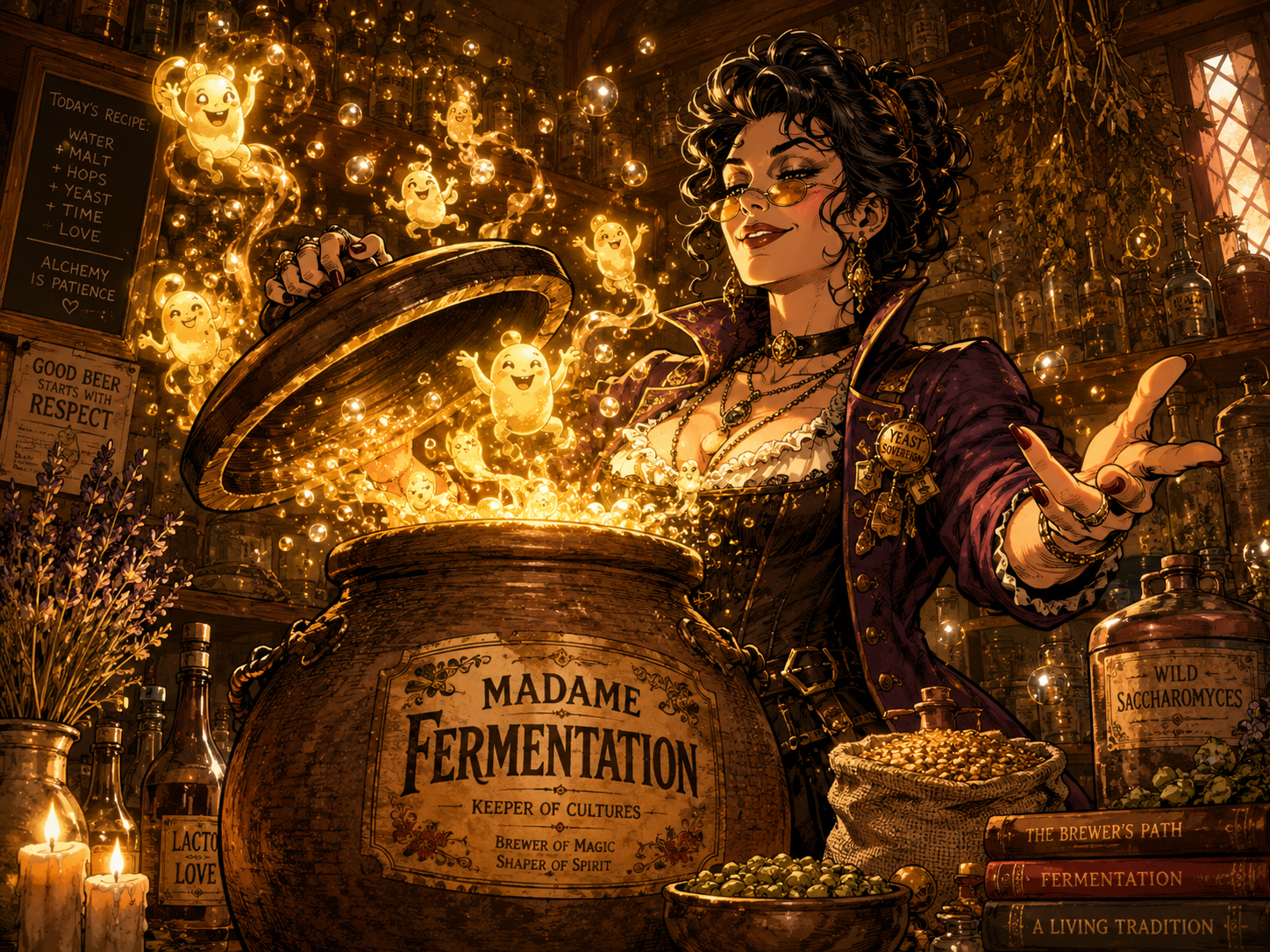
Madame Fermentation appears whenever sweet grain liquid is ready to become something more interesting. She wears amber robes, carries a jar key, and speaks in calm warnings like, “Time is an ingredient,” and “Do not anger the yeast.”
She represents the great transformation at the heart of beer: yeast consuming sugar and producing alcohol, carbon dioxide, aroma, and flavor. Without her, beer is only a sweet promise.
Madame Fermentation: “The brewer begins the story. The yeast finishes the chapter.”
The jar before the miracle
The scene begins with sweet wort resting inside a vessel. Barley Boy has done his part. Malt Sensei has taught the grain to release sweetness. The brewer has prepared the liquid. Everyone waits.
The jar looks ordinary, but Madame Fermentation knows better. A vessel is never just a vessel. It is a room where invisible life may go to work.
Yeast-chan clocks in
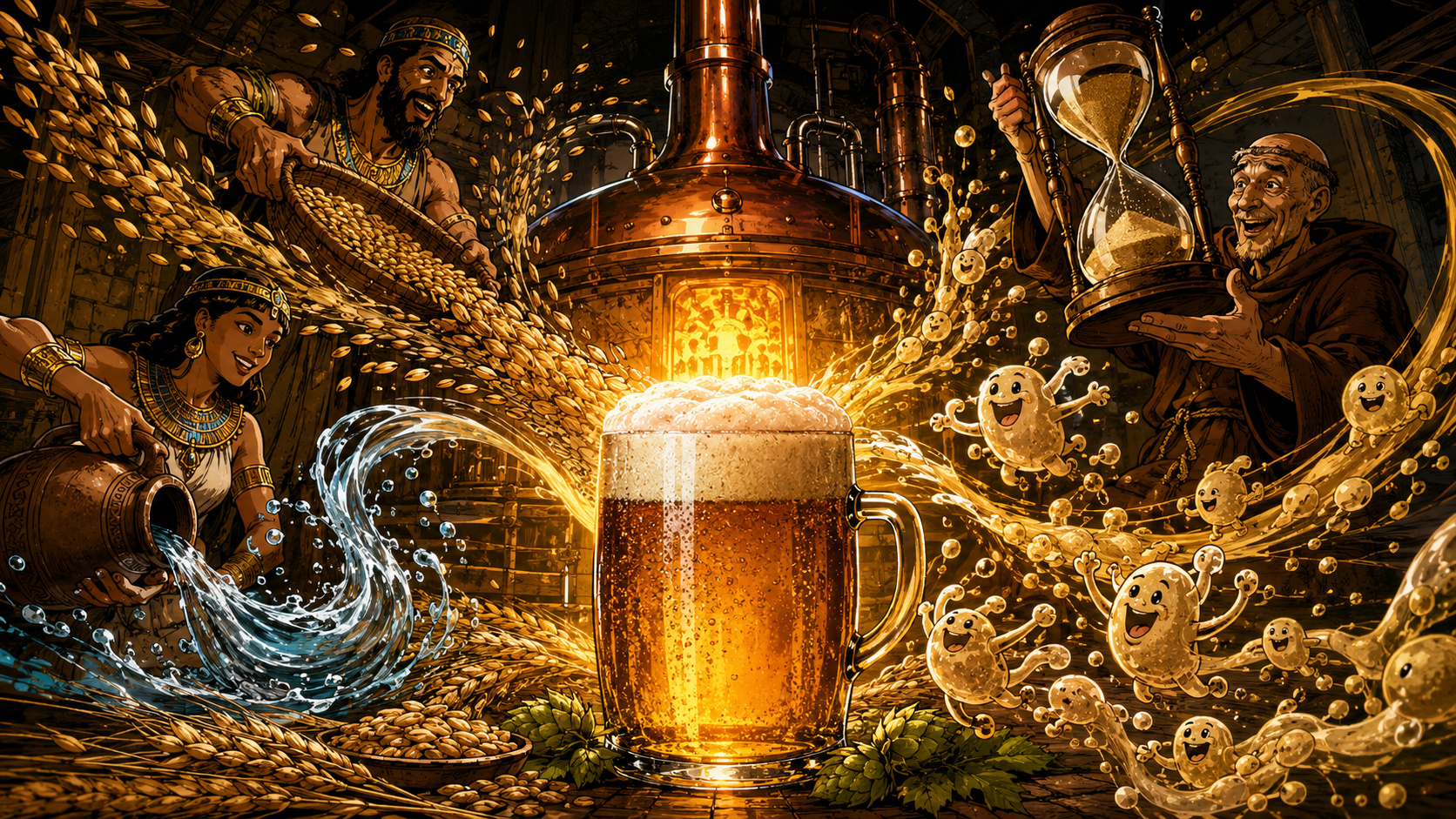
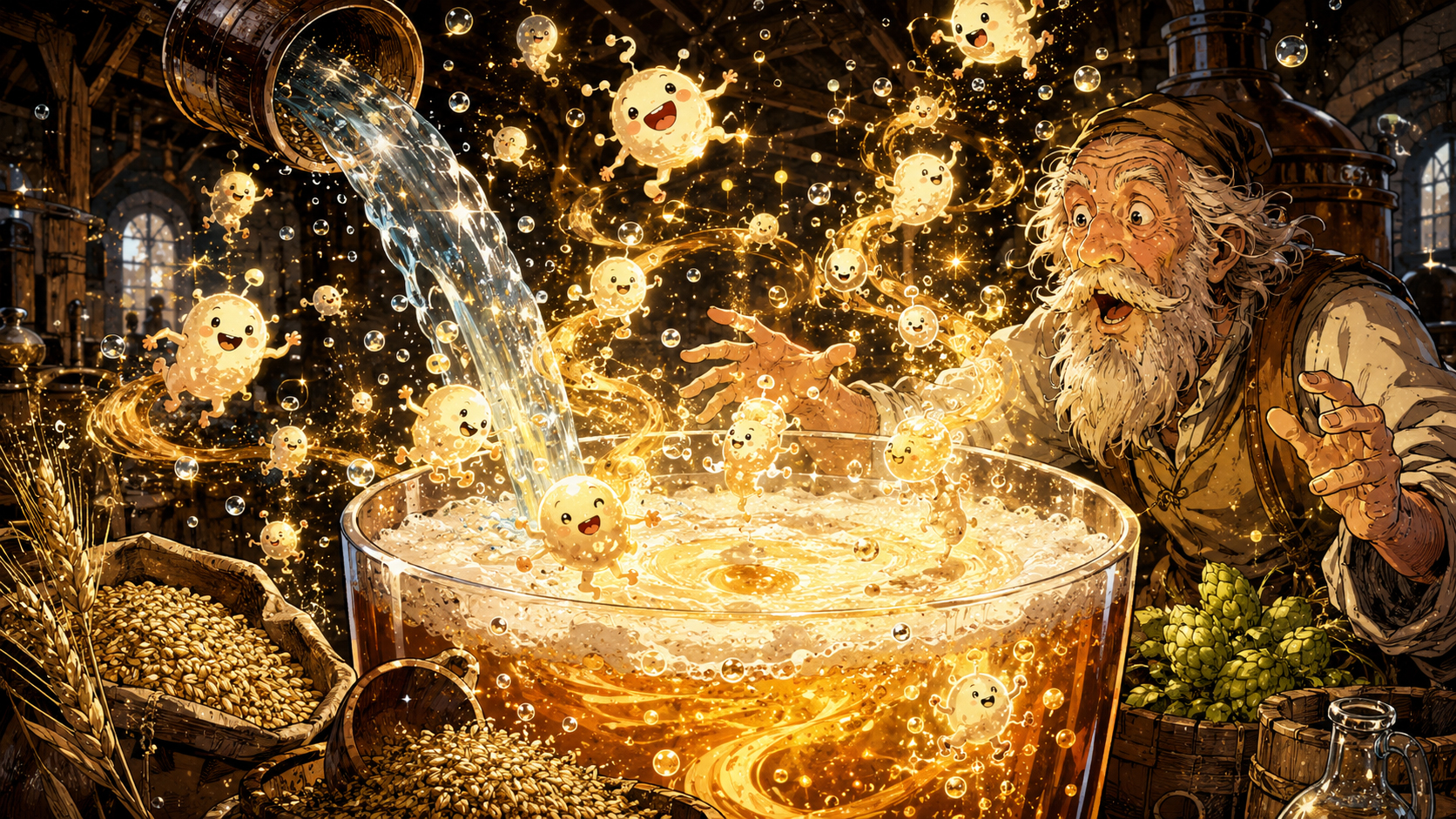
Yeast-chan appears on the rim of the jar with a tiny clipboard and a serious expression. “Sugar detected,” she says. “Temperature acceptable. Drama level manageable. Beginning fermentation.”
The jar begins to bubble. Barley Boy gasps. Professor Pint smiles. Foam Goblin tries to claim the bubbles are “ancient carbonation magic,” but Madame Fermentation silently points him toward the science corner.

What fermentation actually does
Fermentation is the process where yeast converts fermentable sugars into alcohol, carbon dioxide, and flavor compounds. The carbon dioxide creates bubbles. The alcohol changes the drink. The flavor compounds create the aromas and character that help define beer styles.
The brewer controls conditions. The yeast performs the transformation. Madame Fermentation supervises the mood and reminds everyone that temperature is not a suggestion.
Ancient brewers knew the signs
Ancient brewers did not understand yeast the way modern science does, but they could observe fermentation. They saw bubbling, aroma changes, texture changes, sediment, warmth, timing, and the difference between a successful batch and a tragic jar.
Certain vessels, residues, practices, and environments likely helped fermentation repeat. Knowledge came through memory, repetition, ritual, household skill, and eventually written or sung tradition.
Madame Fermentation and Ninkasi
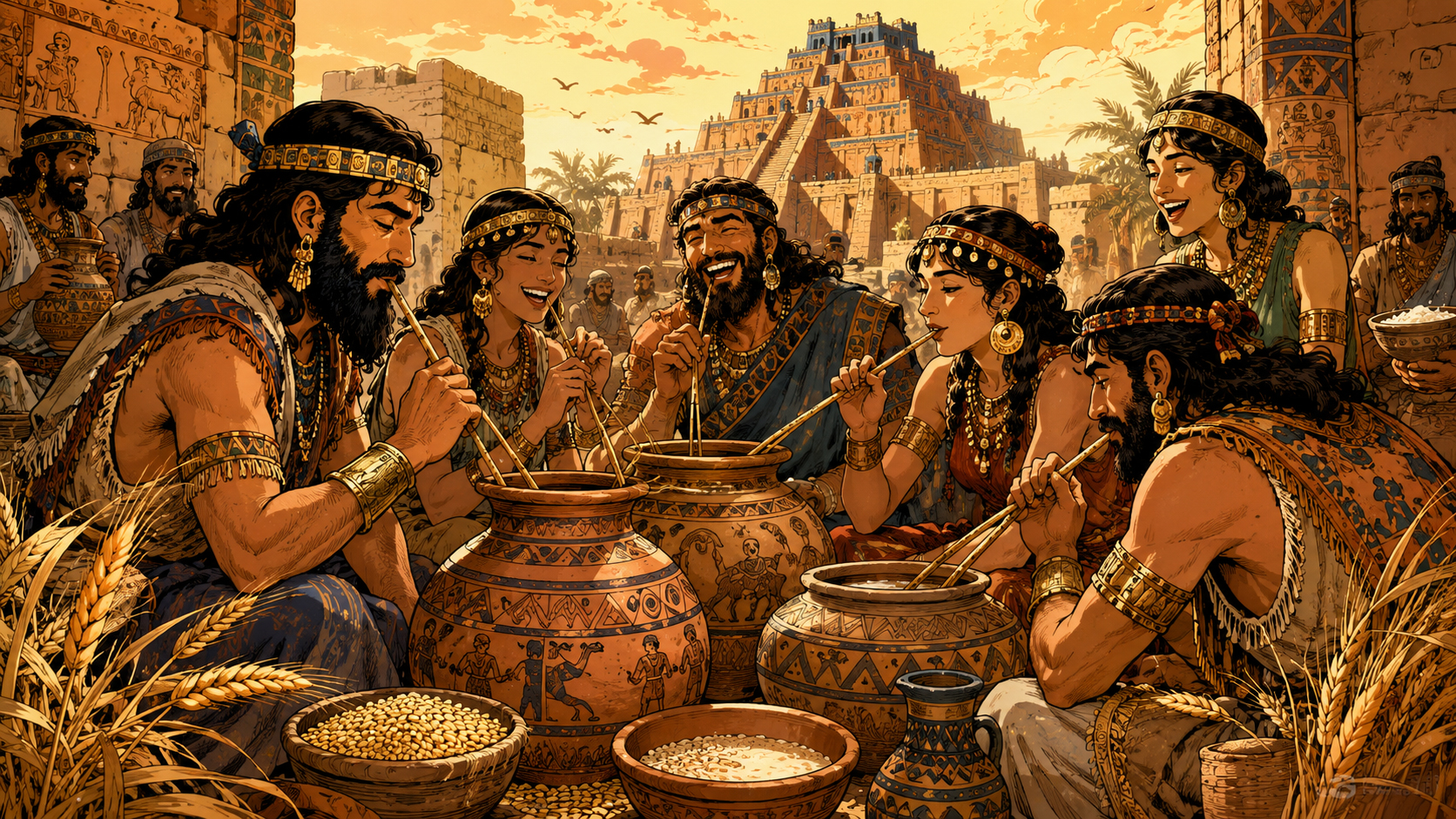
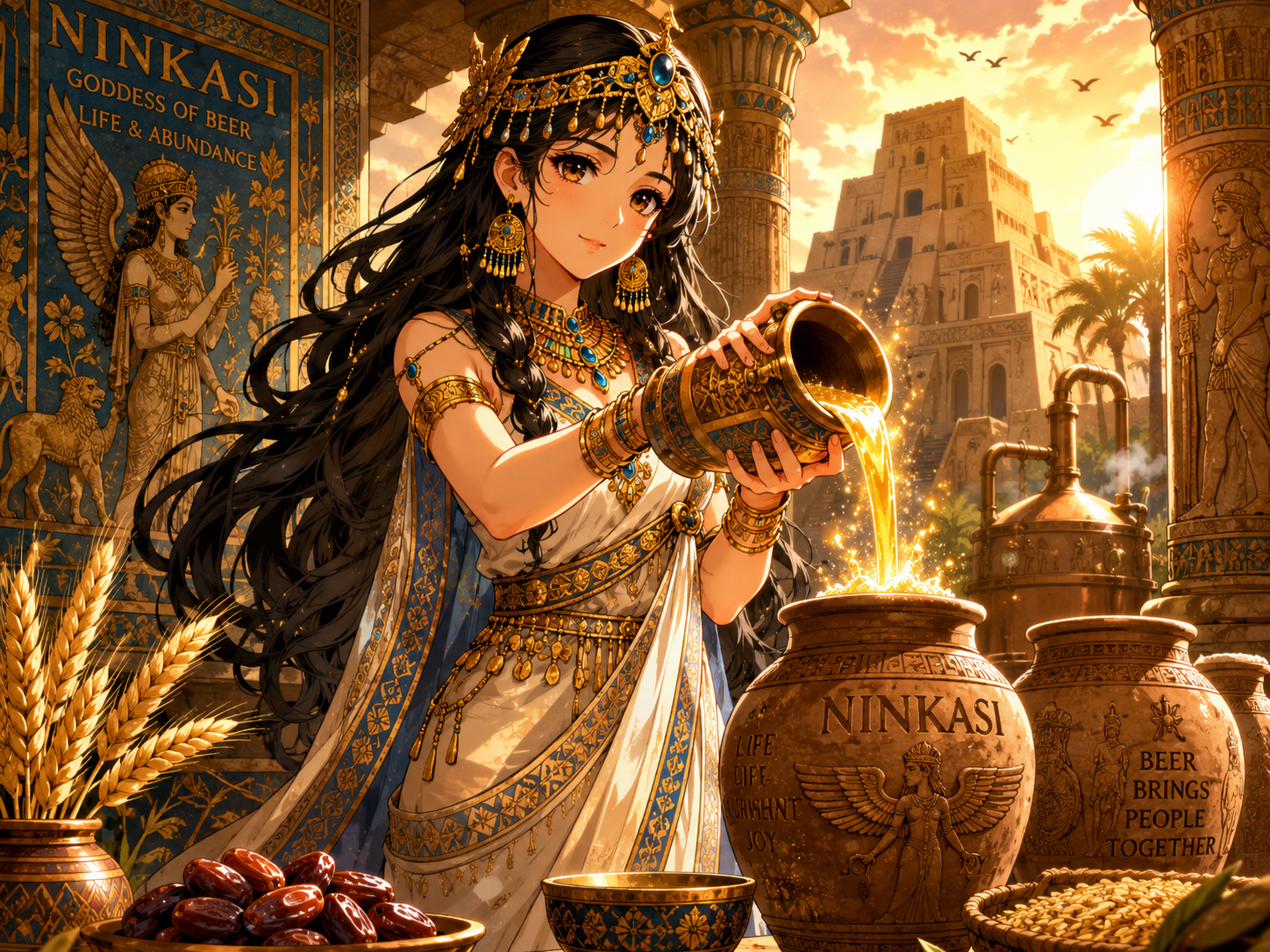
Ninkasi brings sacred memory to brewing. Madame Fermentation brings the bubbling transformation. The two characters work beautifully together: Ninkasi sings the process into memory; Madame Fermentation opens the jar and lets the invisible workforce begin.
BeerDaily’s ancient brewing department is very clear on this point: a recipe can be sacred, but the yeast still has to show up.
Temperature changes the story
Madame Fermentation keeps a thermometer tucked in her sleeve. Temperature affects yeast behavior. Warmer fermentations can bring fruity or spicy expression. Cooler fermentations can be cleaner and slower. Too hot, too cold, or too careless, and the batch may wander off-script.
“Yeast has personality,” she says. “Temperature decides whether it writes poetry or starts a riot.”

Wild fermentation: the old mystery
Before modern yeast labs and controlled pitching, many fermentations depended on local microbes, reused vessels, house cultures, and environmental conditions. That could create complexity, sourness, fruitiness, funk, or failure.
Wild fermentation is not automatically good or bad. It is powerful, risky, and deeply tied to place. Madame Fermentation respects it, but she also keeps a mop nearby.
Foam Goblin misunderstands bubbles
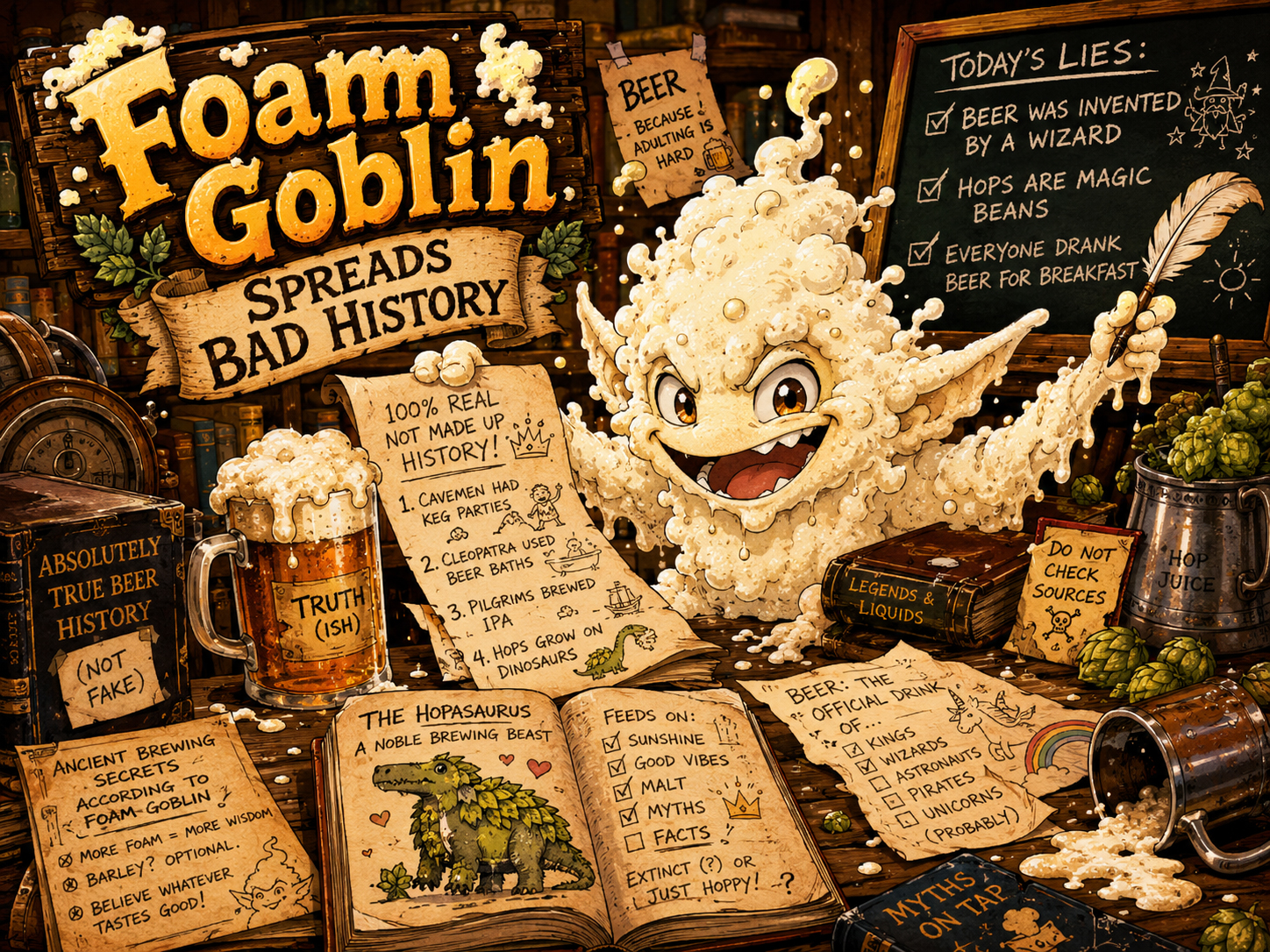
Foam Goblin bursts into the room and announces, “Bubbles mean the beer is happy!”
Madame Fermentation closes the jar lid halfway. “Bubbles mean gas production. Happiness is not a measurable brewing variable.”
Professor Pint adds, “But we appreciate the enthusiasm.”
Fermentation creates flavor
Yeast does more than create alcohol. It shapes aroma and flavor. Depending on yeast strain and conditions, fermentation can create fruity, spicy, clean, dry, funky, tart, soft, or complex character.
This is why beer is not only a grain drink. It is a fermentation drink. The malt may build the stage, but yeast decides how the actors speak.
The jar becomes a lesson
Madame Fermentation opens the jar again. The liquid inside has changed. The sweetness is no longer simple. The aroma is deeper. Bubbles rise. The brewer tastes carefully and nods.
Barley Boy whispers, “I became part of something.”
Yeast-chan replies, “You became fermentable. Then useful. Then historic.”
The BeerDaily lesson
Madame Fermentation teaches that beer history depends on invisible work. Grain, water, heat, and vessels matter, but fermentation is the transformation that makes beer beer.
Ancient brewers may not have known yeast by name, but they learned to respect the signs. Modern brewers know more, but the mystery still feels alive when the vessel begins to bubble.
BeerDaily moral: the jar is not sleeping. It is negotiating with invisible life.