Opening scene: the basket of destiny
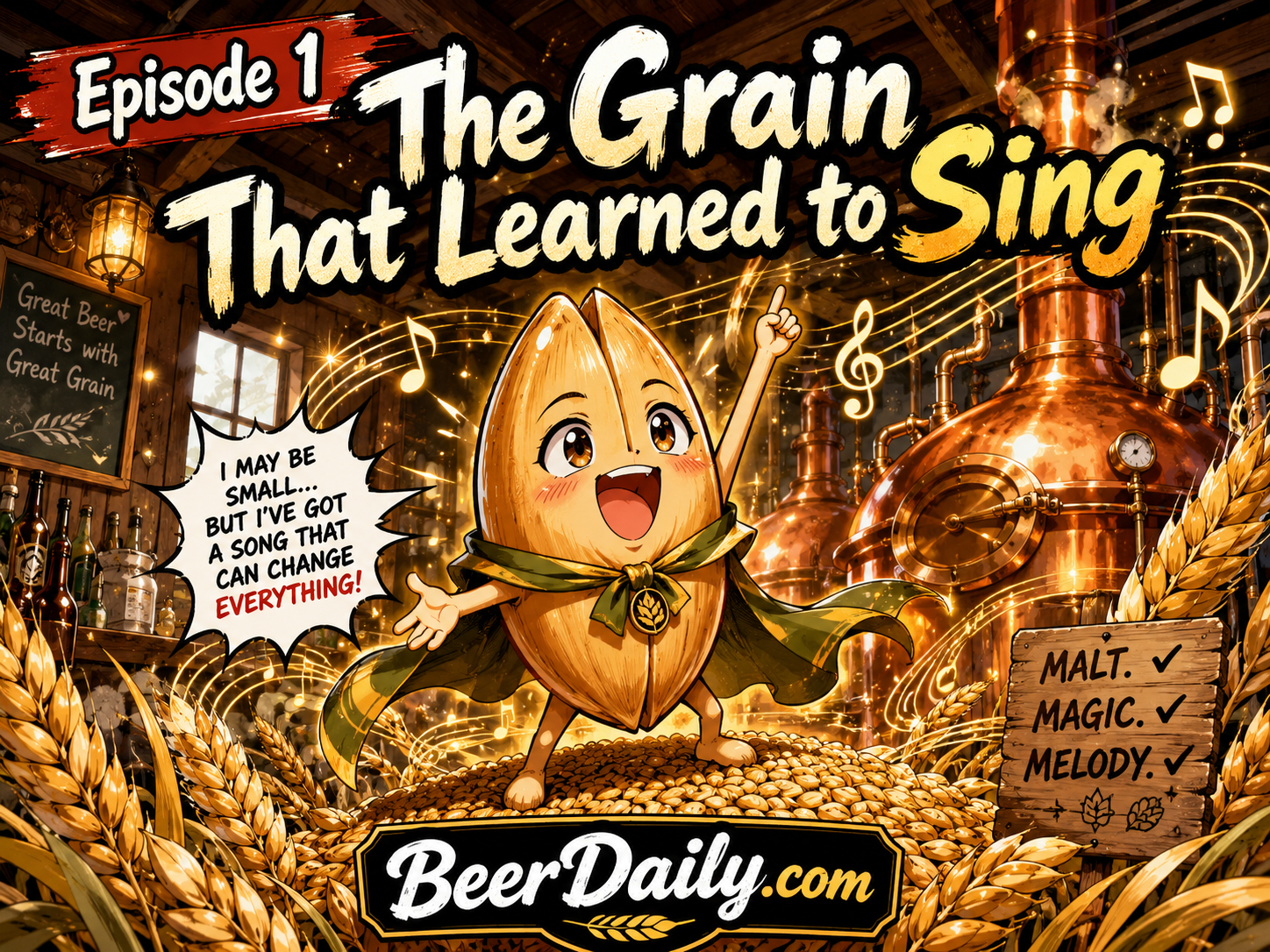
Barley Boy sits in a woven basket beside other grains, feeling very proud of himself. “I am dry, useful, and historically important,” he announces. Nobody argues, because the other grains are asleep.
Then a brewer walks by with water. Barley Boy does not like the look of this. Water is always how adventures begin. The brewer soaks the grain, and suddenly Barley Boy feels the ancient machinery inside him waking up.
Barley Boy: “I thought I was a grain.”
Yeast-chan: “You were. Now you are a plot device.”
Panel 1: grain is food, but beer needs sugar
Beer begins with grain, but yeast cannot easily ferment hard grain starch. The grain must be prepared so its starches can become sugars. This is why malting and mashing matter. They turn grain potential into yeast snacks.
Barley Boy does not know this yet. He only knows he is damp, confused, and beginning to sprout. A tiny narrator appears over his head and says, “This is normal. Please do not panic unless you are a tax collector.”
Panel 2: Malt Sensei enters
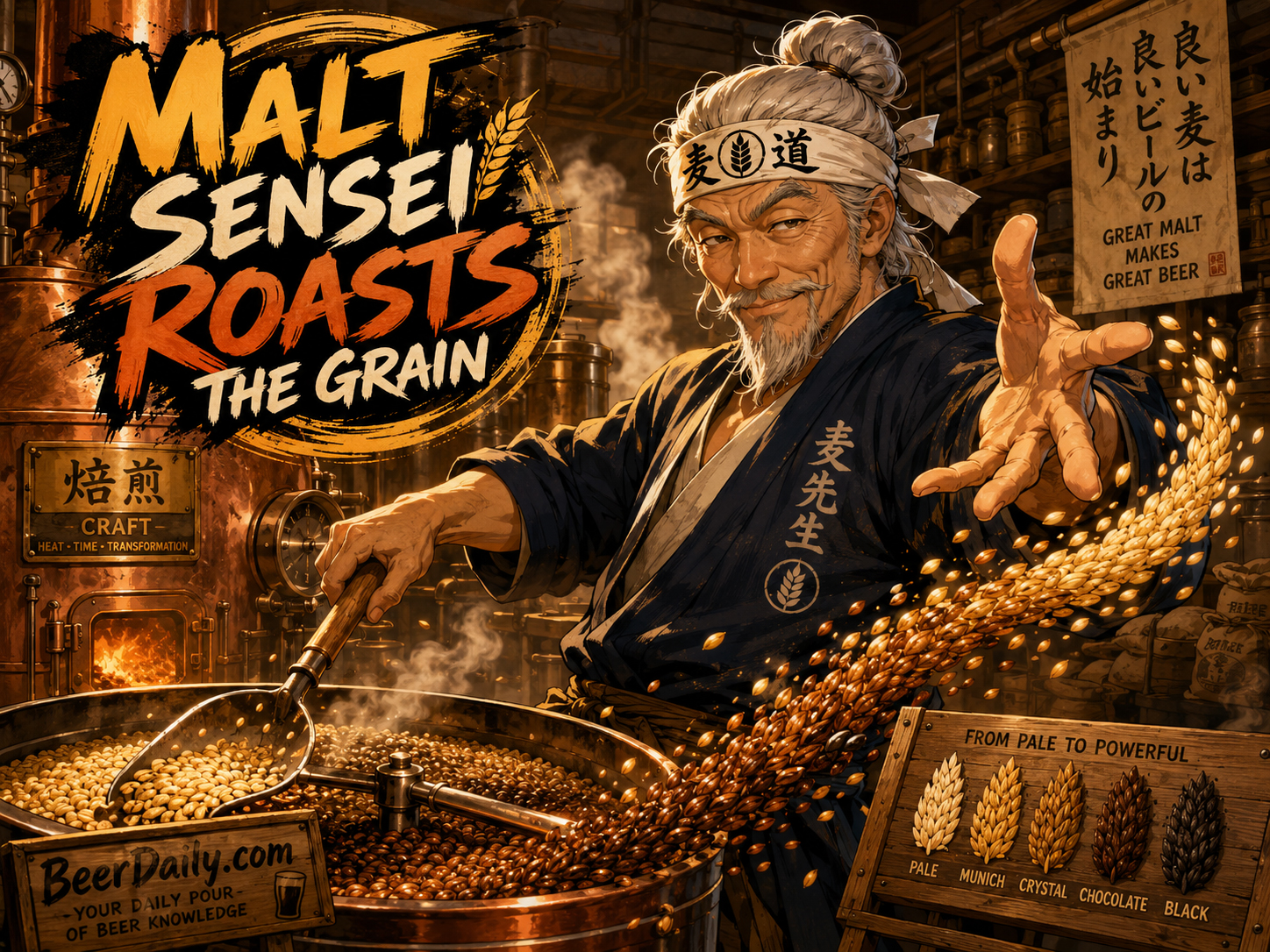
Malt Sensei arrives wearing a robe made of toasted grain husks. He explains that malting lets grain begin to germinate, then drying stops the process at just the right time. The grain has awakened its enzymes, and those enzymes will help convert starches into sugars during the mash.
Barley Boy is impressed. “So I contain hidden power?” he asks. Malt Sensei nods. “Yes. Also, you smell like bread now.”
Panel 3: the mash becomes sweet
The crushed malt meets warm water. This is the mash. Starches break down into sugars, and the liquid becomes sweet. Brewers call this sweet liquid wort before fermentation.
Barley Boy hears a musical note. Then another. The mash begins to hum. The sugar is not singing exactly, but BeerDaily refuses to deny the emotional power of a good malt conversion.
Panel 4: Yeast-chan clocks in
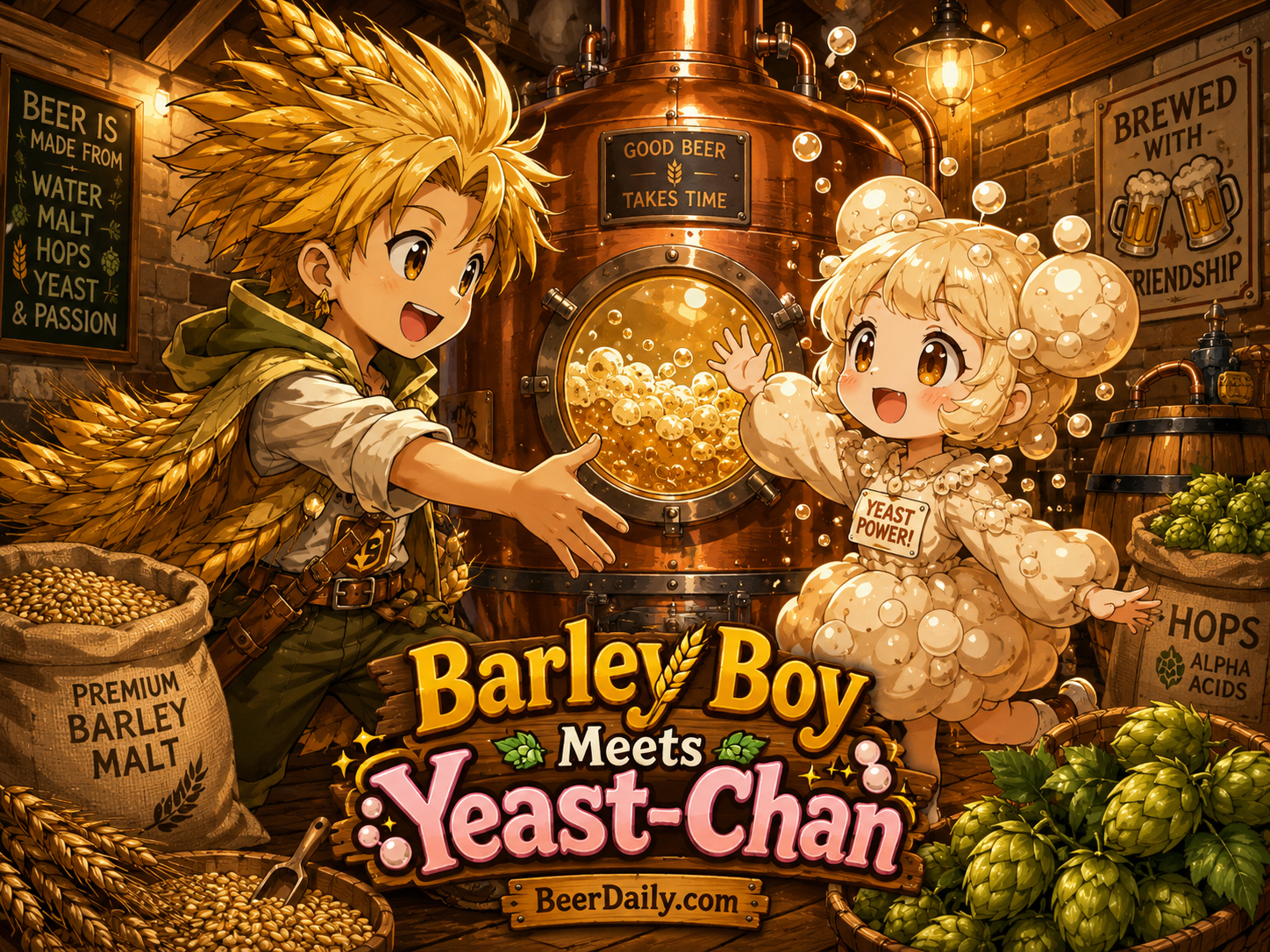
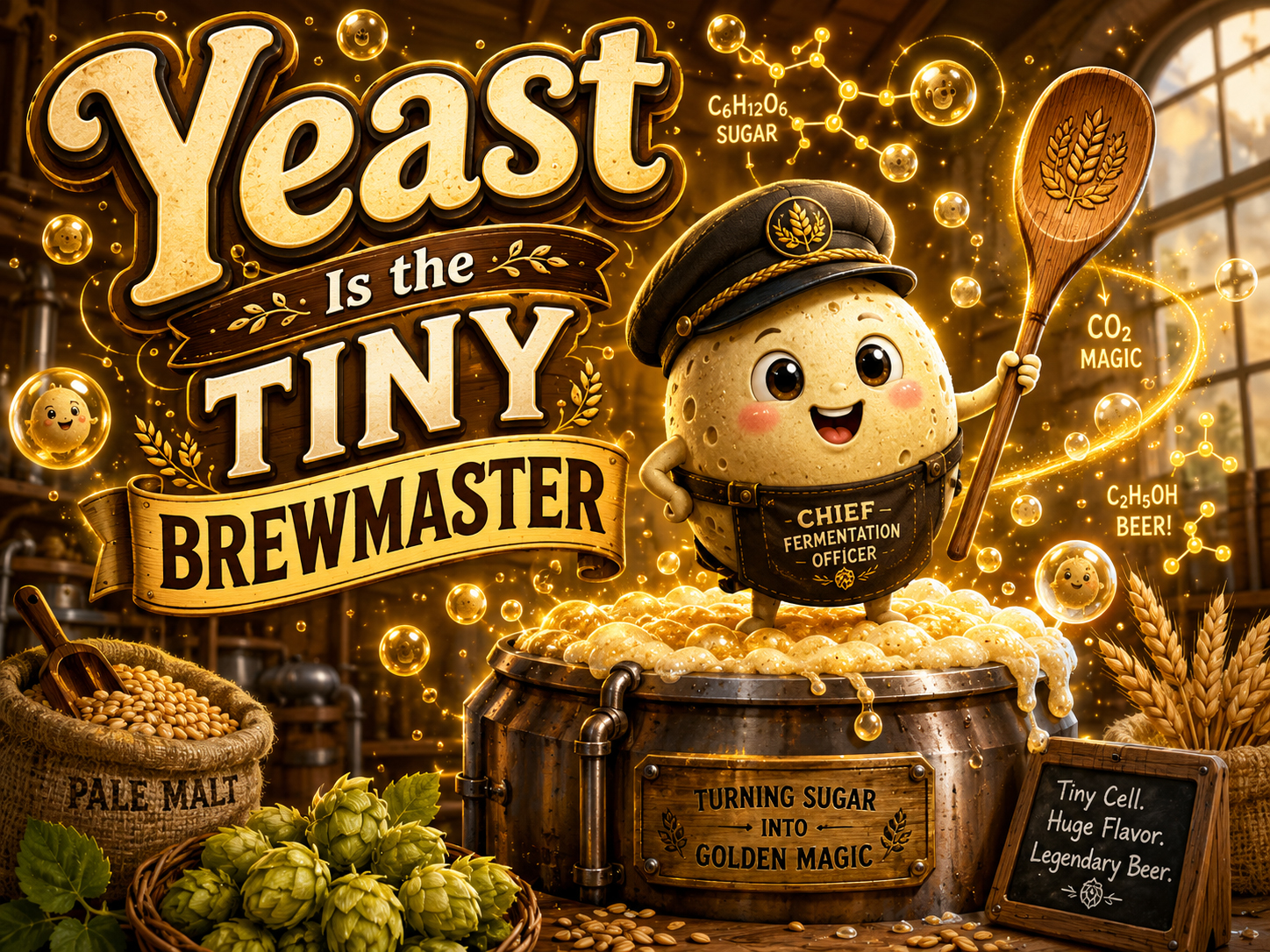
Yeast-chan appears in a puff of bubbles. She is tiny, cheerful, and very serious about her job. “I eat sugar,” she says. “I make alcohol, carbon dioxide, and flavor. Please provide a clean vessel and stop asking me to explain my feelings.”
The wort trembles. Barley Boy realizes the story has changed. This is no longer just grain soup. This is fermentation.
Panel 5: the first bubble
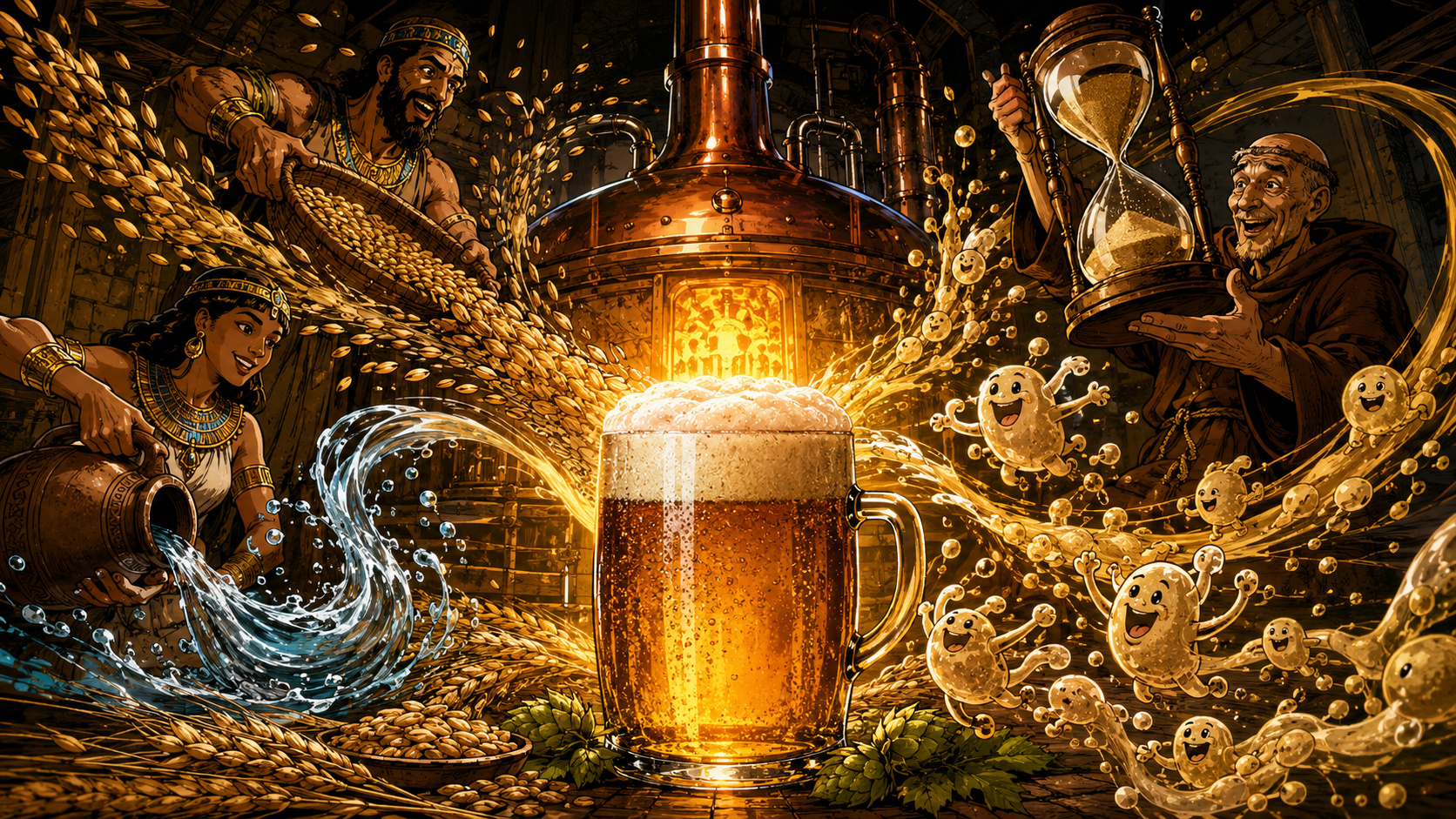
A bubble rises. Then another. Then the whole vessel begins to whisper, hiss, burp, and sing. The grain has become something new. It is not bread. It is not porridge. It is not soup. It is fermented grain drink — the ancient ancestor of beer.
Barley Boy, now part of the brew, hears the song clearly. It is the sound of yeast doing civilization-level work while receiving almost no applause.
Yeast-chan: “You are welcome.”
Barley Boy: “For what?”
Yeast-chan: “For beer.”
History note: beer was not invented in one neat moment
This episode is a cartoon, but the real history is important. Beer was not invented by one person on one afternoon. Fermented grain drinks likely emerged through repeated discoveries in early agricultural societies. Grain got wet. Grain sprouted. Grain was cooked. Sweet liquid fermented. People noticed. Then they learned to repeat it.
That repeatability is the beginning of brewing. Beer history starts when humans stop treating fermentation as a random surprise and begin treating it as a process.
Why the grain “learned to sing”
The title is a joke, but it points to something real. Fermentation is active. It bubbles, changes aroma, transforms texture, creates alcohol, releases carbon dioxide, and alters flavor. To ancient people, that transformation could feel mysterious, powerful, and alive.
Long before modern microbiology, brewers learned through observation. They knew some vessels worked better. Some residues helped fermentation. Some temperatures behaved. Some batches failed. The invisible world was not yet named, but it was already employed.
Professor Pint explains the lesson
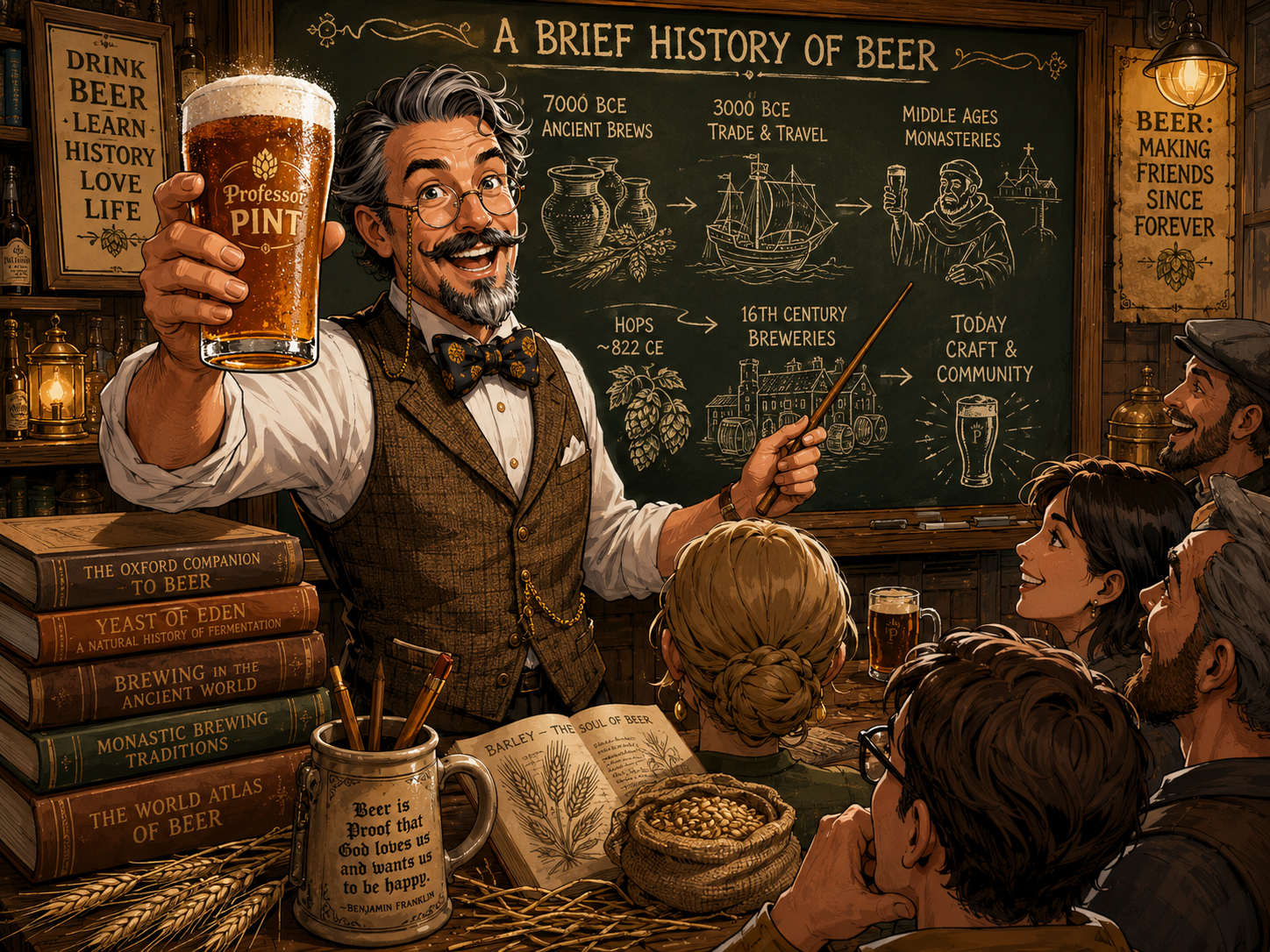
Professor Pint enters with a chalkboard and writes:
- Grain provides starch and flavor.
- Malting prepares grain enzymes.
- Mashing converts starch into fermentable sugar.
- Yeast turns sugar into alcohol, carbon dioxide, and flavor.
- Time lets the transformation happen.
The Foam Goblin tries to add, “And then everyone drank beer because water was poison.” Professor Pint throws a barley husk at him. “Too simple,” he says.
Episode moral
Beer begins with a humble transformation. Grain becomes sugar. Yeast becomes active. Time becomes flavor. The process is simple enough to explain and complex enough to build a civilization around.
The grain learned to sing because humans learned to listen. Then they learned to repeat the song.