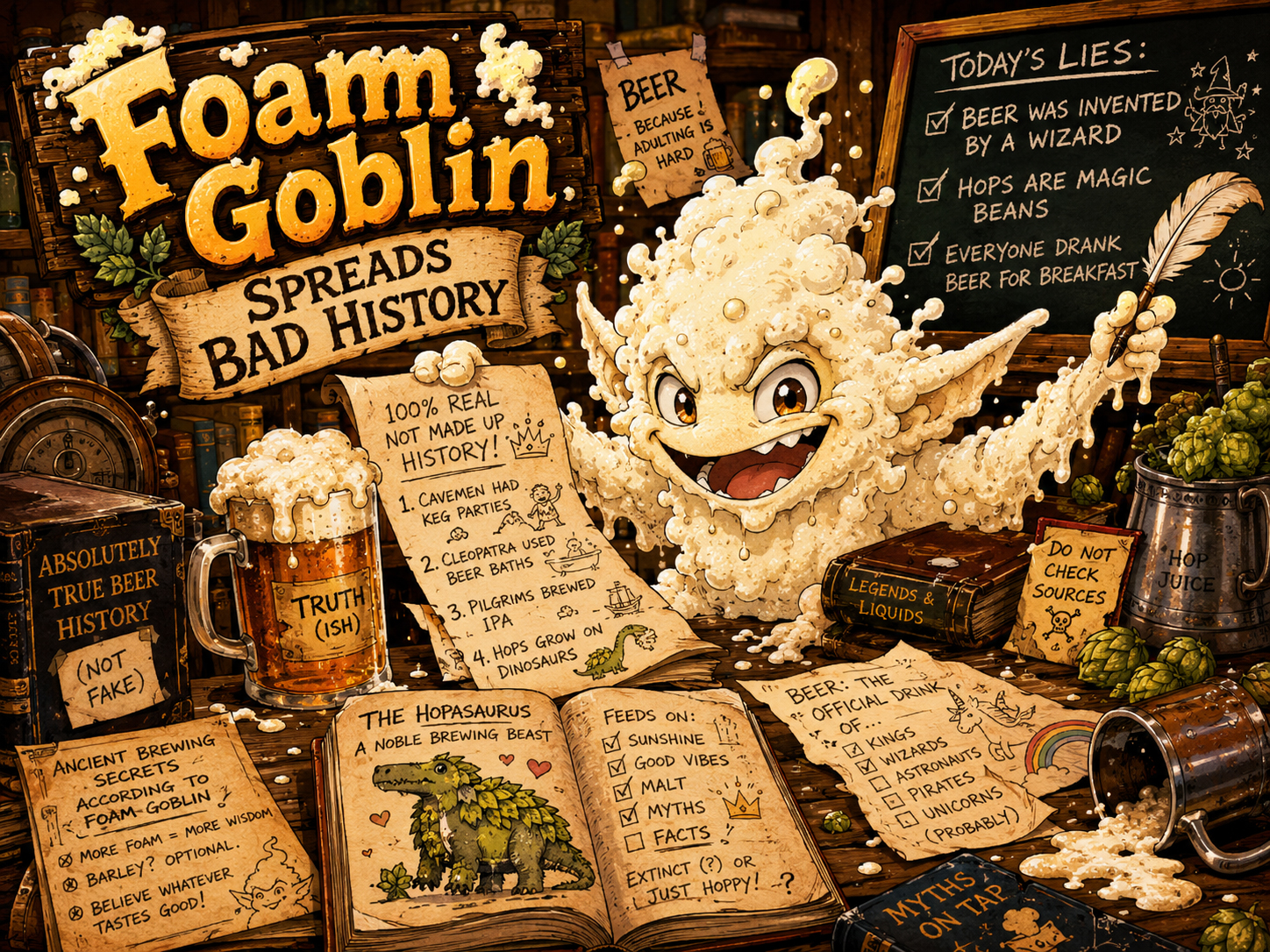
Meet Foam Goblin
Foam Goblin is the spirit of overconfident beer misinformation. He lives in the sticky space between a real fact and a bad conclusion. He does not hate history. He simply refuses to read enough of it.
He carries a chalkboard, a fake scroll, and a pocket full of half-truths. He begins most sentences with “Actually,” and ends most of them with the Foam Detective yelling, “Source?”
Foam Goblin: “The simpler story is always better.”
Foam Detective: “The simpler story is usually missing three civilizations and a tax record.”
Myth attack #1: “Ancient people drank beer only because water was bad.”
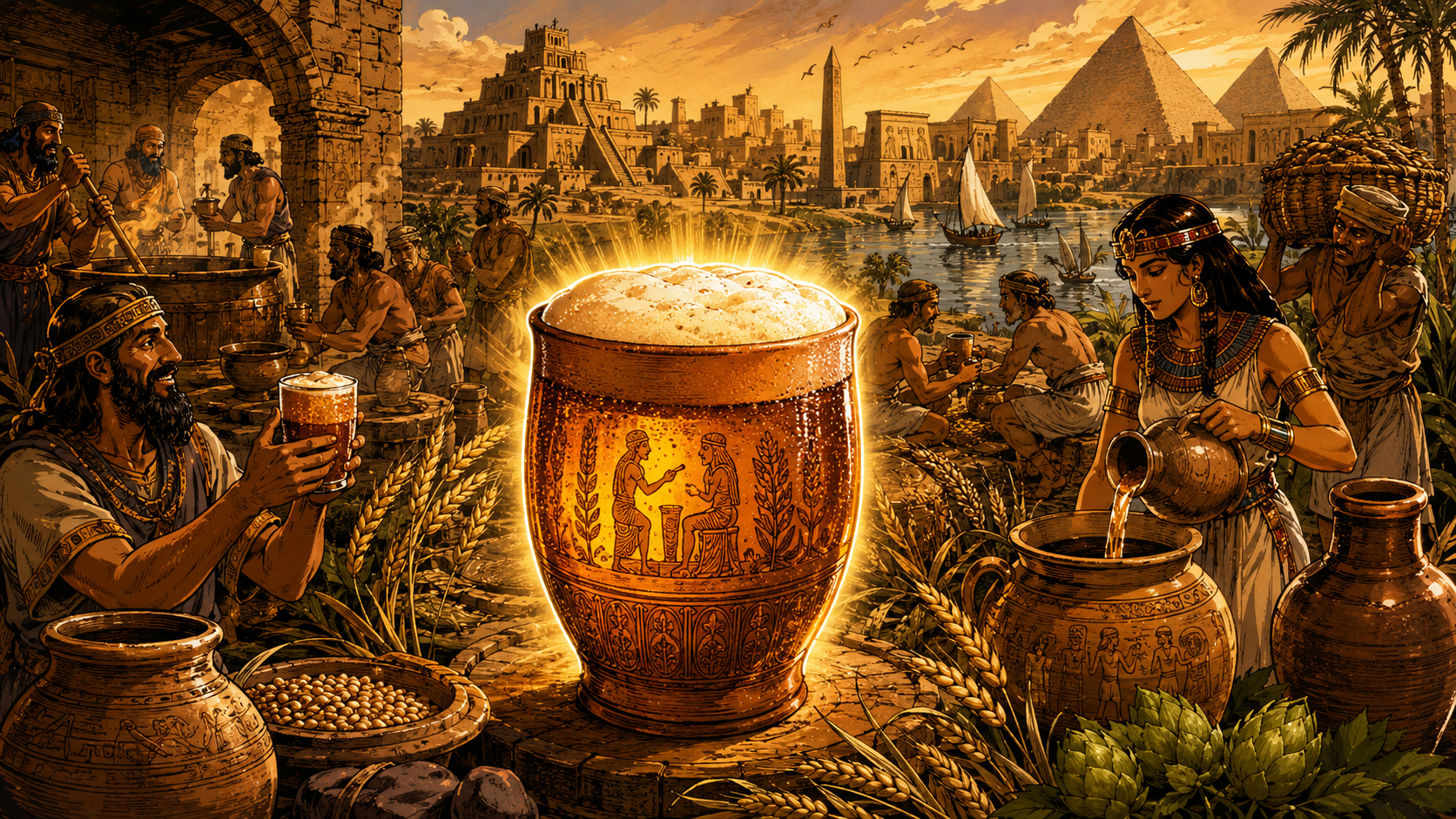
Foam Goblin loves this one because it sounds tidy. Water quality did matter in many historical settings, but beer was not simply emergency water with bubbles. Ancient beer was food, ritual, wage, offering, storage technology, agricultural culture, and social glue.
The better story is richer: grain was grown, stored, processed, fermented, distributed, offered, counted, and shared. Beer belonged to civilization, not just panic over puddles.
Myth attack #2: “Hops were always beer.”
Foam Goblin points at a modern pint and declares that beer has always meant barley plus hops. Incorrect. Beer existed long before hops became dominant in many brewing traditions. Ancient and medieval beers could use herbs, gruits, smoke, sourness, fruit, honey, spices, and local plants.
Hop Samurai respects the pre-hop world. Foam Goblin erases it because he cannot fit it on a coaster.

Myth attack #3: “Monks invented beer.”
Foam Goblin puts on a robe and announces that monks invented beer. Then every clay jar from ancient history throws a sandal at him.
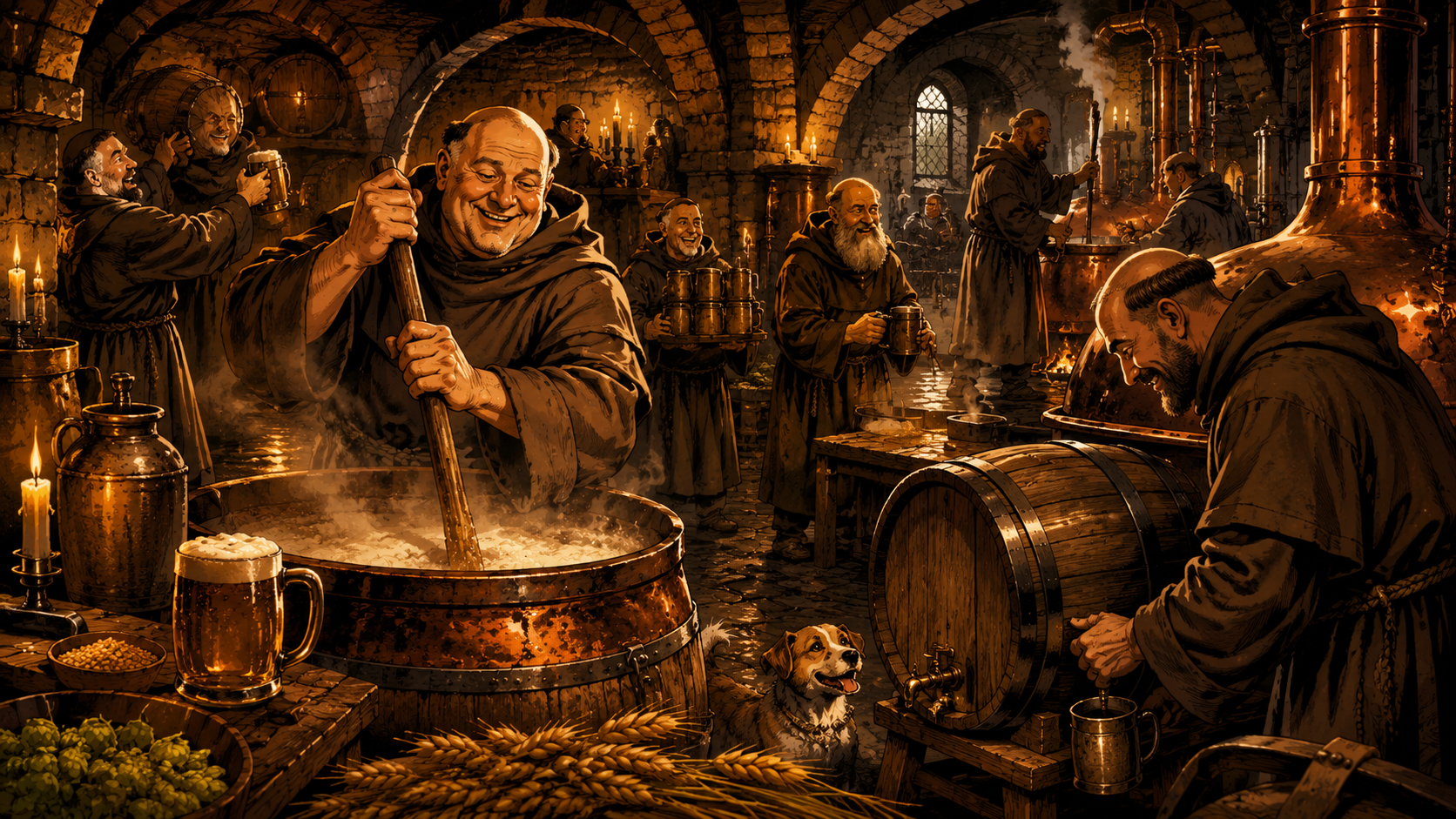
Monks did not invent beer. Beer is much older. Monasteries mattered because they helped preserve, refine, record, store, and repeat brewing practices. That is important enough without stealing credit from Sumer, Egypt, China, Babylon, and countless household brewers.
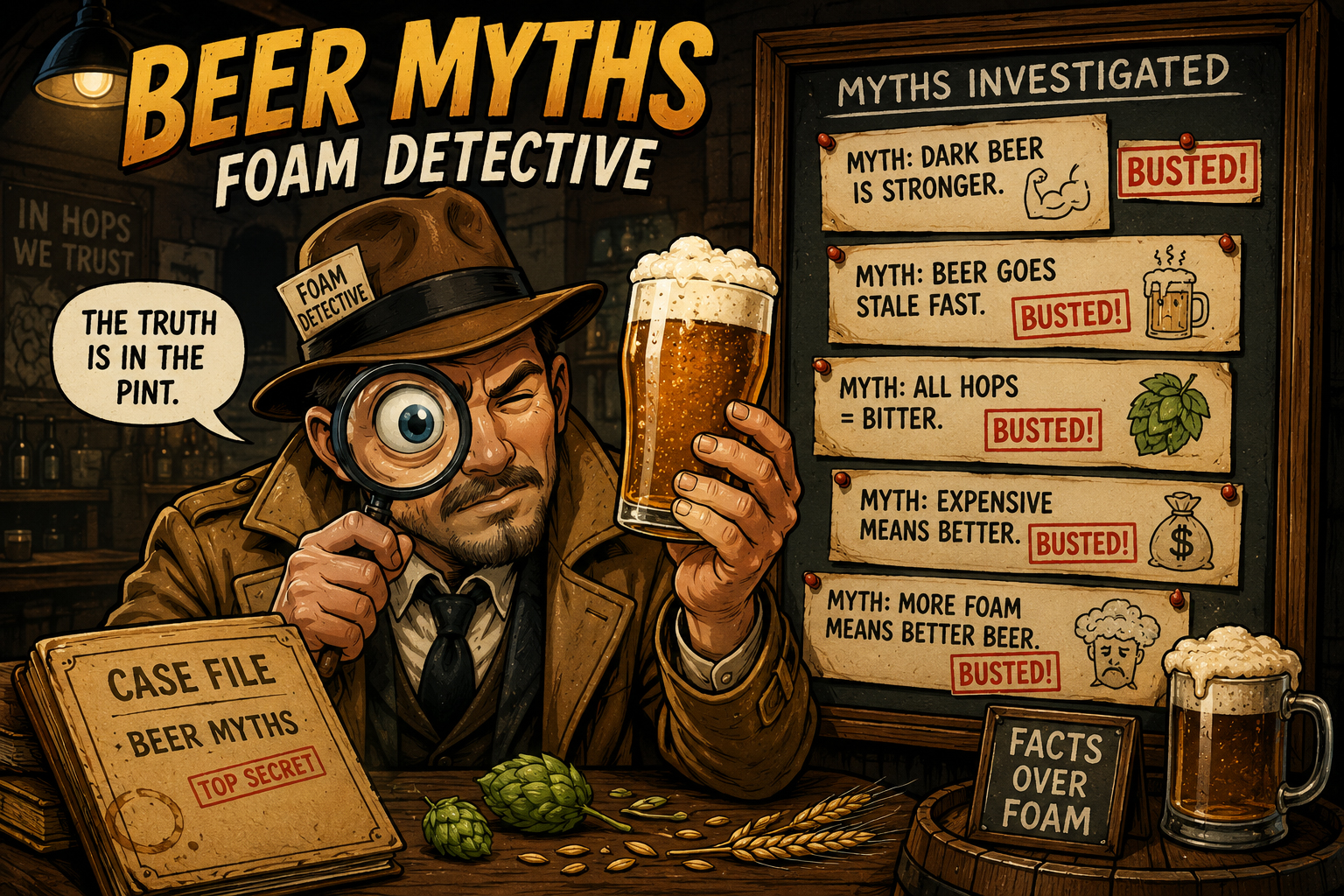
Myth attack #4: “Dark beer is stronger.”
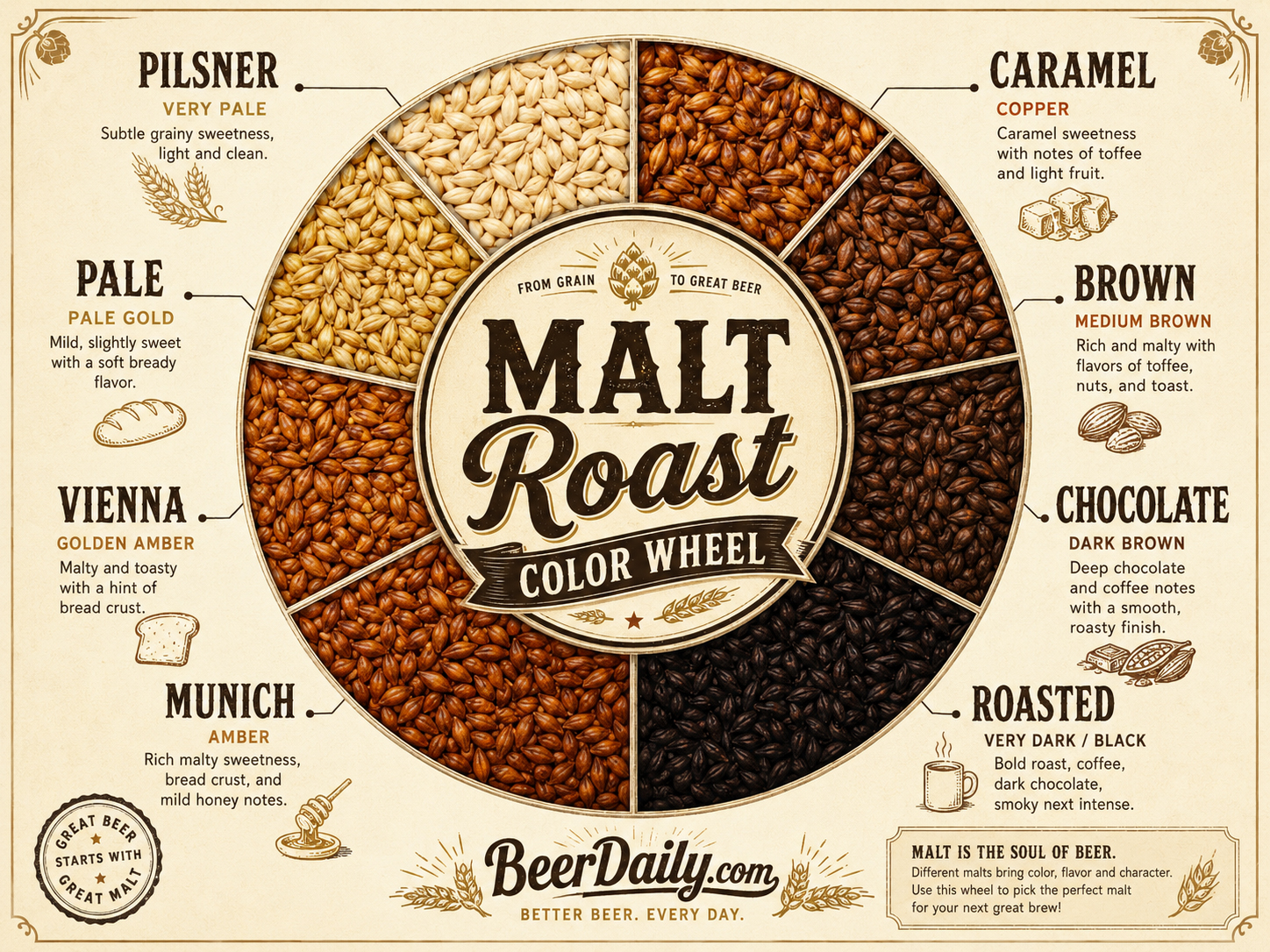
Foam Goblin sees a dark pint and shouts, “Danger! Strong beer!” Foam Detective calmly explains that color comes from malt roast, while alcohol strength comes from fermentable sugar and fermentation.
A dark mild can be gentle. A pale tripel can sneak up wearing golden shoes. Color is not alcohol. The glass is not a mood ring.
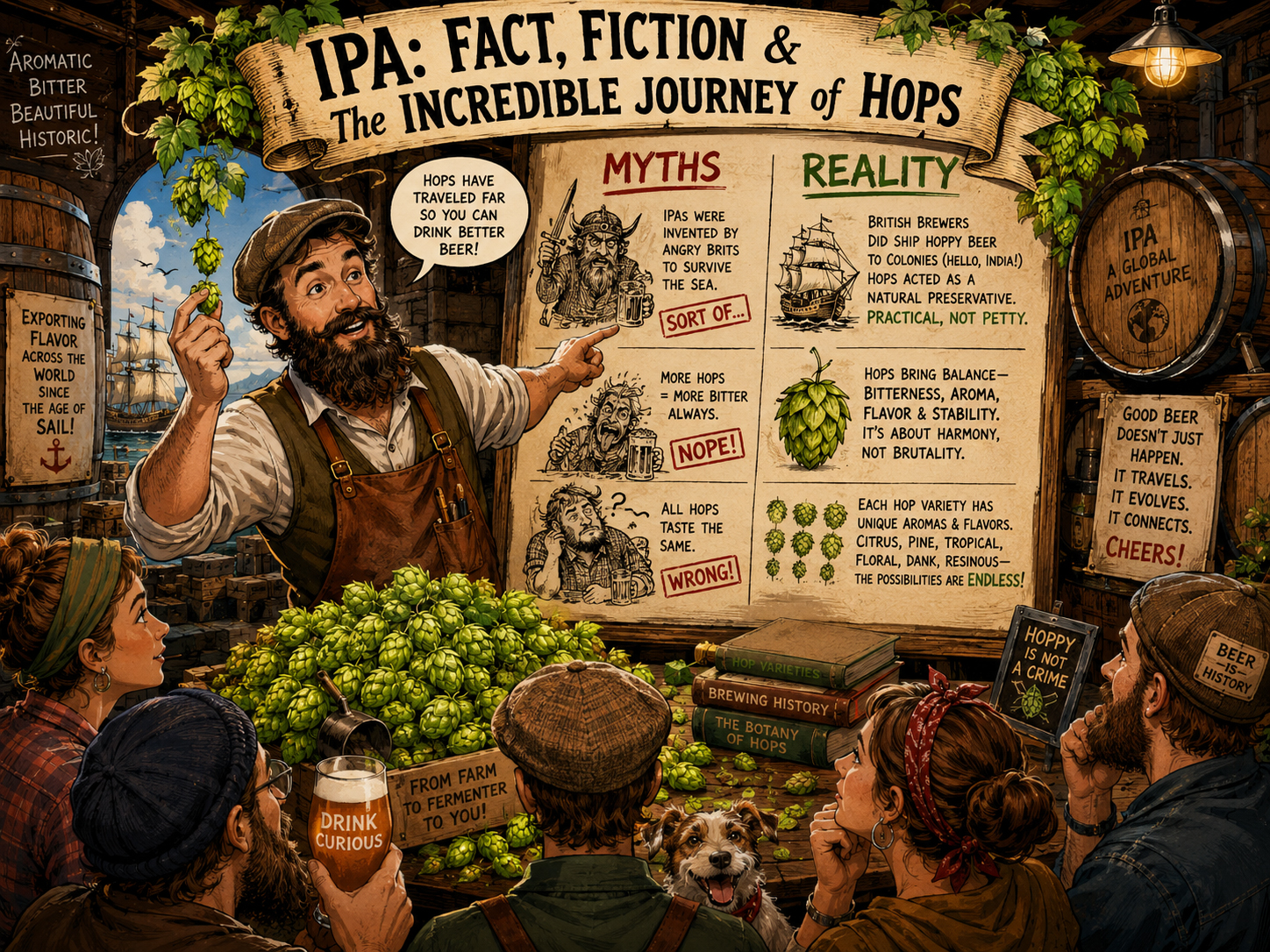
Myth attack #5: “IPA has one simple heroic origin.”
Foam Goblin loves a simple IPA story because it sounds like a movie trailer: extra hops, long voyage, empire, done. But IPA history is more complicated. Preservation, trade, pale ales, porter, brewery practice, market demand, shipping routes, and later storytelling all matter.
BeerDaily rule: enjoy the legend, then check the ledger.
Foam Goblin’s tools
Foam Goblin works with several dangerous instruments:
- The half-truth: a real detail inflated into a false whole.
- The single-cause story: one reason pretending to explain everything.
- The modern assumption: thinking ancient beer worked like modern beer.
- The heroic origin: one neat invention moment replacing messy development.
- The no-source shrug: “Everyone knows this,” which usually means nobody checked.
Foam Detective enters the tavern
Foam Detective is Foam Goblin’s sworn enemy. He carries a magnifying glass, a red pen, a case file, and a very low tolerance for fake certainty.
He does not hate fun. He hates bad history pretending to be fun. His motto: “The true version is already weird enough.”
Professor Pint explains the damage
Bad beer myths do more than annoy historians. They flatten the story. They erase brewers, workers, women, temples, households, farmers, sailors, monasteries, tax systems, industrial machinery, refrigeration, and local culture.
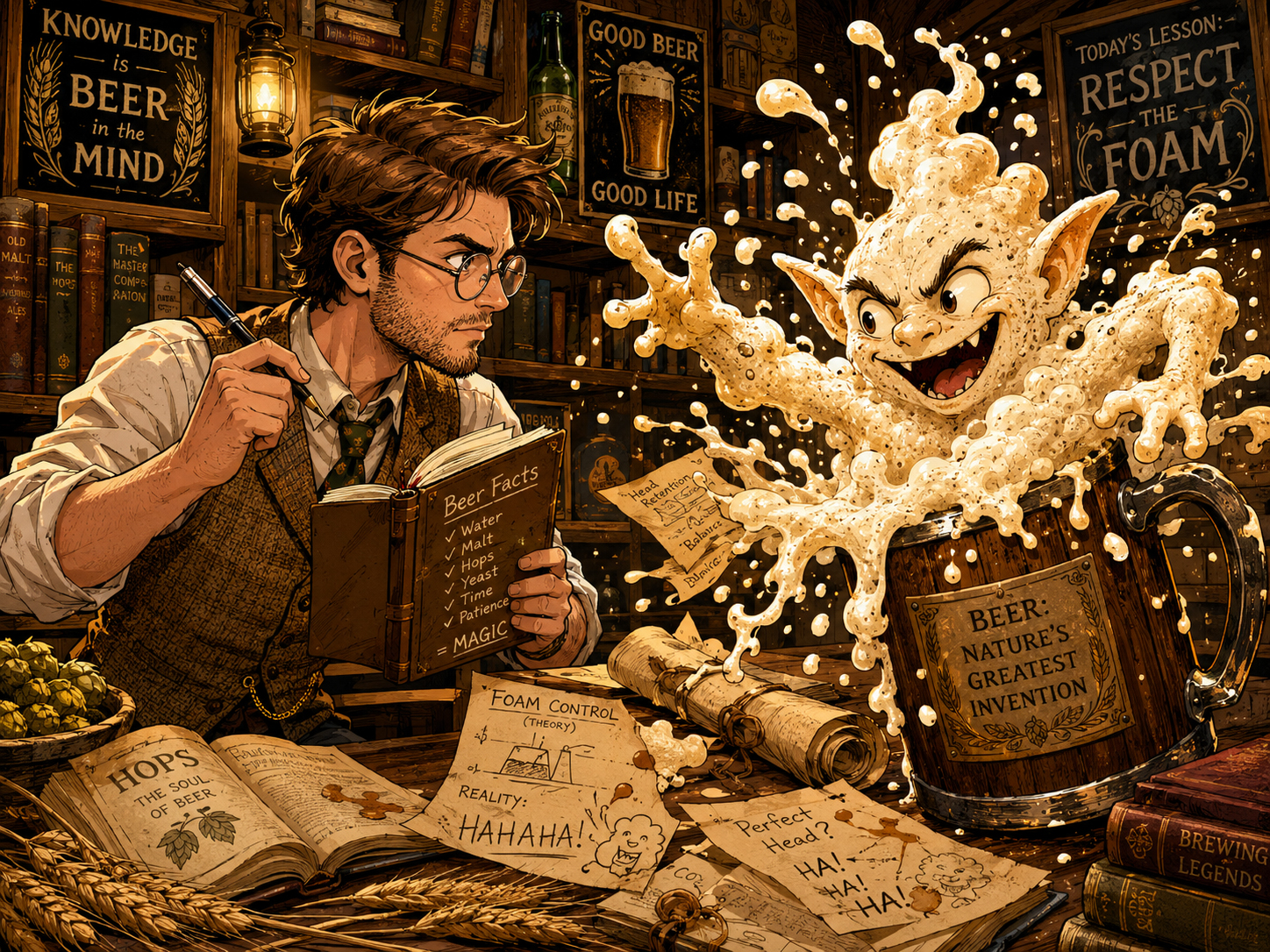
Beer history is not one sentence. It is a long chain of grain, water, yeast, heat, vessels, law, trade, taste, labor, and memory. Foam Goblin wants a bumper sticker. Professor Pint wants the whole lecture.

Foam Goblin accidentally teaches a lesson
Foam Goblin is wrong so often that he becomes useful. Every time he says something lazy, BeerDaily gets to explain the better version.
“Ancient beer was just because of bad water” becomes a lesson about grain economies. “Hops were always beer” becomes a lesson about herbs and gruit. “Monks invented beer” becomes a lesson about records and refinement. “Craft is always better” becomes a lesson about skill, sanitation, and balance.
The BeerDaily correction system
When Foam Goblin spreads bad history, BeerDaily follows three steps:
- Find the true piece: most myths begin with something partly real.
- Stop the exaggeration: one fact rarely explains the whole story.
- Restore the wider history: add people, place, process, time, and evidence.
That makes the story more accurate and more fun. The real history has more characters, better jokes, and fewer fake chalkboards.
The BeerDaily lesson
Foam Goblin represents the temptation to make beer history too simple. BeerDaily’s answer is not to remove fun. It is to make the true story stronger, stranger, funnier, and more useful than the fake one.
BeerDaily moral: bad history foams up fast. Good history has a better finish.