Opening scene: the brewery goes quiet
The brewery floor once roared with steam, bottles, barrels, workers, wagons, and the proud sound of industrial beer becoming a business. Now the machines slow. The lights dim. A legal notice appears on the door with the emotional warmth of a damp coaster.
Prohibition enters wearing a severe hat and carrying a clipboard. “I am here to stop the manufacture, sale, and transport of intoxicating beverages,” it announces.
A barrel in the corner rolls two inches to the left.
Prohibition: “Did that barrel move?”
Barrel: “No.”
Panel 1: temperance did not come from nowhere
Professor Pint appears beside a chalkboard. “Before anyone turns this into a cartoon, remember the temperance movement had real social concerns behind it: poverty, domestic violence, workplace harm, saloons, public order, and moral reform.”
The Foam Goblin raises his hand. “So the entire story is simple?”
Professor Pint says, “Absolutely not. Sit down.”
Panel 2: the law arrives at the barrel
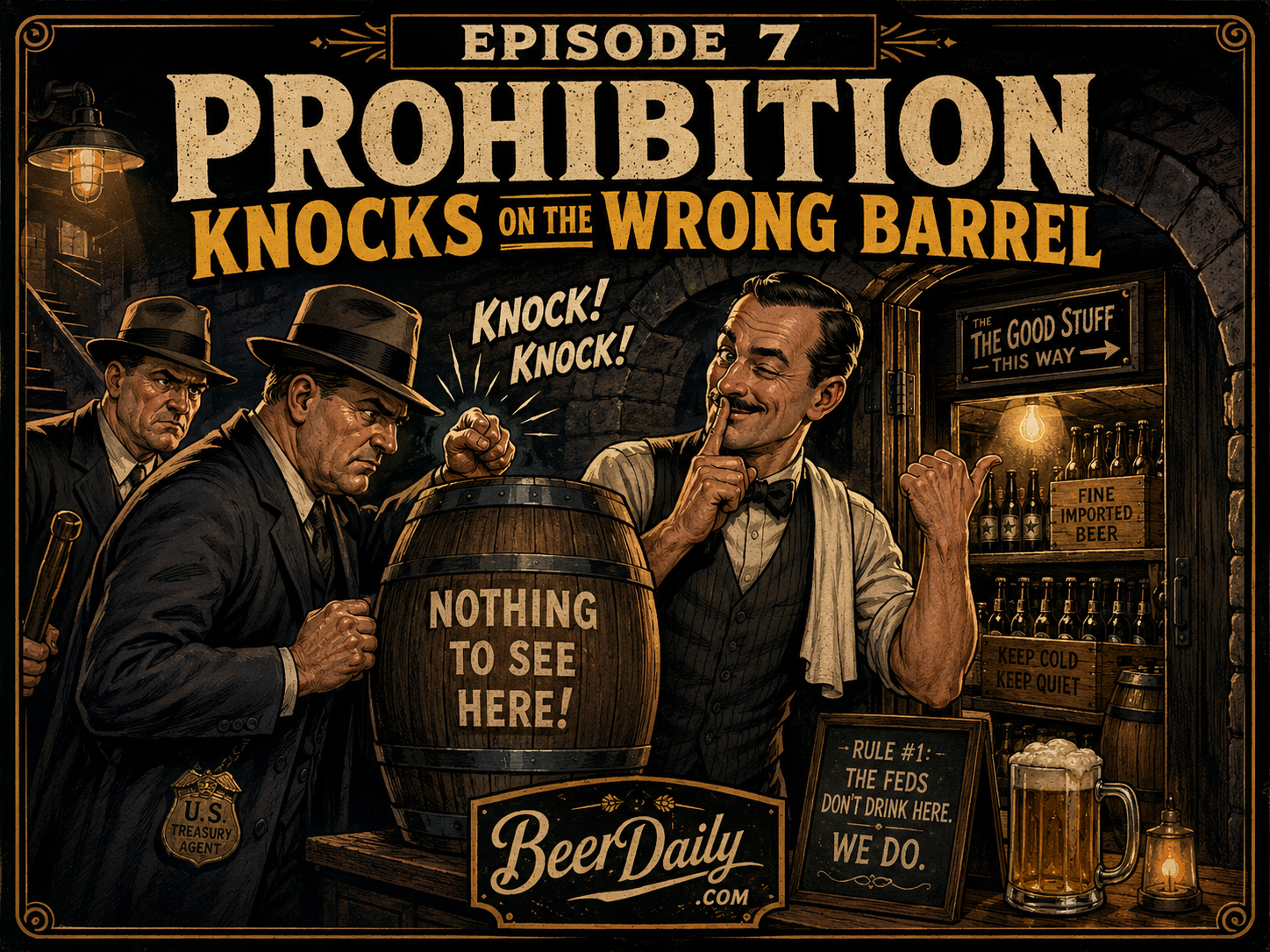
Prohibition knocks on a large barrel labeled “Definitely Not Beer.” The barrel sweats. Behind it, a trapdoor creaks open. A tiny speakeasy band starts playing very softly.
“Open up,” Prohibition says.
The barrel replies, “I am furniture.”
The Foam Detective takes notes. “Suspicious furniture,” he mutters.
Panel 3: near beer puts on a fake mustache
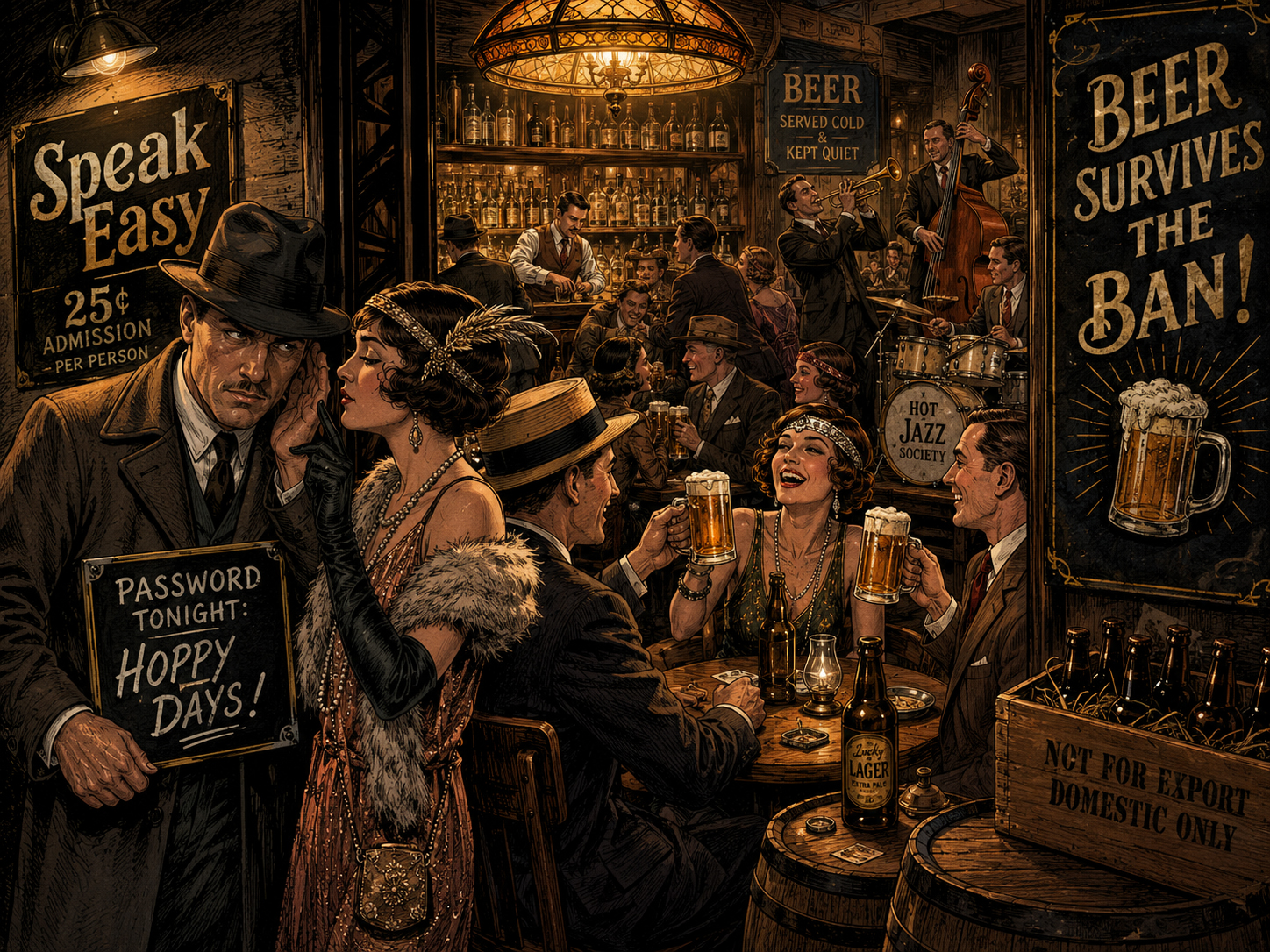
Some breweries try to survive by making near beer: very low-alcohol beer-like beverages designed to fit within legal limits. Near Beer appears on stage wearing a fake mustache, sunglasses, and a label that says, “Totally Legal, Probably.”
The old brewery sighs. “This is not what I was built for.”
Near Beer shrugs. “I am doing my best under difficult regulatory conditions.”
Panel 4: breweries pivot or perish
The next panels show breweries making soft drinks, cereal beverages, malt extract, ice cream, and other products. Some survive. Many fail. Workers lose jobs. Equipment sits idle. Distribution networks collapse or transform.
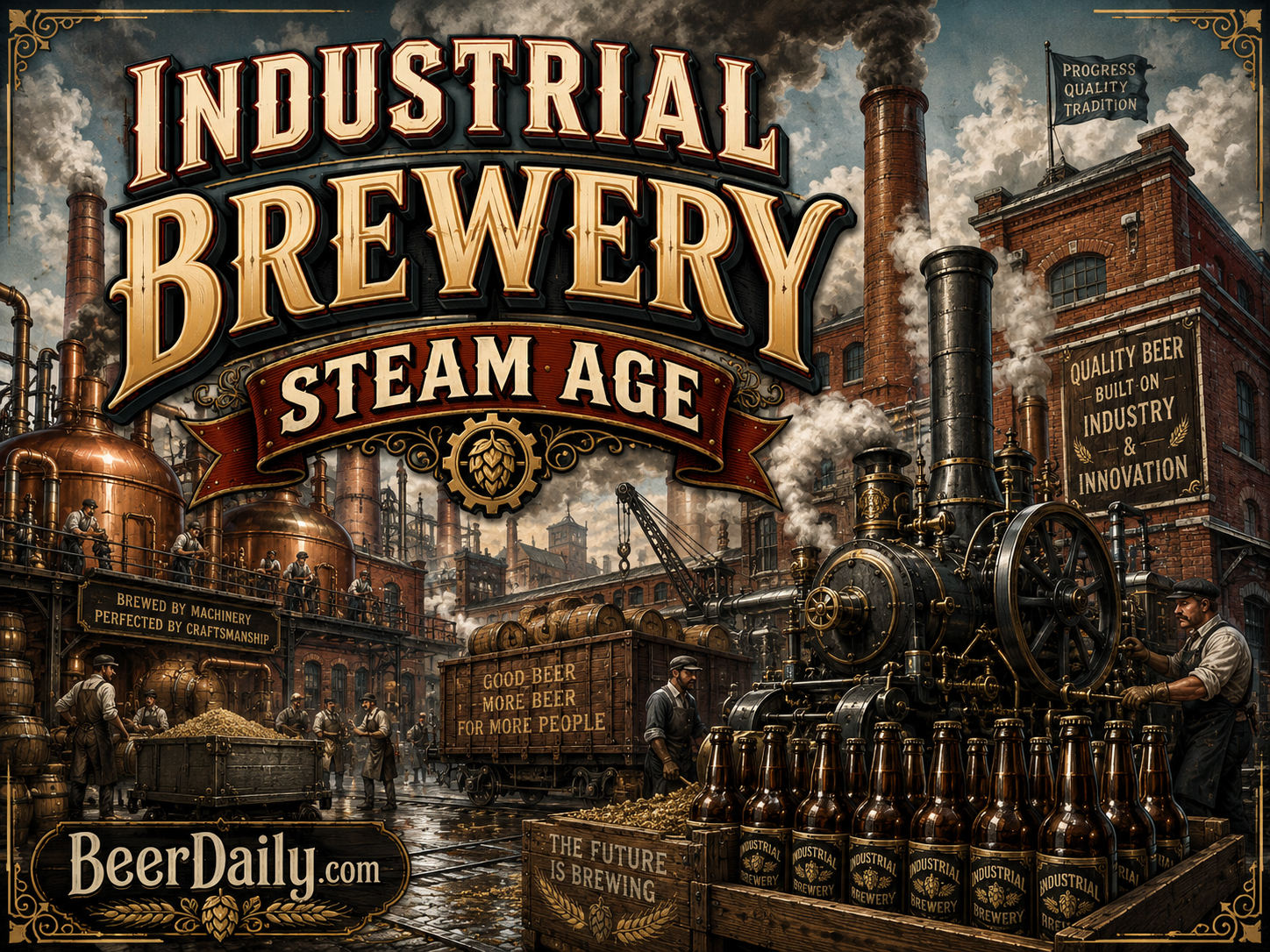
Industrial beer had been built on machinery, railroads, glass, refrigeration, packaging, and sales systems. Prohibition did not merely empty glasses. It disrupted an entire economic machine.
Panel 5: the basement gets creative
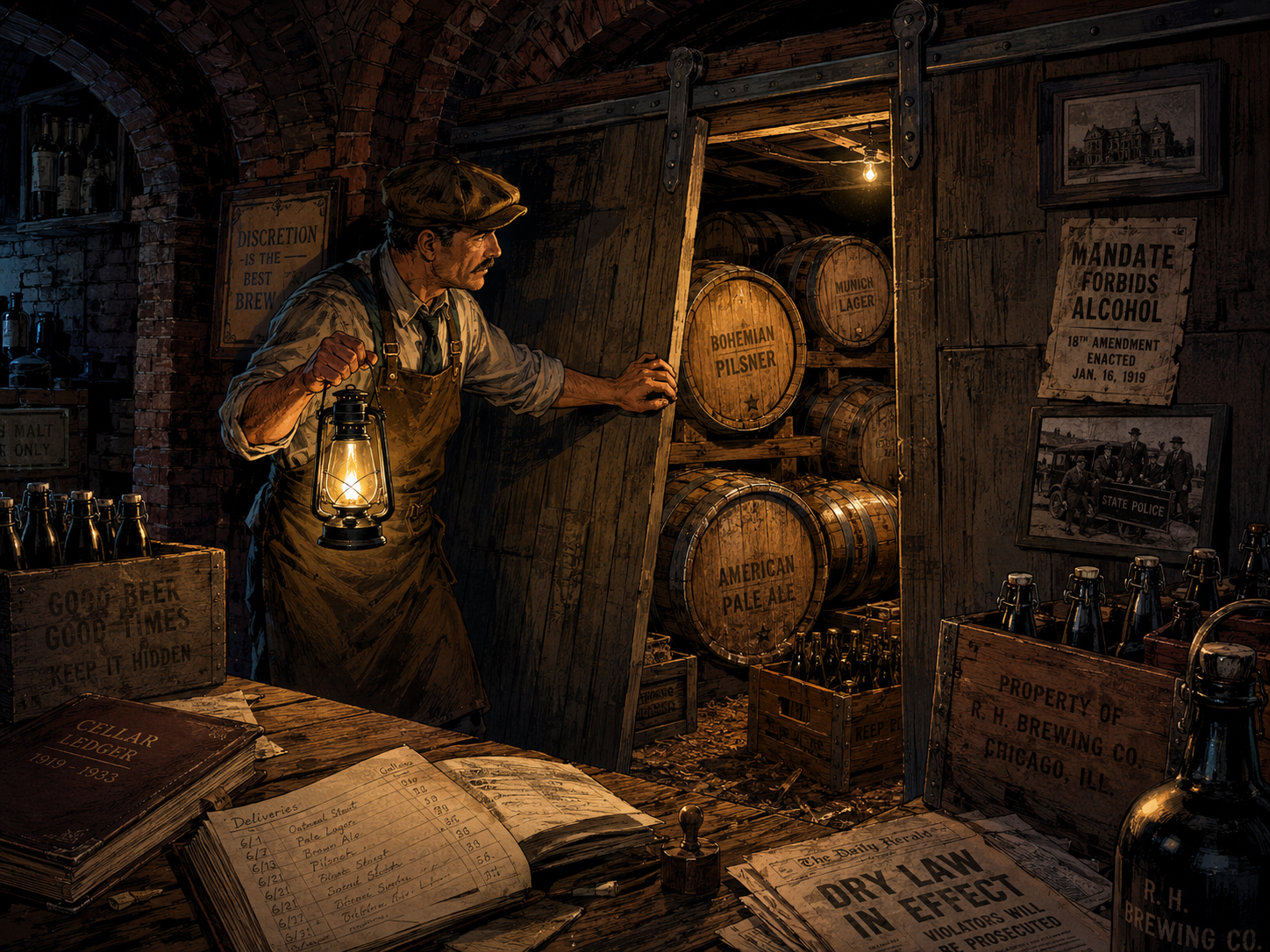
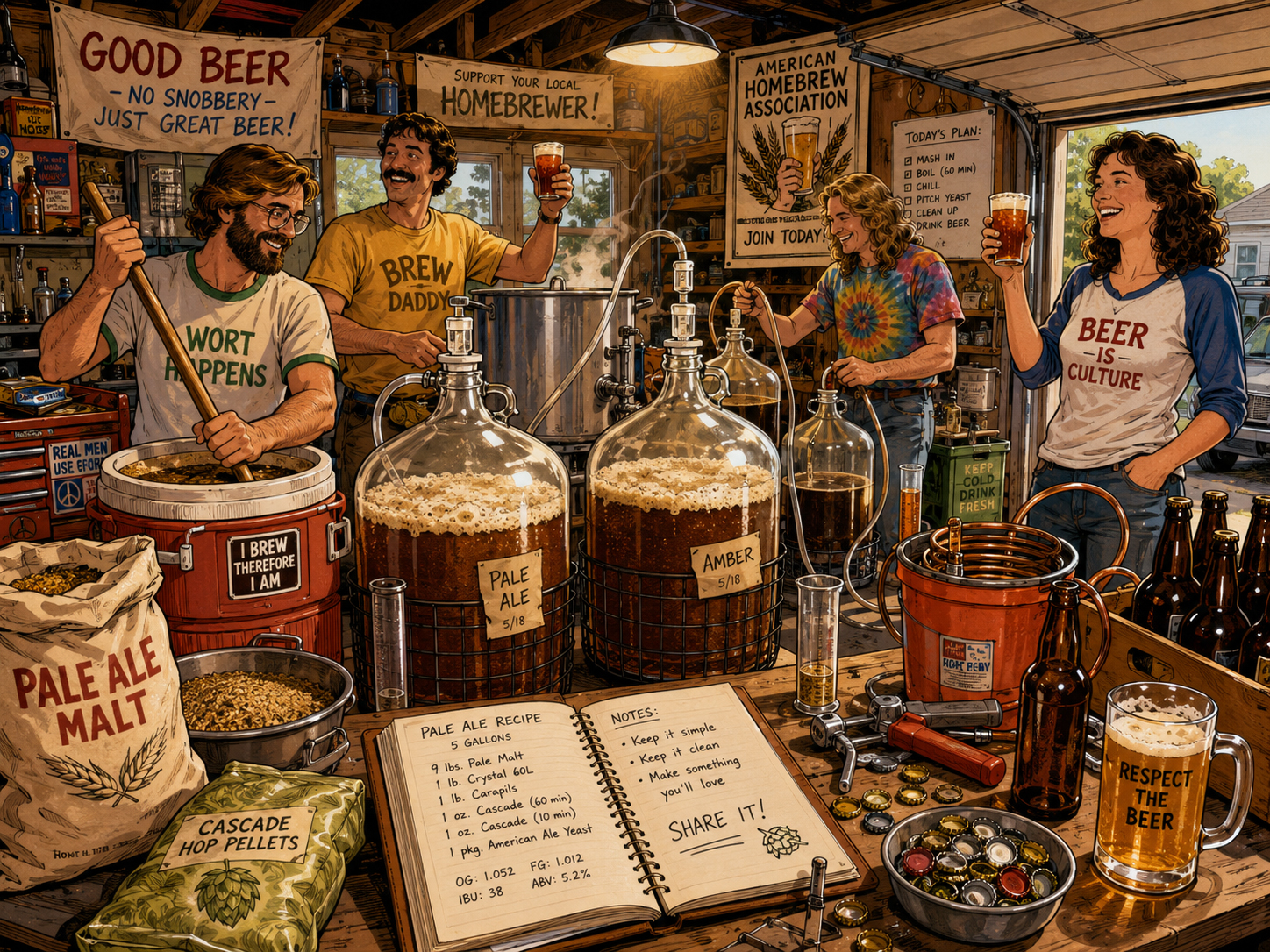
In a hidden cellar, Homebrew Revival Garage Brewers gather around buckets, grain, and questionable confidence. One person reads a pamphlet. Another says, “How hard can fermentation be?” Yeast-chan appears and says, “Harder than your sanitation habits suggest.”
Home production, malt products, smuggling, and underground drinking became part of beer’s survival story. Not all of it was glamorous. Some of it was risky. Some of it was bad beer wearing a brave face.
Panel 6: speakeasy whispers
A hidden door opens behind a bookshelf. Inside, people gather under low lights. The bartender says, “Password?”
Barley Boy panics and says, “Fermentable.”
The bartender nods. “Close enough.”
Speakeasies became the cultural icon of the era: secret rooms, music, bribery, raids, danger, glamour, and rebellion. The reality varied widely, but the image remains powerful because it captures the contradiction of a law that made drinking hidden instead of gone.
Panel 7: the Foam Goblin oversimplifies repeal
The Foam Goblin leaps onto a table. “Prohibition failed because everyone wanted beer!” he declares.
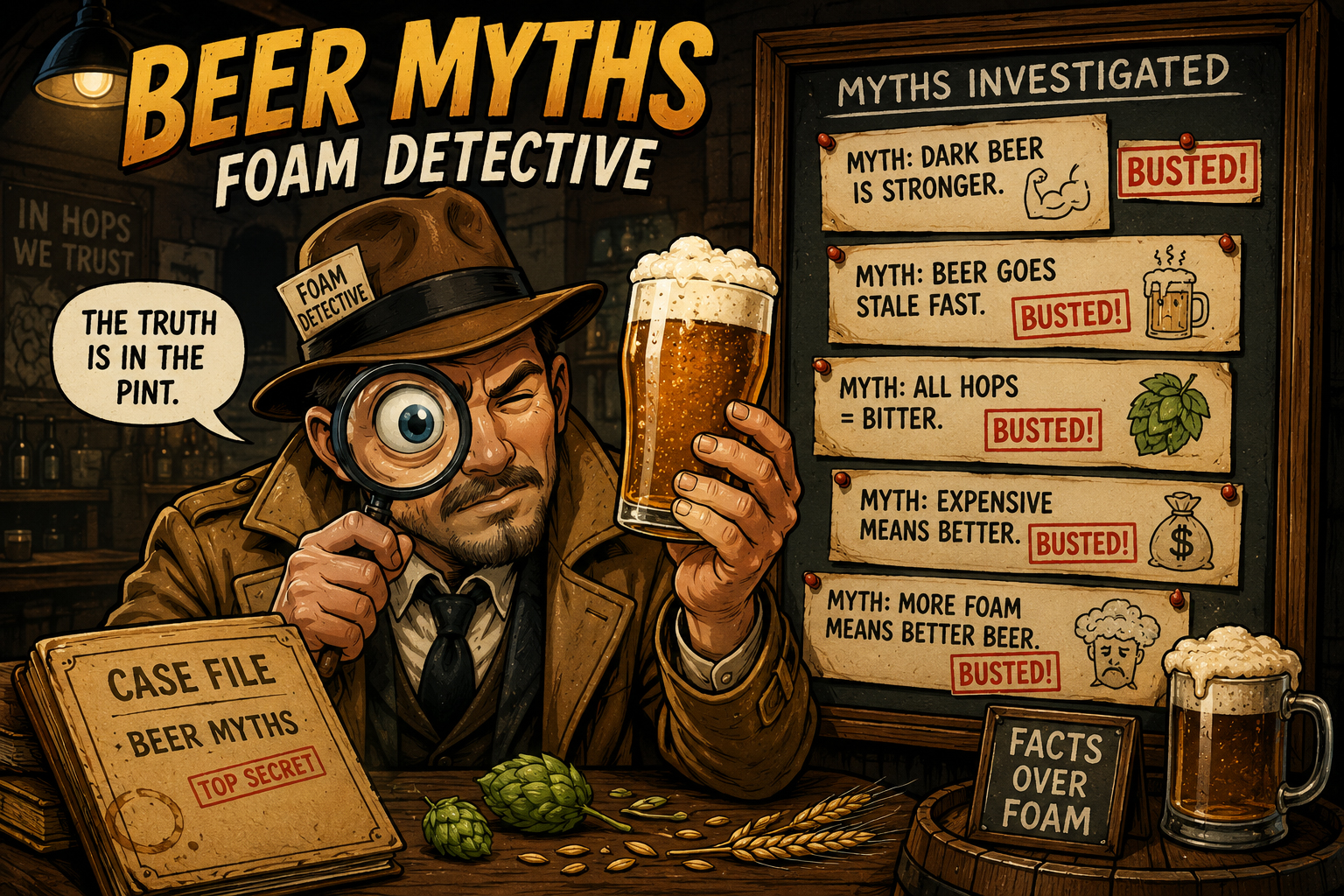
Foam Detective blows a whistle. “Too simple. Add enforcement problems, crime, economics, changing public opinion, tax revenue needs, the Depression, individual liberty arguments, and the political case for repeal.”
The Foam Goblin groans. “Your version has too many nouns.”
“History does that,” says Professor Pint.
History note: Prohibition changed what came after
Repeal did not simply restore the old beer world. Many breweries were gone. Surviving breweries had to restart, rebuild markets, and operate in a changed regulatory and economic environment. Over time, consolidation and mass-market light lager became powerful forces in American beer.
Prohibition did not just pause beer. It damaged, reshaped, and narrowed the brewing landscape. The comeback was real, but the old map had been torn.

Panel 8: the barrel survives
Prohibition finally opens the suspicious barrel. Inside is not beer, but a note.
It reads: “Beer is an industry, a habit, a memory, a technology, and a culture. You can close the legal tap, but the story will look for another vessel.”
Prohibition stares at the note. The barrel rolls away behind a false wall.
Barrel: “Tell Craft Beer I said hello.”
What the episode teaches
Prohibition was not a joke, even when BeerDaily gives it a funny hat. It was a serious national policy rooted in real social concerns, but it also produced enforcement problems, illegal markets, industry disruption, and major unintended consequences.
Beer survived through pivots, loopholes, hidden production, legal substitutes, memory, demand, and eventual repeal. The barrel did not win easily. It endured.
Episode moral
Beer history is resilient because beer is more than liquid. It is grain, labor, equipment, law, culture, memory, business, community, and desire. Prohibition knocked on the barrel. The barrel became a door.
BeerDaily moral: when history closes a tap, check the basement for footnotes.