Beer begins sweet.
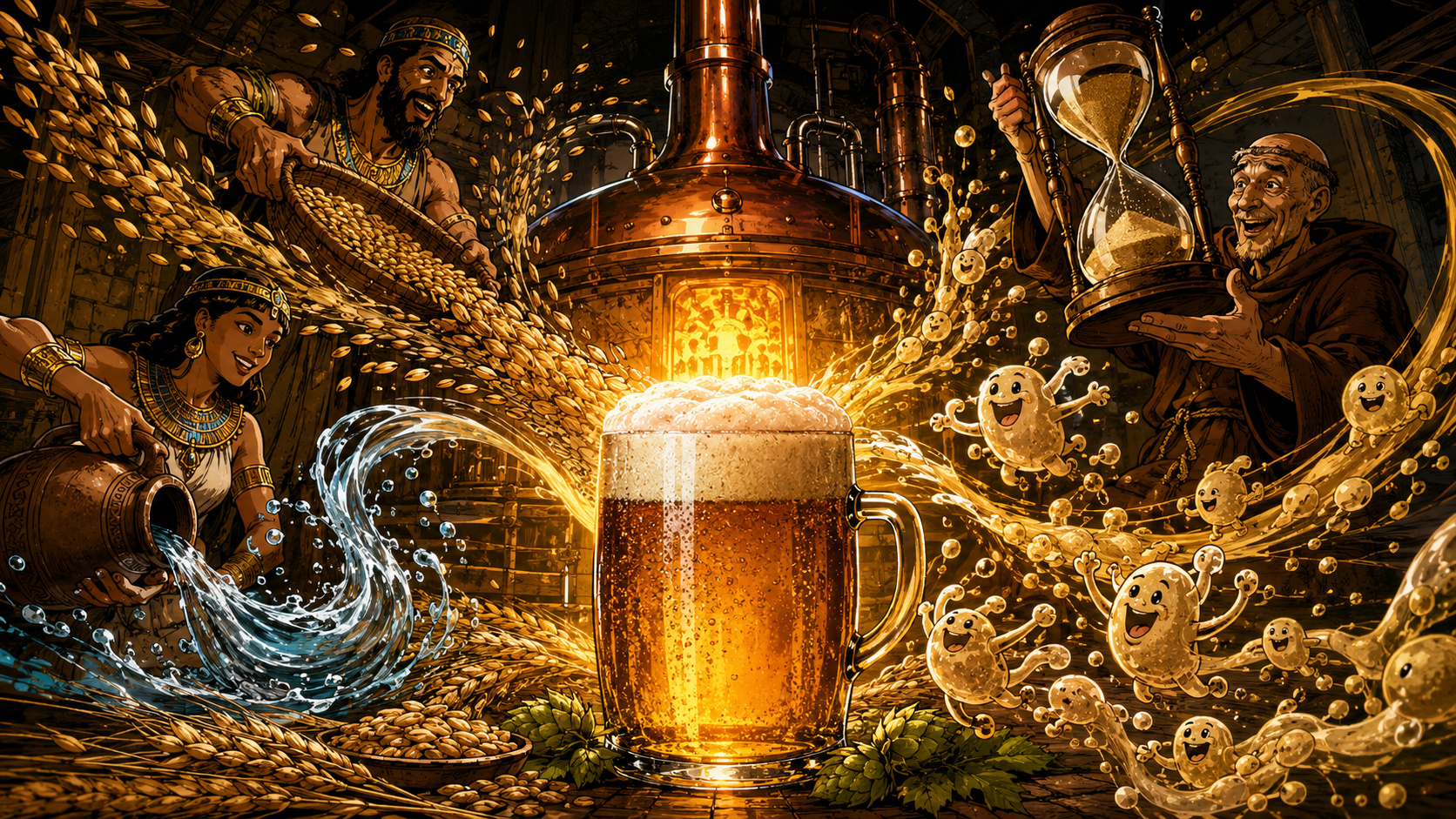
Before beer ferments, the brewer has sweet wort: grain sugars dissolved in water. Malt gives beer bread, biscuit, honey, caramel, toast, chocolate, roast, body, and color. Without malt sweetness, there is nothing for yeast to ferment and nothing for bitterness to balance.
Barley Boy loves this part. He stands on the edge of the mash tun and says, “You are welcome.” Yeast-chan replies, “Thank you for becoming edible to me.”
Professor Pint says: “Sweetness is not the enemy. Unbalanced sweetness is the lecture.”
Sweet: the grain voice
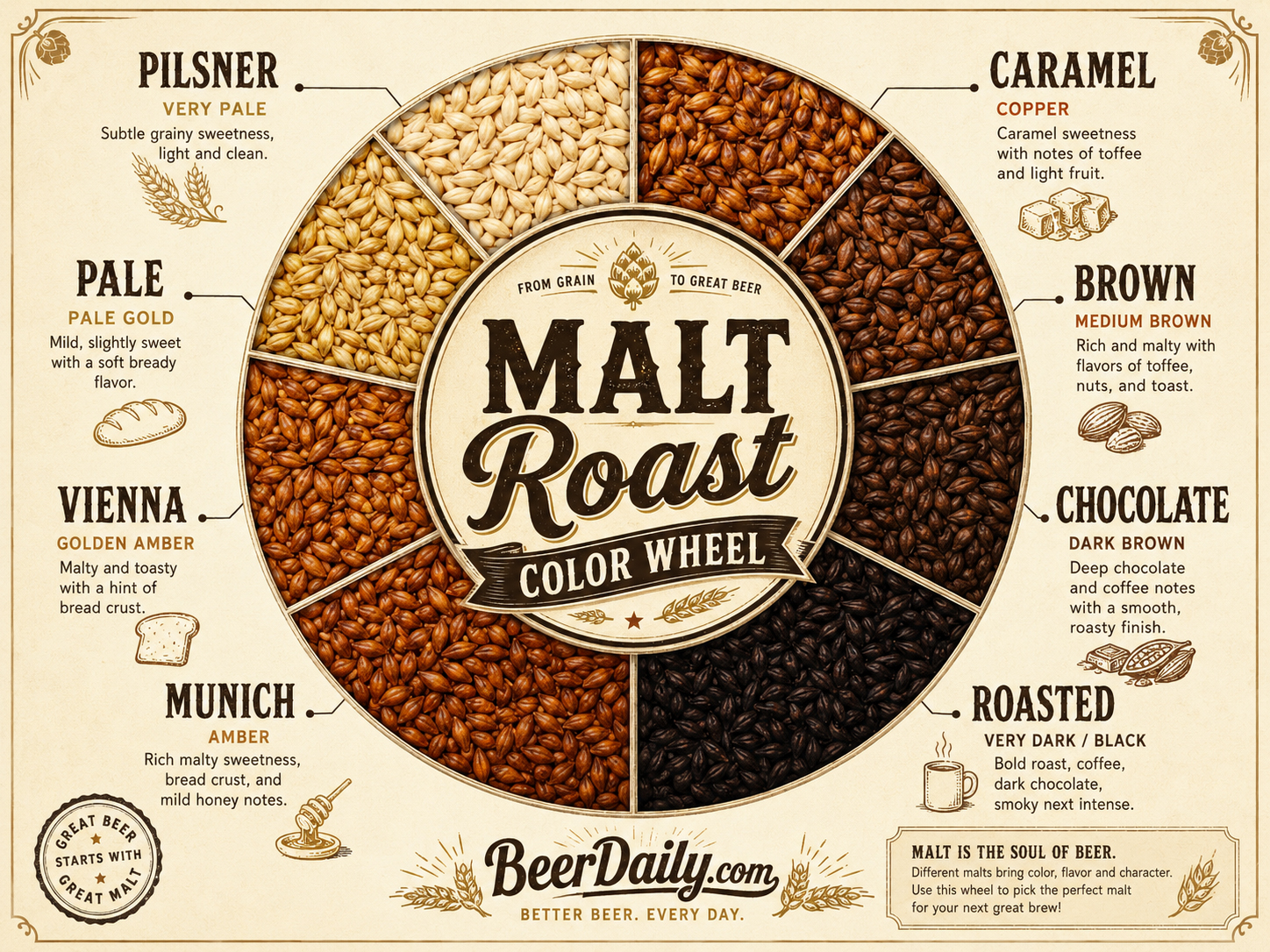
Sweetness in beer can be delicate or heavy. Pale malt can bring clean grain, bread crust, honey, cracker, or biscuit notes. Darker malt can bring caramel, toast, raisin, chocolate, coffee, or burnt sugar. The malt bill is beer’s foundation, body, and color palette.
Ancient beers may have leaned sweeter, thicker, grainier, or more nourishing than many modern drinkers expect. Some fermented grain drinks were closer to food than to a crisp modern pint. Beer history begins in that grain-rich world.
Bitter: the balancing blade
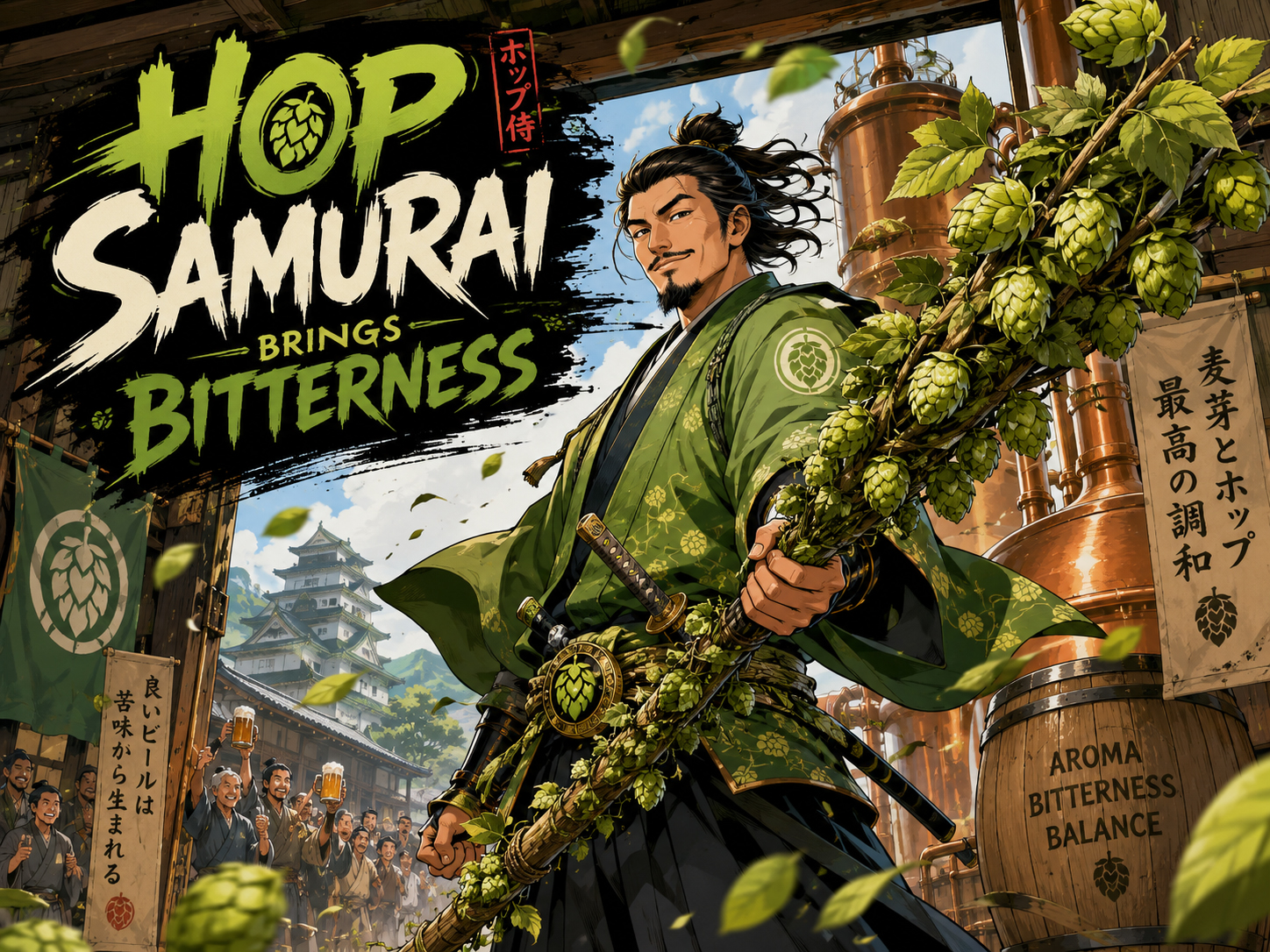
Bitterness is one of beer’s great balancing tools. It cuts through malt sweetness, adds structure, and helps make a beer feel more drinkable. Hops became the most famous source of bitterness, but beer before hops could use other herbs, gruit mixtures, roast, smoke, or acidity to balance sweetness.
Hop Samurai enters here, of course. He does not hate sweetness. He simply believes sweetness needs a worthy opponent.
Bitterness before hops
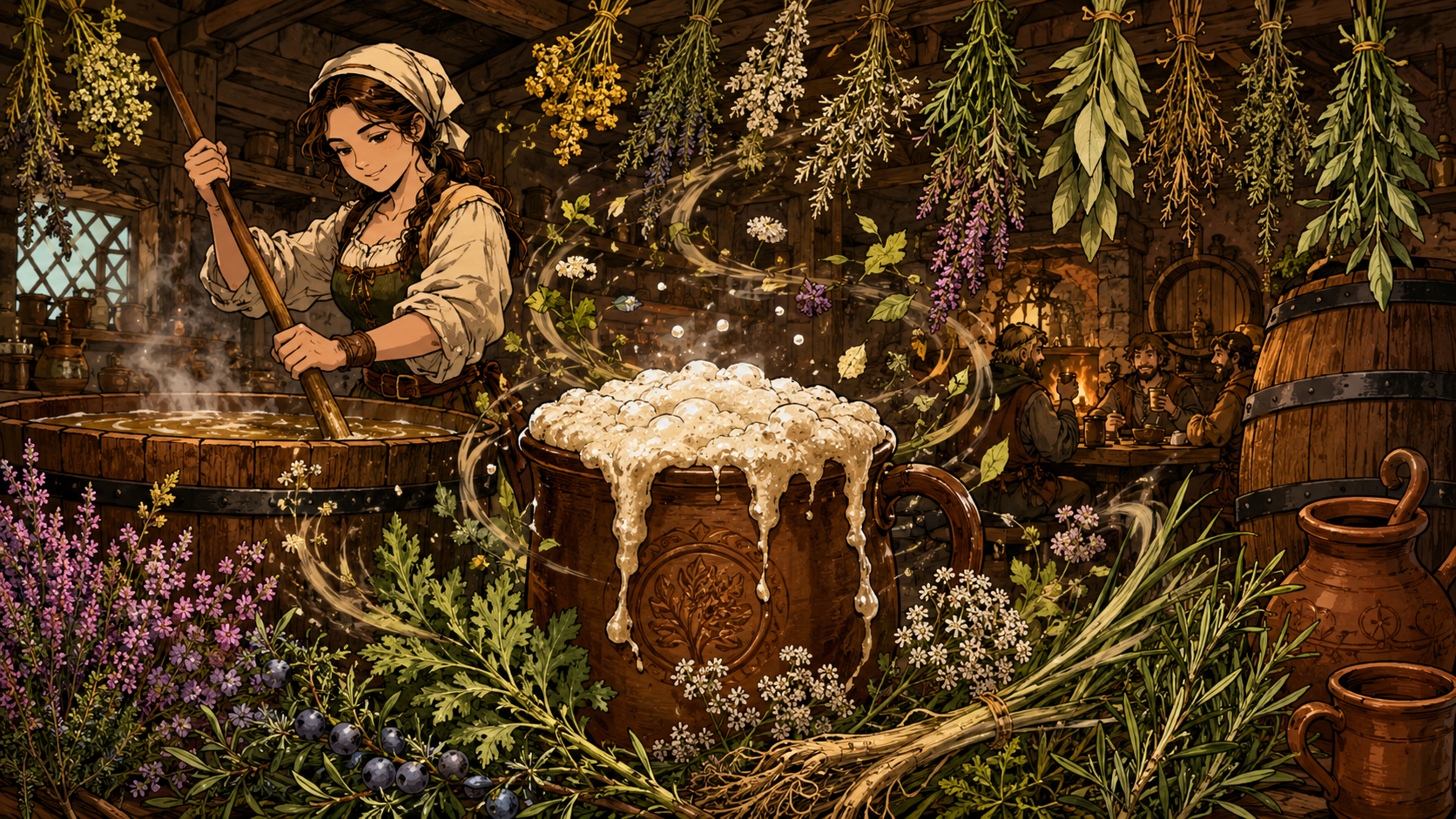
Before hops became dominant in many brewing traditions, brewers used local plants, gruit mixtures, spices, herbs, smoke, and sourness to shape the glass. Beer before hops was not flavorless. It was diverse, regional, and often strange in ways modern style charts do not easily capture.
The herb cabinet deserves respect. Hop Samurai bows before entering the kettle. Foam Goblin does not bow because he is busy writing “hops were always required” on a napkin. Foam Detective confiscates the napkin.
Hops made bitterness portable.
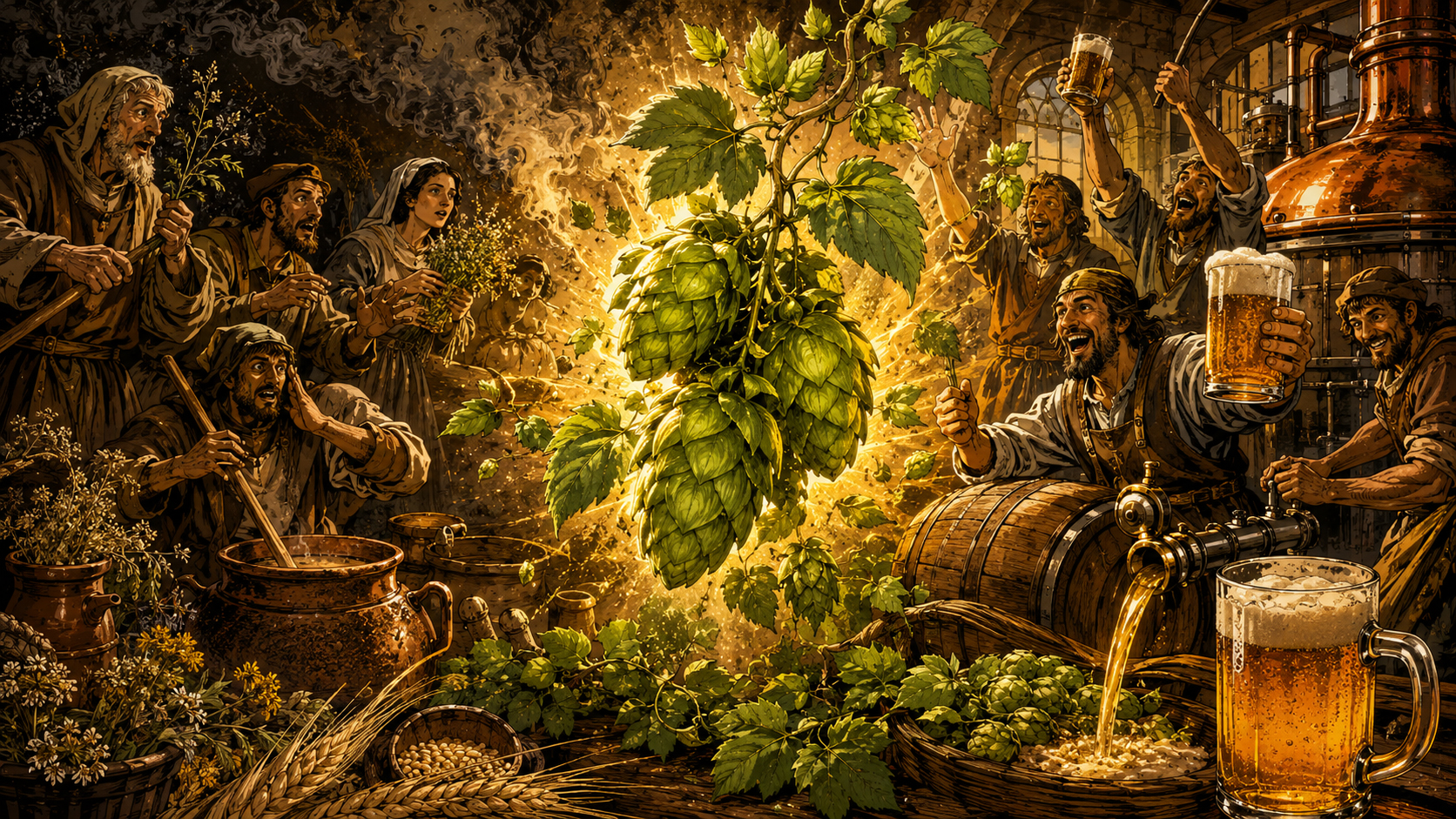
Hops became powerful because they did multiple jobs. They added bitterness, contributed aroma, and helped beer keep better. That made hopped beer useful for storage, trade, and larger brewing systems.
The bitterness was not only about taste. It was also about stability and logistics. Beer that keeps better can travel farther. Beer that travels farther can change markets. The hop cone brought flavor and a passport.
Sour: the old wild card
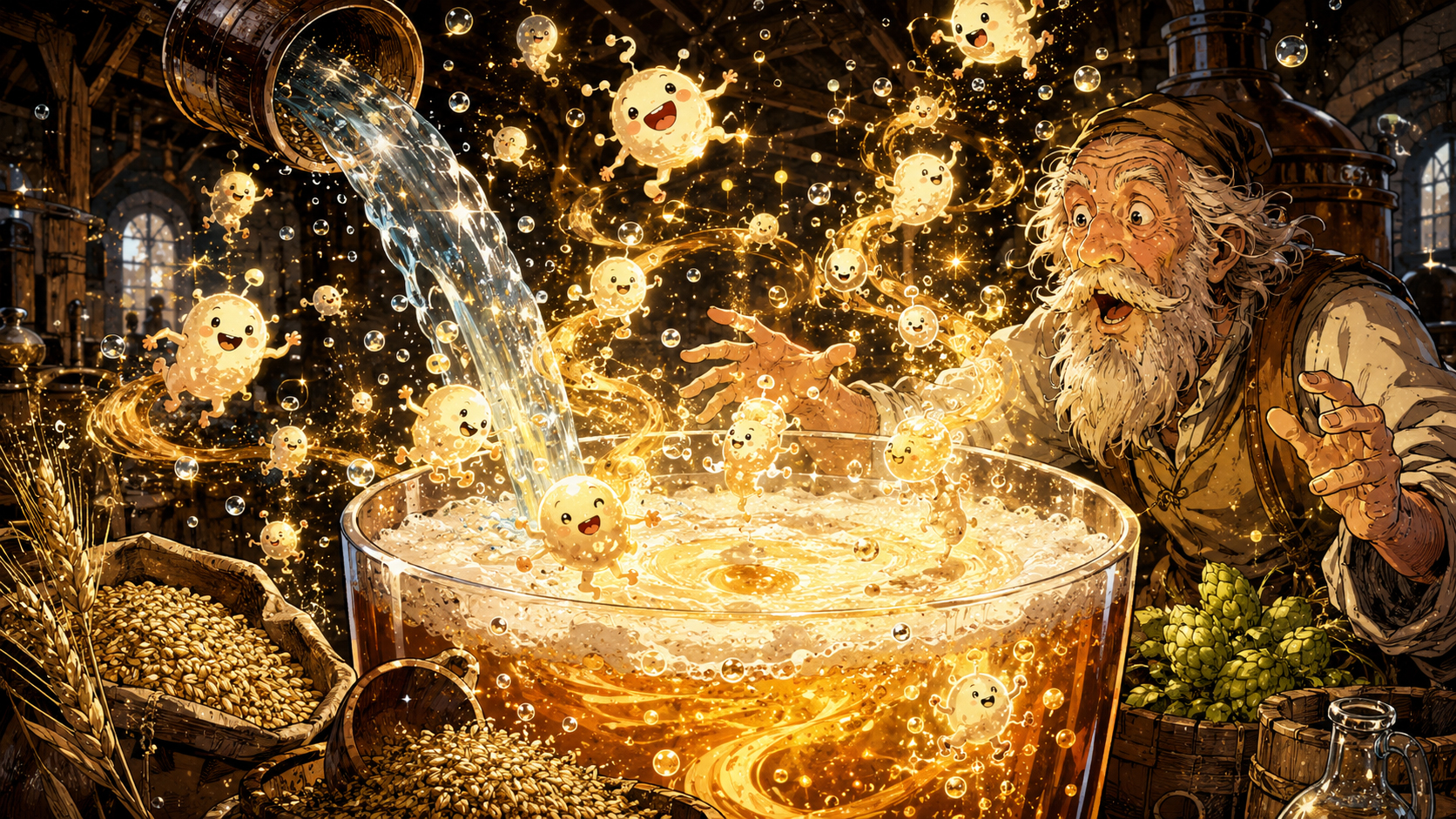
Sourness belongs deeply to beer history. Before modern sanitation, controlled yeast pitches, sealed tanks, stainless steel, and refrigeration, fermentation was often more mixed and local. Wild microbes, wooden vessels, reused equipment, fruit, age, temperature, and storage could all create acidity.
Sourness could be welcome, tolerated, or disastrous depending on context. Some traditions embraced tartness. Some batches simply lost the battle. The difference between “complex acidity” and “the goblin won” is often process, intention, and skill.
Sourness is not new.
Modern sour beer may feel like a craft trend, but acidity in fermented beverages is ancient. Fermentation is a living process, and living processes do not always stay polite. Tartness, funk, fruitiness, and microbial complexity have been part of the wider beer family for a long time.
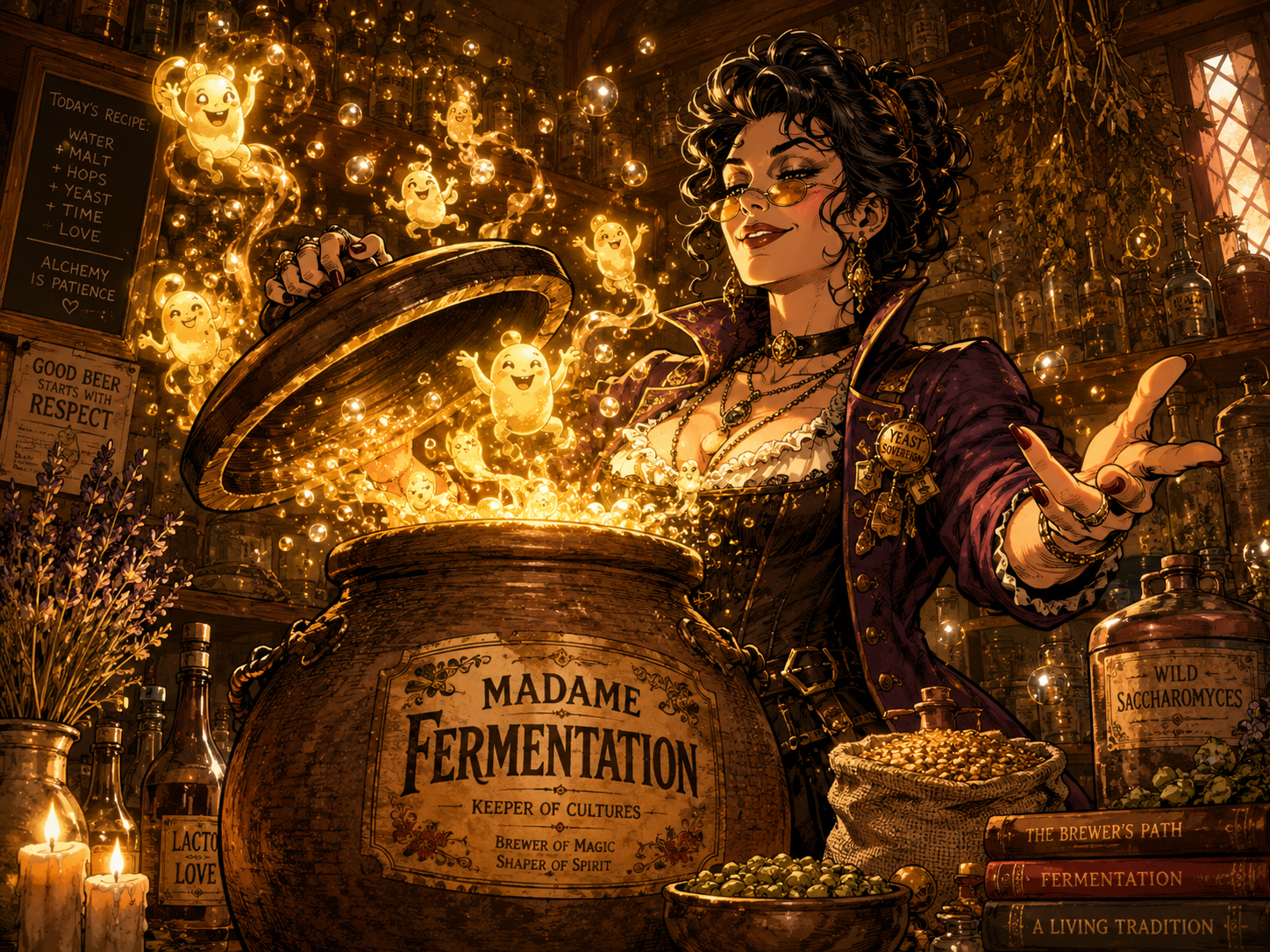
Madame Fermentation understands this. She opens the jar carefully and says, “Wonderful things can happen here. Also, mistakes.”
Smoke: the forgotten fourth voice
Smoke is not in the title, but it belongs in the panel. Before modern clean kilning, drying malt over fire could add smoky character. In some places, smoke was part of the expected flavor. In others, it was something brewers worked to reduce.
Beer flavor history is also fuel history. Wood, straw, peat, kiln design, and drying method could shape the beer before the brewer even reached the kettle.
Balance changes with technology.
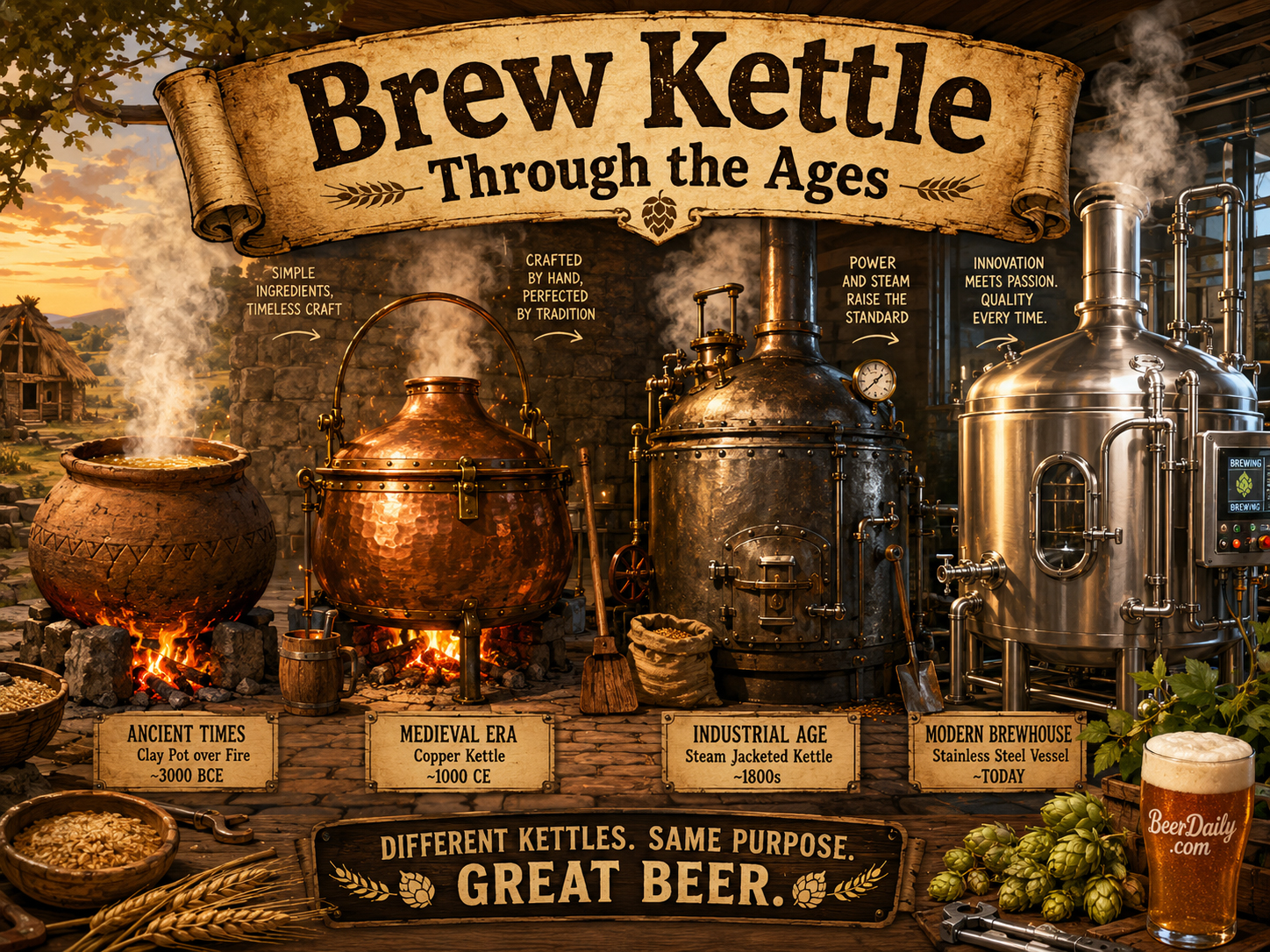
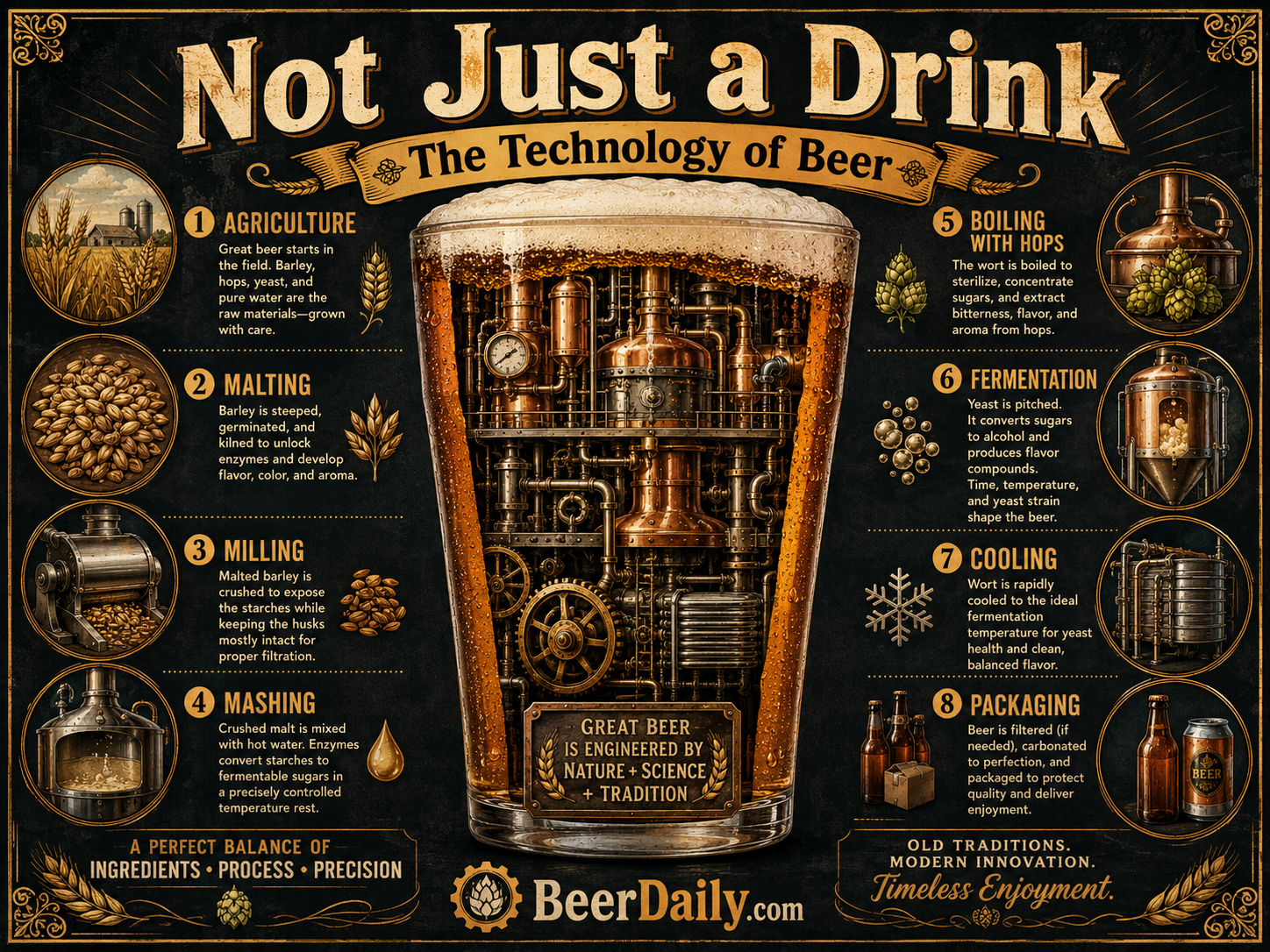
Beer balance changed as brewers gained better control over malting, mashing, boiling, hops, yeast, fermentation temperature, storage, sanitation, packaging, and refrigeration. A modern brewer can aim for a specific balance in ways ancient brewers could not fully control.
That does not mean old beer was inferior. It means old beer lived in a different technology world. Its flavor reflected local grain, water, fuel, vessels, microbes, storage, and expectations.
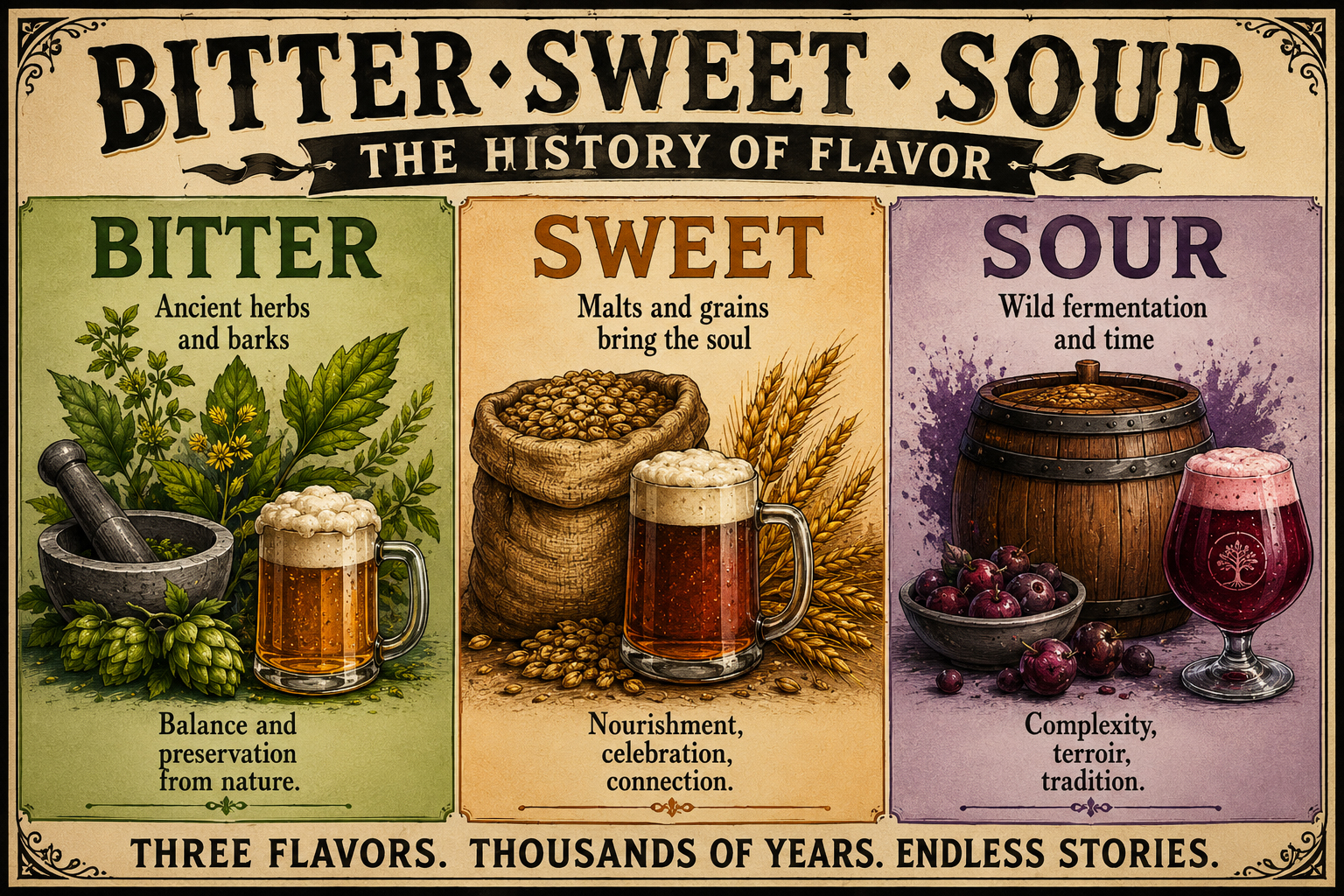
The flavor triangle
BeerDaily flavor map
- Sweet: malt, grain, bread, honey, caramel, roast, body, and residual sugar.
- Bitter: hops, herbs, gruit, roast, tannin, and balancing structure.
- Sour: acidity, wild fermentation, mixed cultures, fruit, age, and microbial complexity.
- Smoke: fuel, malt drying, kilns, old technology, and regional tradition.
- Balance: the brewer’s job, the yeast’s mood, and history’s moving target.
Foam Goblin ruins the tasting panel.
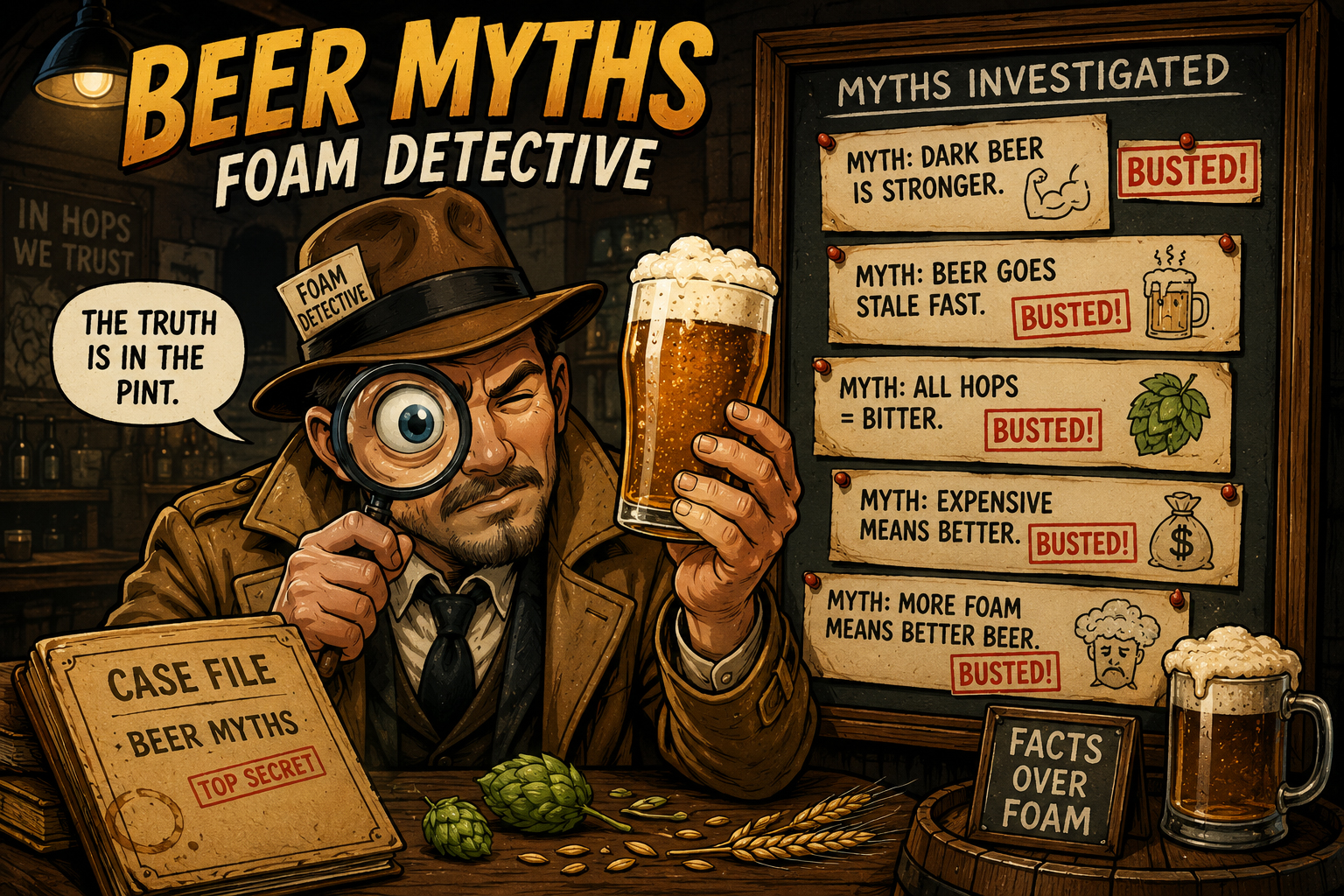
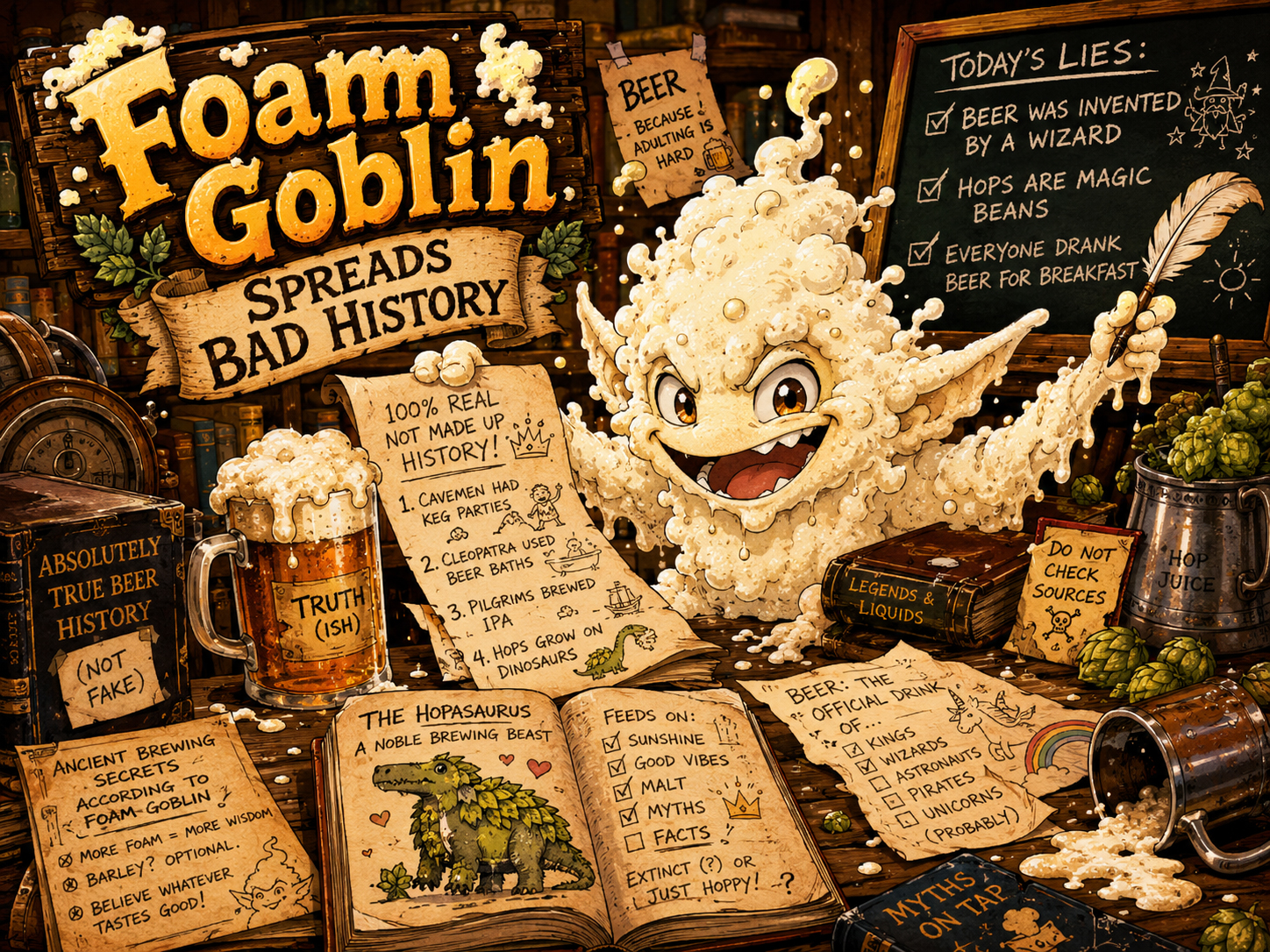
Foam Goblin walks into the tasting room and announces, “Bitter beer is always better. Sweet beer is for beginners. Sour beer is spoiled. Dark beer is stronger. Hops were always required.”
Foam Detective slowly removes his glasses. Professor Pint reaches for the chalk. Hop Samurai unsheathes one tiny hop cone. Madame Fermentation closes the jar.
“Congratulations,” says Professor Pint. “You have been wrong in four flavor directions at once.”
Modern craft beer reopened the panel.
Craft beer helped modern drinkers rediscover the range of beer flavor: aggressive bitterness, soft malt, pastry sweetness, barrel acidity, farmhouse funk, smoked malt, fruit, spices, yeast character, and clean lager precision.
That does not mean every experiment is good. It means the modern flavor map is wide again. Beer can be bitter, sweet, sour, smoky, subtle, loud, elegant, strange, or technically perfect — sometimes all before the server finishes explaining the tap list.
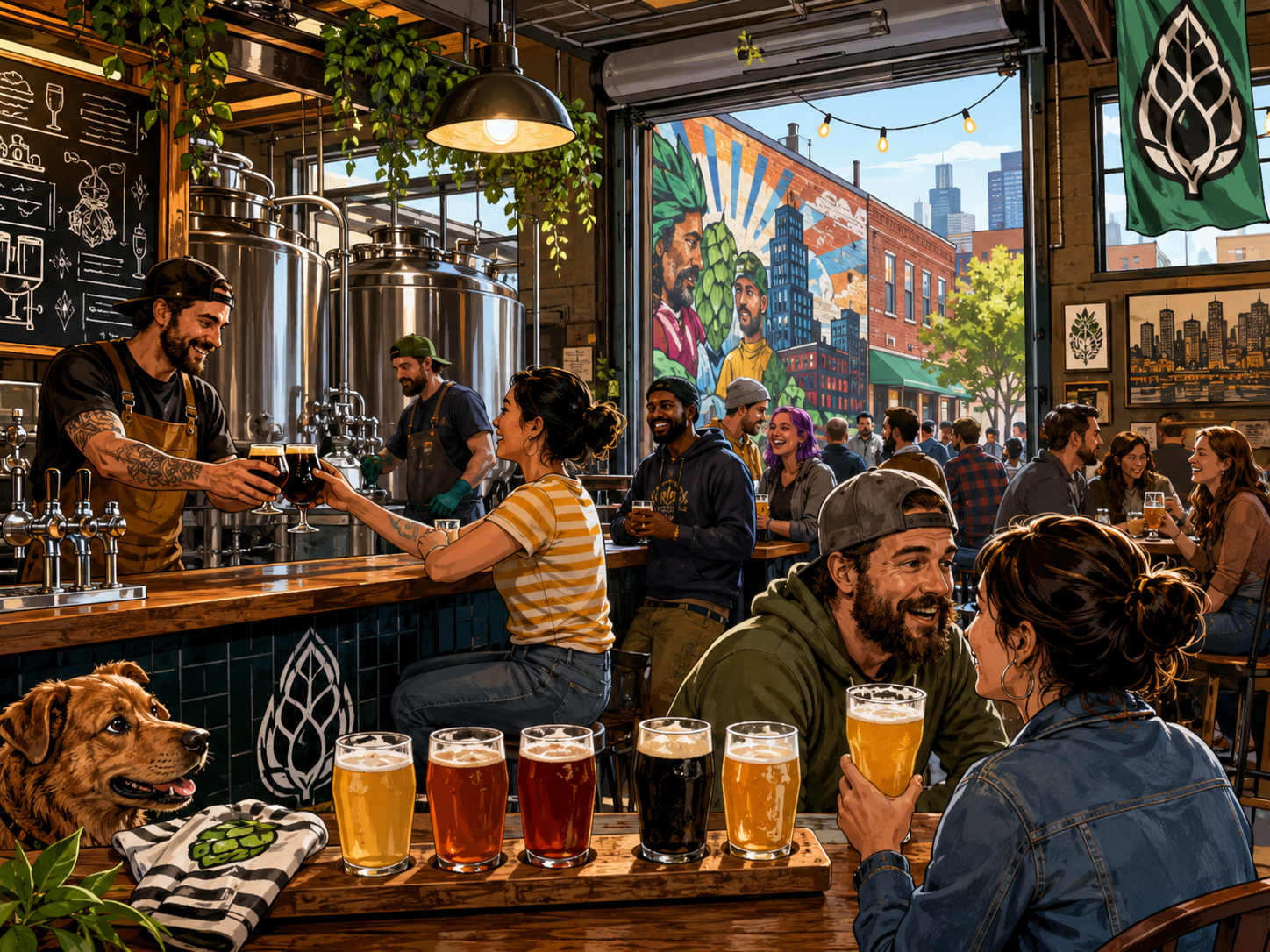
The BeerDaily flavor lesson
Beer flavor history is not a ranking of bitter over sweet or modern over ancient. It is the story of balance changing across time. Grain gives sweetness. Hops and herbs bring bitterness. Microbes and age can bring sourness. Fire can bring smoke. Technology changes control. Culture changes taste.
BeerDaily moral: beer flavor is not one note. It is the whole tavern arguing in harmony.